This is the species-by-species Serengeti animals guide: Big Five, Big Nine, birds, and where to look across about 90 mammal species. If you want what a typical game drive actually delivers, use what animals you will see. If you want photos, use the Serengeti animals list with pictures.
How this Serengeti animals guide is different
Use this page when you want the top animals to see in the Serengeti as a species-by-species guide (Big Five, Big Nine, birds, and where to look). For realistic day-to-day safari expectations – what most guests actually photograph – start with our companion guide: Serengeti animals: what you will actually see.
The Serengeti is not a zoo. Sightings depend on season, region, and the skill of your guide. That unpredictability is part of the magic. This guide covers the top Serengeti animals travelers ask about most, where to look for them, and how to plan a safari that gives you the best chance of memorable encounters. For the full planning framework, see our Tanzania safari tours guide.
Visual index: See 70+ Serengeti species with photos on our Serengeti wildlife gallery page.
Start here for safari planning: Serengeti animals and wildlife – what you will actually see.
Serengeti animals pictures: browse our visual species index for a full Serengeti animals list with pictures (Big Five, migration stars, and birds) before you read the species notes below.
Serengeti wildlife planning tip: match the animals you care about most to season and region (Ndutu for calving, north for Mara crossings, Seronera year-round). Cross-check photos in the wildlife gallery and day-to-day odds in what you will actually see.
Quick Answer: What Animals Can You See in the Serengeti?On a typical 2-3 day Serengeti safari you can reasonably expect lions, elephants, buffalo, giraffes, zebras, wildebeest, hippos, hyenas, and many antelope species. Leopards, cheetahs, and rhinos are possible but require patience and the right location. The park holds one of Africa’s largest lion populations and hosts the year-round Great Migration cycle.
The Big Five in the Serengeti
Most safari travelers still chase the Big Five – lion, leopard, elephant, buffalo, and rhino. The name comes from old hunting terminology, but today it simply means five iconic species that define an East African safari. Serengeti is one of the few parks where seeing all five in a few days is genuinely possible, though rhino and leopard remain the hardest.
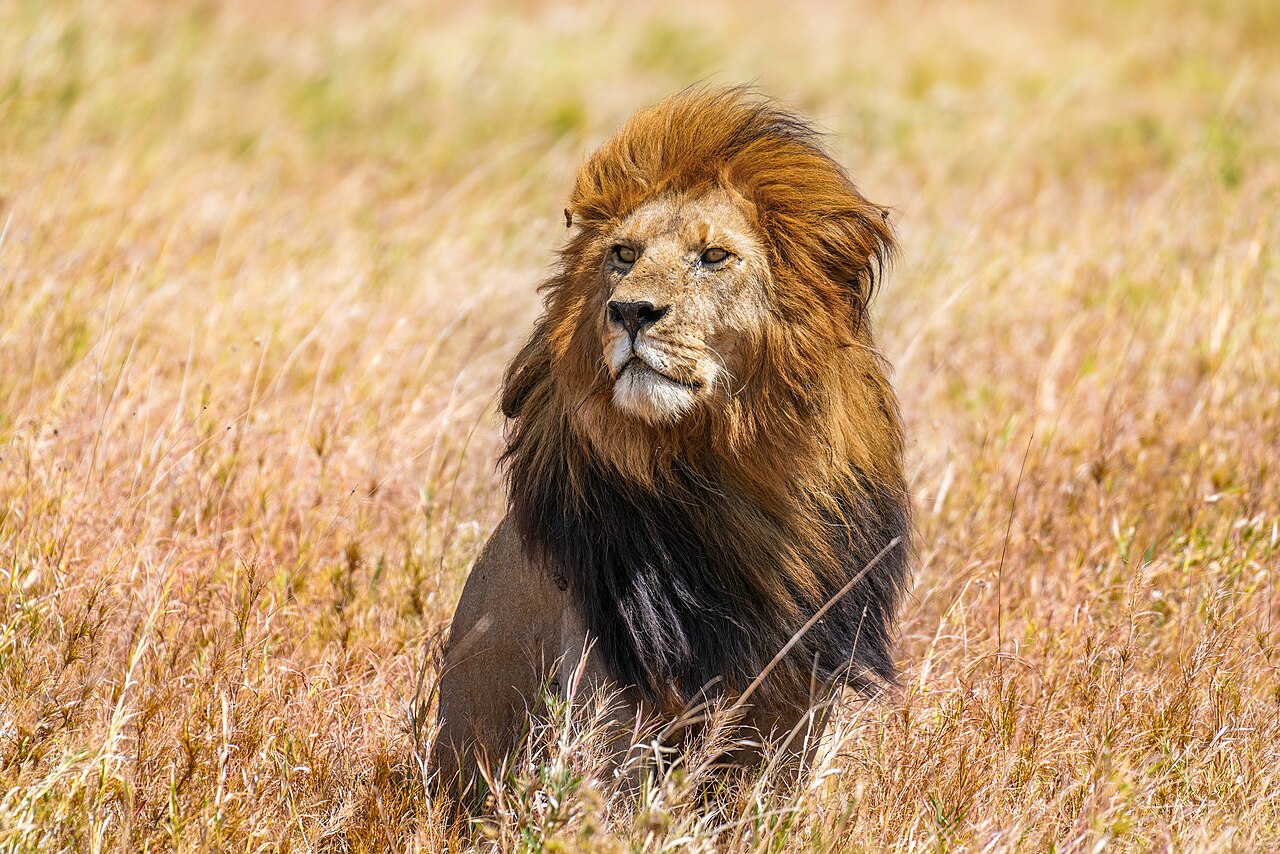
Lion
Serengeti holds an estimated 3,000-4,000 lions, one of the largest populations on the continent. Prides are often seen on kopjes (rocky outcrops), along river lines, or trailing migration herds in dry season. Lionesses do most of the hunting; males defend territory. Central Seronera and the southern plains are reliable year-round, while northern Kogatende shines when herds gather for river crossings from July to October.
Leopard
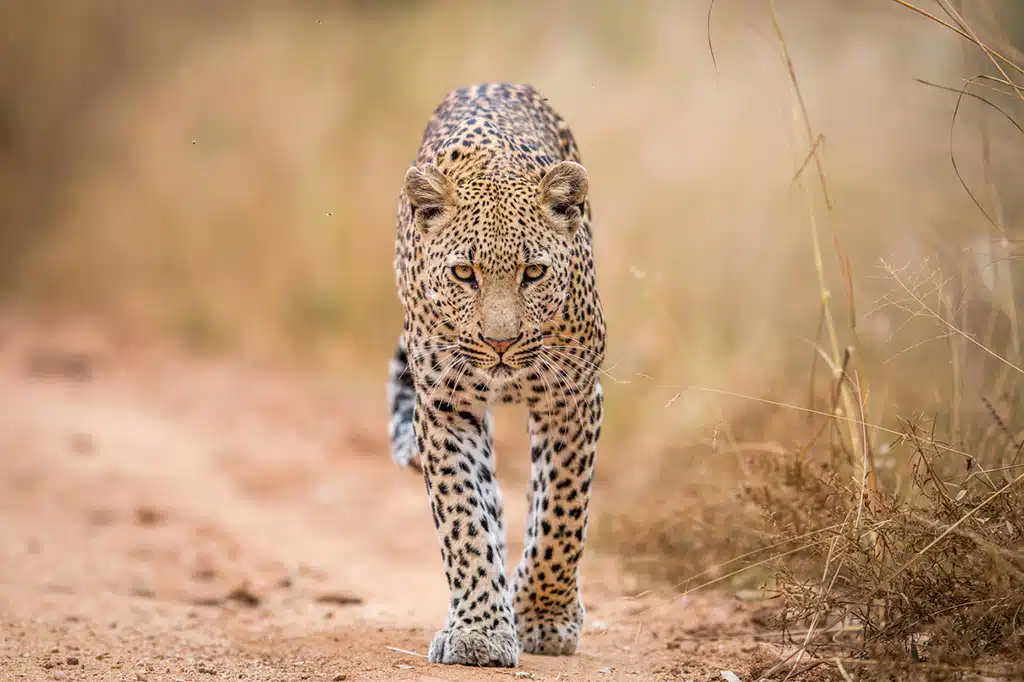
Leopards are the most elusive Big Five cat. Shy and largely nocturnal, they rest in acacia and sausage trees during the day. Seronera Valley has a strong reputation for daytime leopard sightings, especially along the Seronera River. Your guide’s knowledge of recent kills and favorite trees makes a real difference here.
Species guide: Serengeti leopard guide.
Elephant
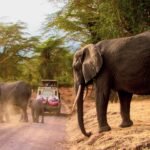
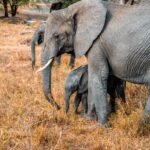
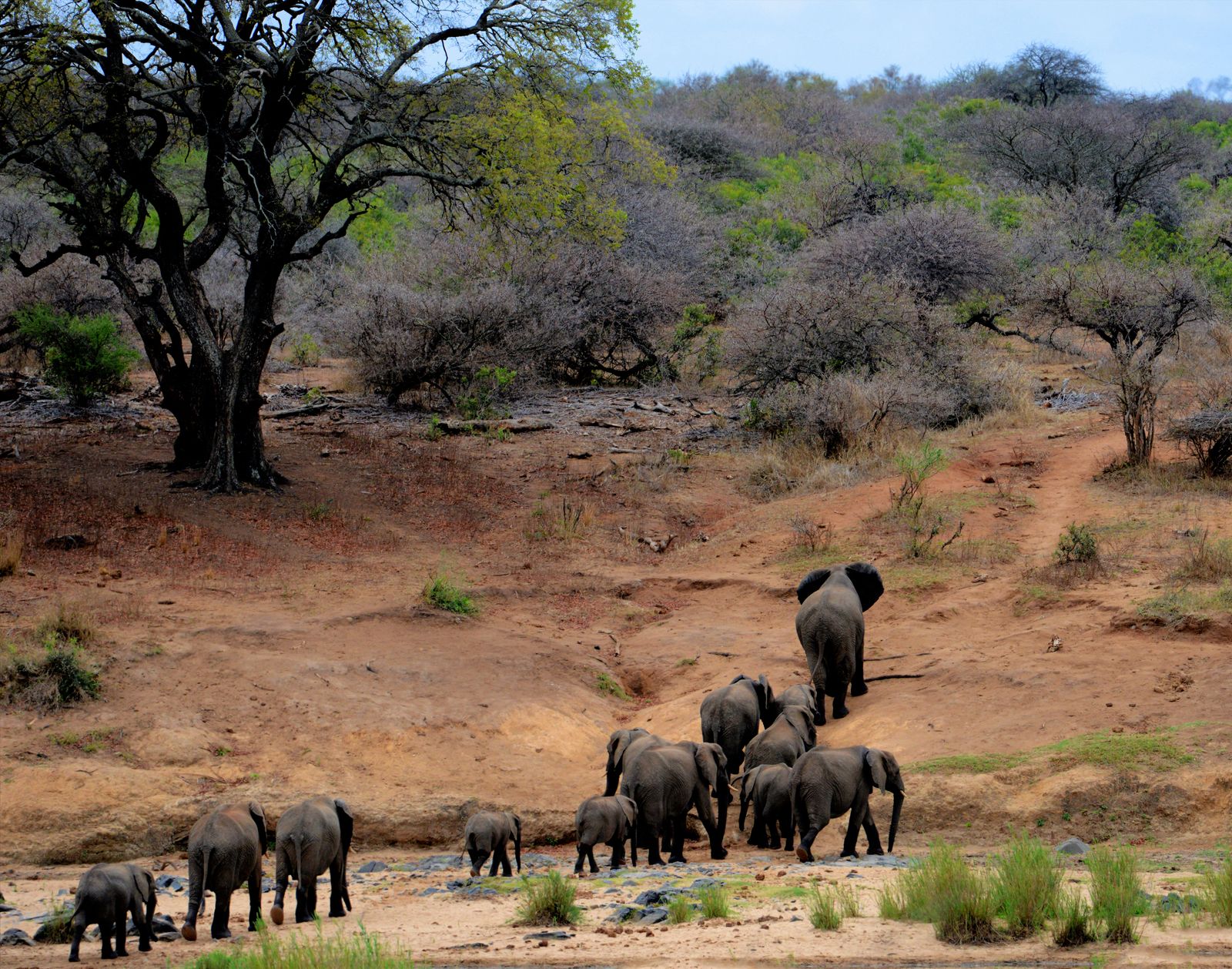
African elephants move in matriarchal family groups across Serengeti woodlands and grasslands. They are intelligent, social, and surprisingly quiet when feeding. Numbers have recovered in recent years thanks to anti-poaching efforts. Look for them near drainage lines, marula trees, and permanent water in dry months.
Species guide: Serengeti elephant guide.
African Buffalo
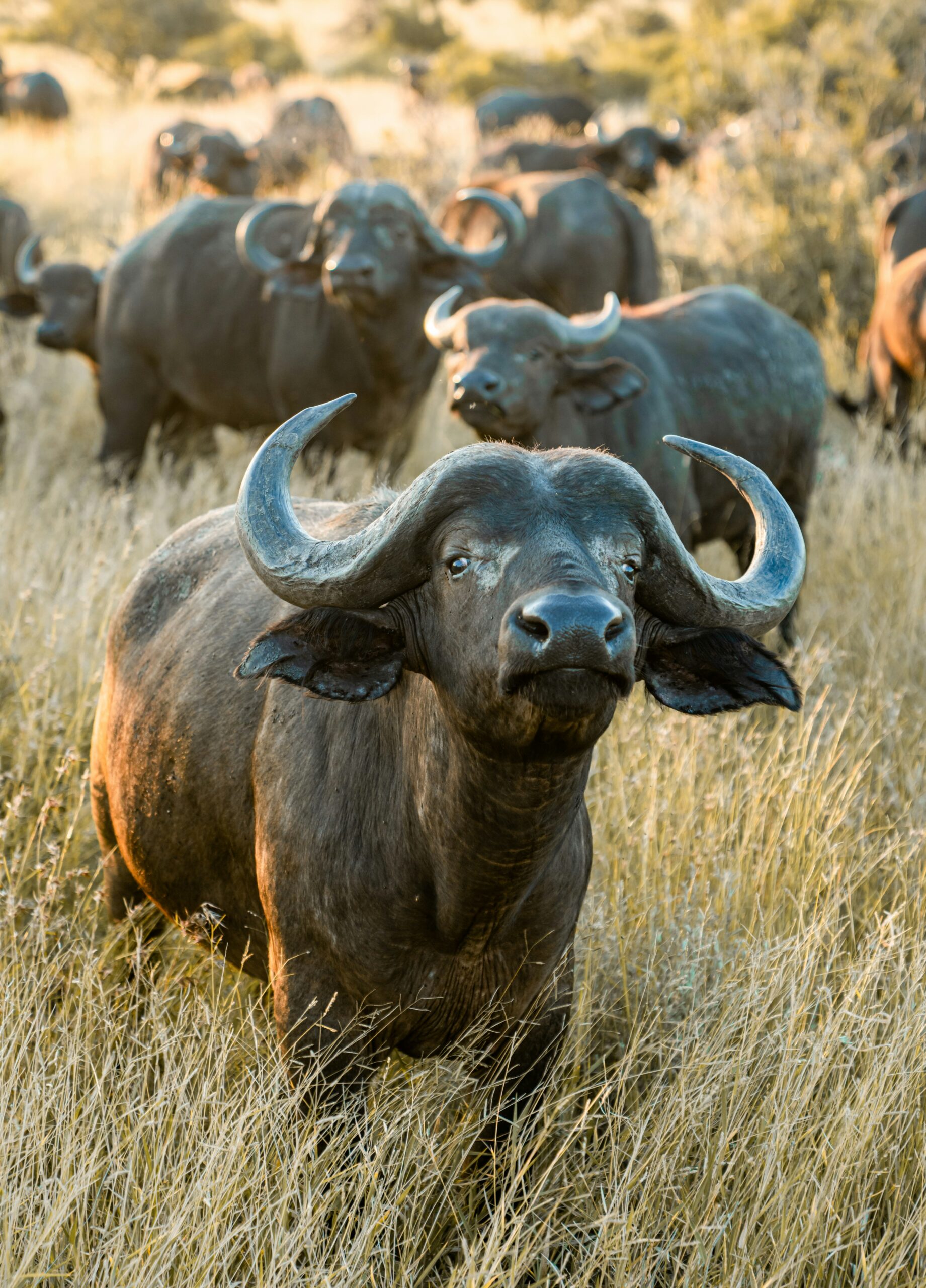
Cape buffalo gather in herds that can exceed 100 animals. They stay close to water, especially in dry season, and are considered one of the more unpredictable large mammals in Africa. Both sexes carry heavy curved horns. Buffalo are among the easiest Big Five to find in Serengeti – you will often see them before lunch on your first game drive.
Species guide: Serengeti buffalo guide.
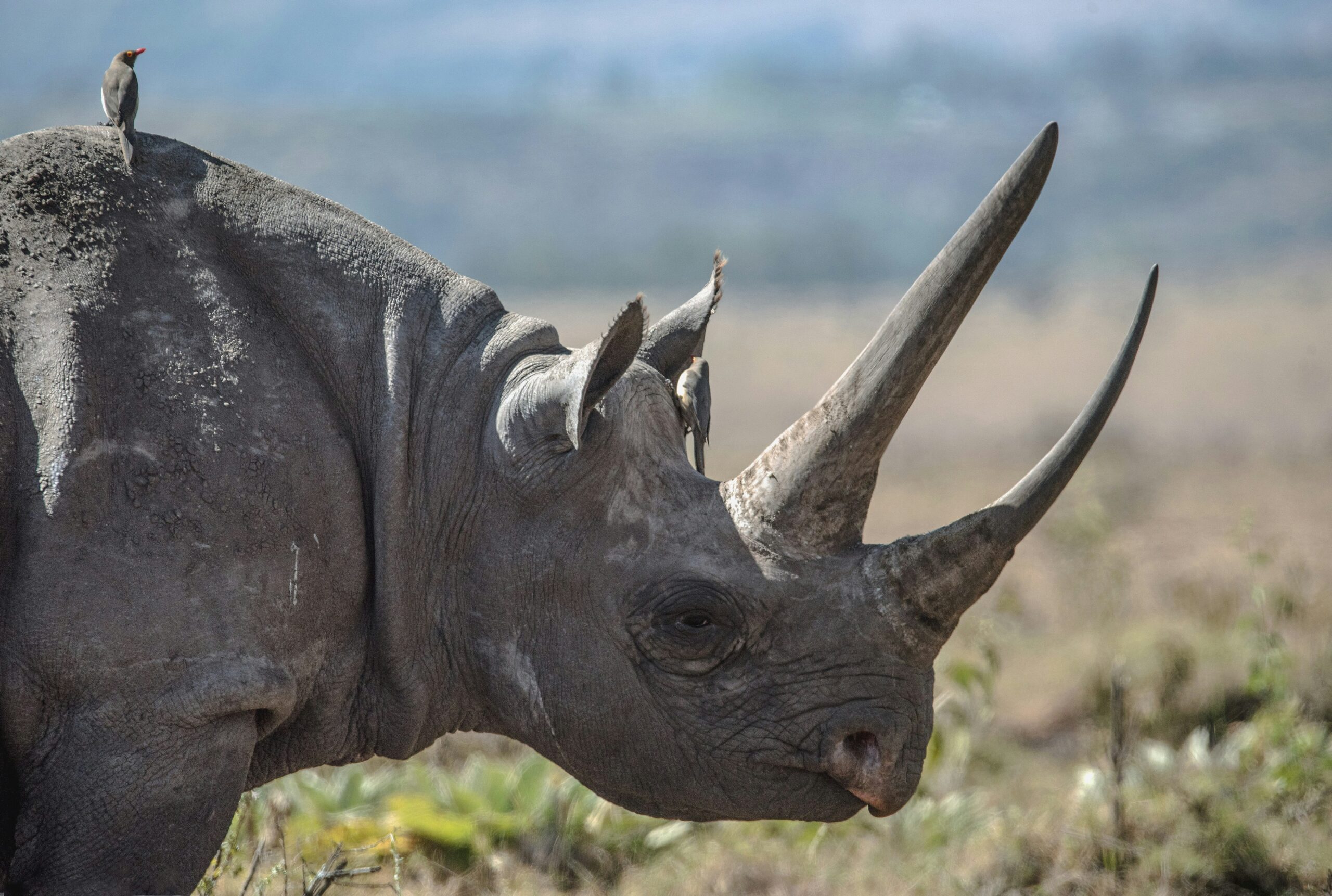
Black Rhino
Black rhino are rare and heavily protected. Serengeti supports a small population, and sightings are never guaranteed. Ngorongoro Crater, often combined with Serengeti on northern circuit itineraries, offers better rhino odds. If rhino is a must-see, tell your operator early so routing and expectations are clear.
Species guide: Serengeti black rhino guide.
The Big Nine: Beyond the Big Five
Many guides and operators now talk about the Big Nine – the Big Five plus cheetah, giraffe, hippo, and zebra. Serengeti is one of the few places where all nine can appear on a single game drive, especially in migration season when plains teem with herbivores and predators follow.
Cheetah
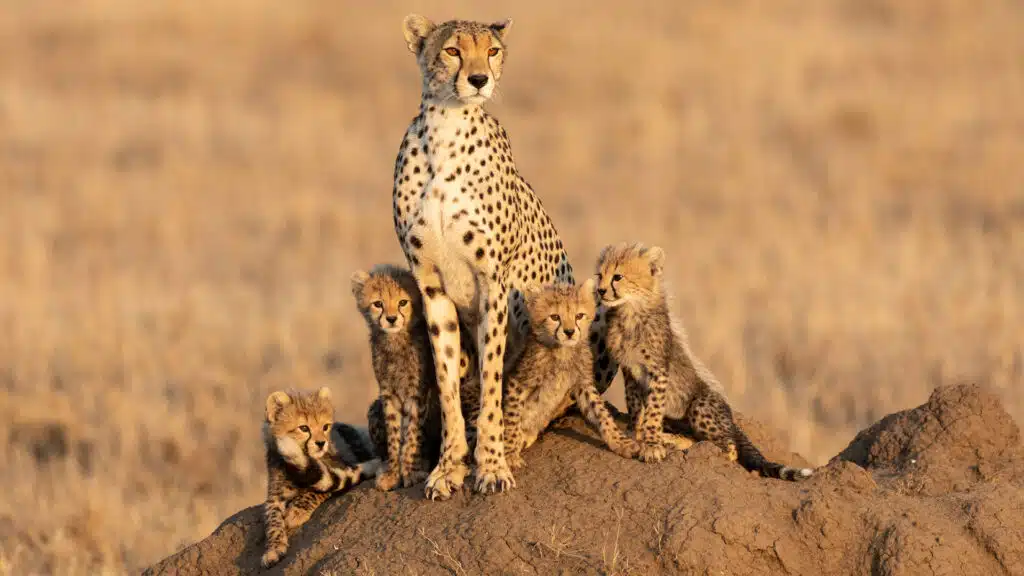
Cheetahs hunt in open country, using speed rather than stealth. Unlike leopards, they cannot climb trees well and prefer short grass where they can spot prey. Serengeti’s southeastern plains and Ndutu area are classic cheetah territory, particularly when gazelle fawns appear during calving season. Seeing a cheetah scan the horizon from a termite mound is one of those moments you remember for years.
Giraffe
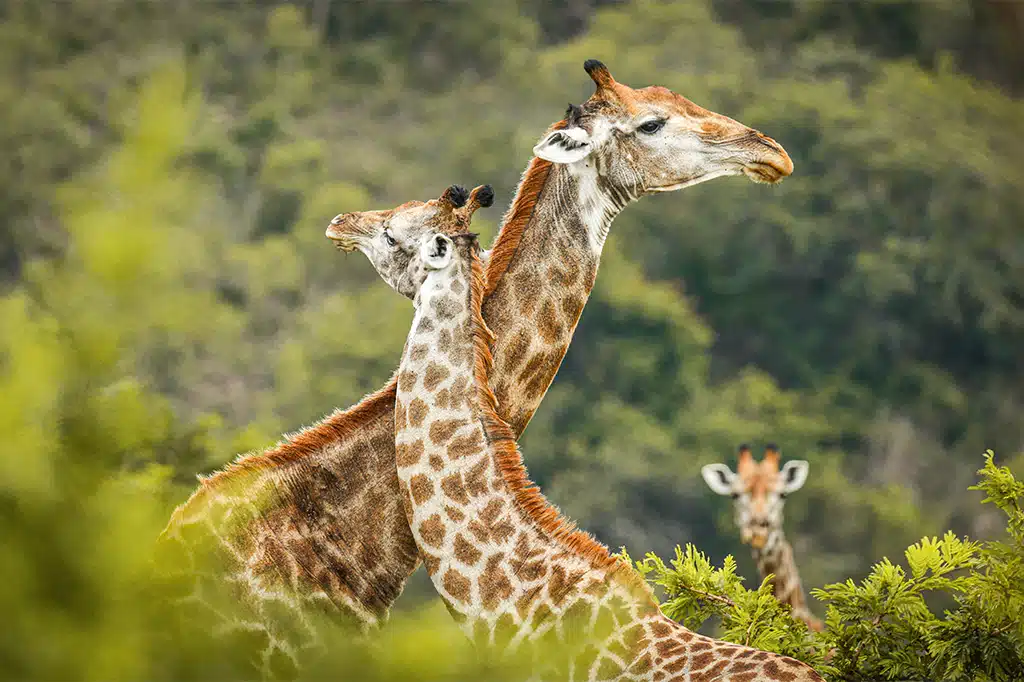
Maasai giraffe – Tanzania’s tallest mammal – browse acacia canopies across the Serengeti ecosystem. Their slow, graceful movement makes them favorites for photographers. Herds are common in central and eastern Serengeti woodlands. A giraffe bending to drink at a waterhole, legs splayed, never gets old.
Hippo
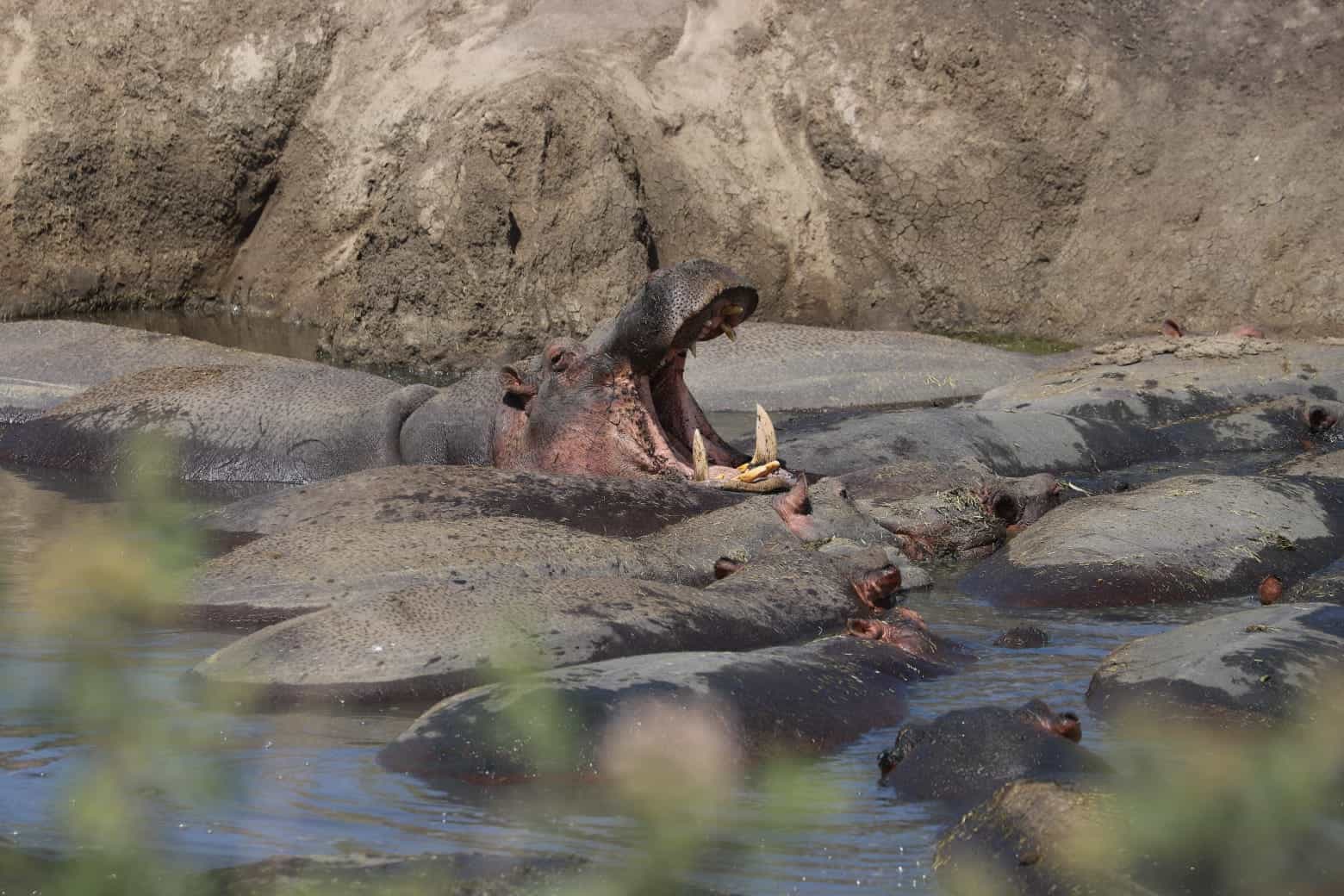
Hippos spend daylight hours submerged in rivers and pools to stay cool, emerging at dusk to graze. Retina Hippo Pool and stretches of the Grumeti and Mara rivers hold large pods. Listen for their loud calls at night from nearby camps – one of the soundtrack moments of a Serengeti stay.
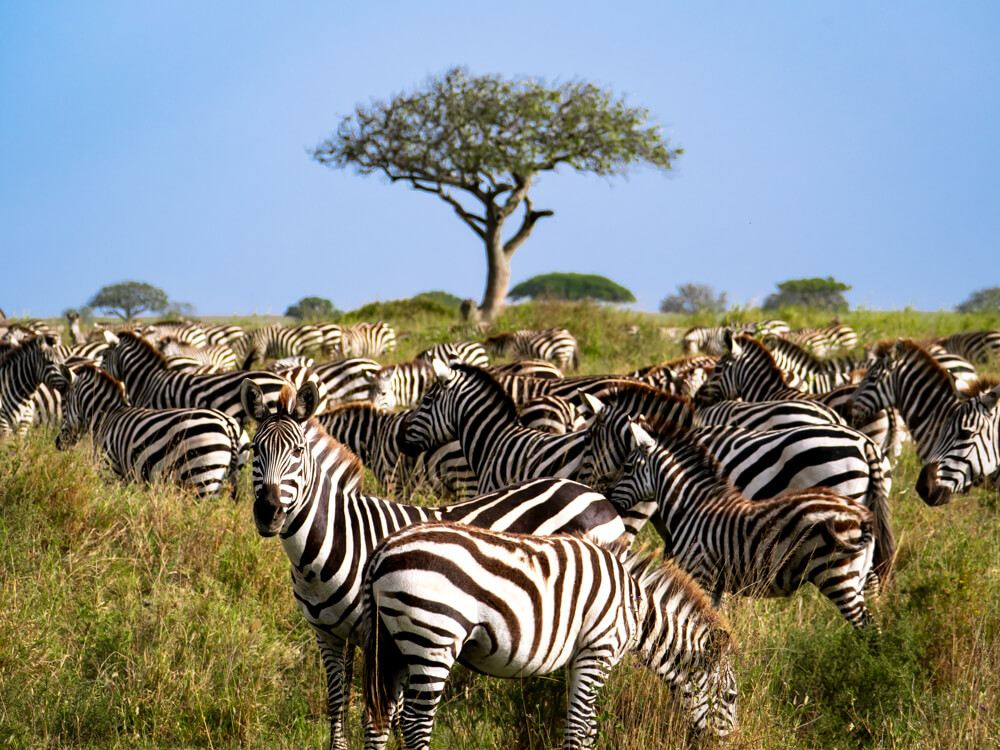
Plains Zebra
Plains zebra move in tight family groups and mega-herds during migration. Their stripes may confuse predators and help with temperature regulation. Zebra often graze alongside wildebeest, and the two species form the backbone of the Great Migration. You will never run out of zebra photo opportunities in Serengeti.
Great Migration Animals: Wildebeest and More
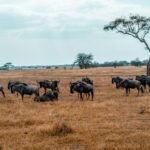
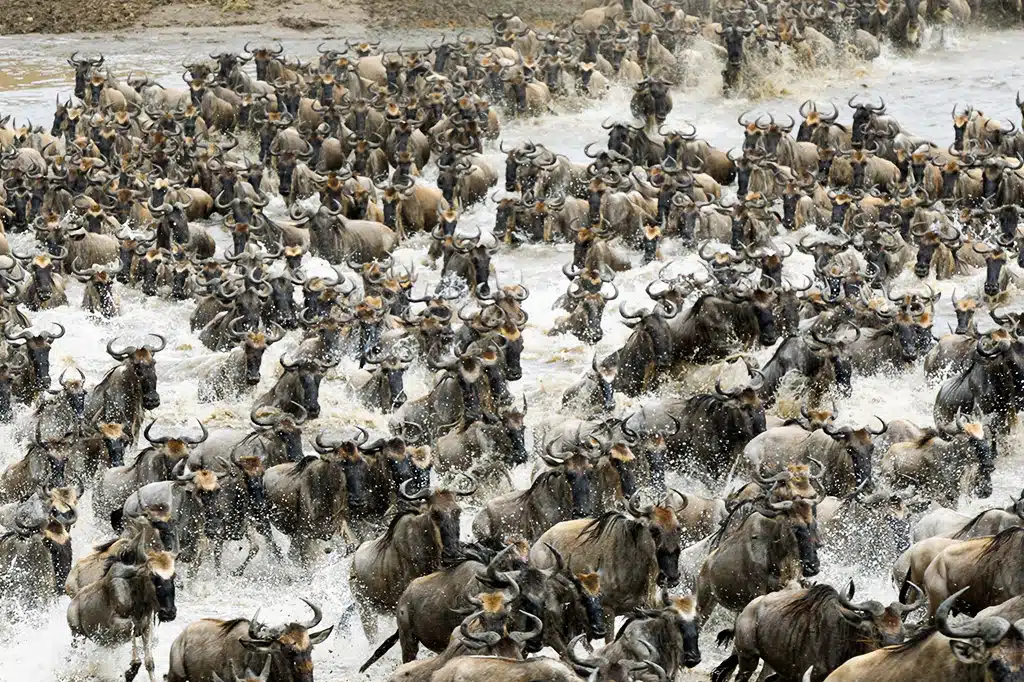
The Great Migration is the Serengeti’s headline act – more than a million wildebeest and hundreds of thousands of zebra and gazelle cycling through the ecosystem year-round. For month-by-month timing, read our Serengeti migration best month guide.
Wildebeest calving in the southern plains (January-February) draws cheetahs and lions. Grumeti and Mara river crossings (June-October) bring crocodiles, vultures, and dramatic predator action. Even outside peak migration, resident herds and antelope – topi, hartebeest, impala, Thomson’s and Grant’s gazelle – keep the plains alive.
Predators and Scavengers Worth Watching
- Spotted hyena – highly social; often heard whooping at night; follow migration herds closely.
- Jackals – side-striped and golden jackals work the edges of kills and camps.
- Crocodiles – Nile crocodiles patrol Mara and Grumeti crossings during migration season.
- Vultures – white-backed and lappet-faced vultures signal a kill long before you arrive.
Birds in the Serengeti: quick guide
Birds in the Serengeti number 500+ species. Even non-birders notice lilac-breasted rollers, ostriches on the plains, and vultures circling kills. Green season (November-May) brings migrants; dry season still delivers raptors and waterbirds at hippo pools. Start with our kori bustard guide – Tanzania’s heaviest flying bird – then browse the full Serengeti wildlife gallery for every bird species page.
Birdlife in the Serengeti
Serengeti records more than 500 bird species. Raptors dominate the skies – Serengeti martial eagle guide, Serengeti bateleur guide, Serengeti secretary bird guide – while Serengeti ostrich guide stride the plains and Serengeti lilac-breasted roller guide perch on acacia branches. Birding peaks during green season (November-May) when migrants arrive, but colorful residents like Serengeti superb starling guide and Serengeti vulturine guineafowl guide show well year-round. Browse photos and short notes for every species on our Serengeti wildlife gallery.
Where to See Serengeti Animals by Region
| Region | Best for | Season notes |
|---|---|---|
| Southern Serengeti (Ndutu) | Calving, cheetah, lion | Jan-Mar peak for newborn wildebeest |
| Central Seronera | Big cats, general game | Strong year-round |
| Western Corridor | Grumeti crossings, hippo | May-Jul river action |
| Northern Serengeti (Kogatende) | Mara crossings, elephant | Jul-Oct migration peak |
Planning your camp location matters as much as the number of days. A northern base in August and a southern base in February are completely different safaris. Our Northern Circuit destination guide helps connect Serengeti with Ngorongoro, Tarangire, and Lake Manyara.
Best Time for Serengeti Wildlife Viewing
Dry season (June-October) offers easier driving, thinner vegetation, and animals concentrated near water. Green season (November-May) brings dramatic skies, newborn antelope, and excellent birding with fewer vehicles. Neither is wrong – match the season to the animals you care about most.
What I Loved Most on Serengeti Game Drives
The moment that stays with me is quieter than a river crossing: early morning in Seronera, engine off, watching a lion pride stretch in golden light while zebra alarm calls ripple across the plain. No rush. No crowd of vehicles. Just the feeling that the savanna was waking up and we were guests in it.
That is why guide quality matters. A good guide reads wind direction, knows when to wait, and respects park rules so animals do not feel harassed. At Zamadam Adventure, based in Arusha, we route private safaris around what you want to see – migration, Big Five, photography, or family-friendly pacing.
Ready to match animals to an itinerary? Browse our 8-day Wildebeest Migration Safari or 7-day Tanzania Safari Package, or contact us for a custom plan.
My Honest Experience
Serengeti exceeded my expectations for sheer volume of wildlife, but it also taught me patience. Leopards do not appear on command. River crossings may take hours of waiting – or not happen at all the day you are there. Travelers who treat each drive as its own story, not a checklist, tend to enjoy the park most.
Who is this best for? Anyone who loves open landscapes and classic African wildlife. Photographers, first-time safari travelers, and families with curious kids all find something here. If you prefer dense forest elephants only, add Tarangire. If you want crater density in one day, combine with Ngorongoro. Serengeti is the wide-screen version of Tanzania.
Conservation and Responsible Viewing
Tanzania protects roughly a third of its land through national parks and conservation areas. Tourism fees fund rangers, anti-poaching patrols, and community programs. Keep distance from animals, stay on designated tracks, and never encourage drivers to crowd a sighting. Ethical viewing protects the same Serengeti animals you came to see. Learn more from TANAPA and UNESCO about Serengeti’s World Heritage status.
Serengeti Species Guide Library
This article covers planning and ecology. For species-by-species identification, behaviour, and where to see each animal, use our dedicated guides below – or open the visual Serengeti wildlife gallery to browse every entry with photos.
Big Five species guides
- Serengeti lion guide
- Serengeti leopard guide
- Serengeti elephant guide
- Serengeti buffalo guide
- Serengeti black rhino guide
Serengeti bird species guides
- Serengeti lilac-breasted roller guide
- Serengeti martial eagle guide
- Serengeti ostrich guide
- Serengeti secretary bird guide
- Serengeti superb starling guide
- Serengeti african fish eagle guide
- Serengeti kori bustard guide
- Serengeti southern ground hornbill guide
- Serengeti vulturine guineafowl guide
- Serengeti bateleur guide
- Serengeti lappet-faced vulture guide
- Serengeti white-backed vulture guide
- Serengeti black-chested snake eagle guide
- Serengeti african harrier hawk guide
- Serengeti black-winged kite guide
- Serengeti african grey hornbill guide
- Serengeti green wood hoopoe guide
- Serengeti hamerkop guide
- Serengeti hadeda ibis guide
- Serengeti african spoonbill guide
- Serengeti african openbill guide
- Serengeti african darter guide
- Serengeti egyptian goose guide
- Serengeti coqui francolin guide
- Serengeti grey-headed kingfisher guide
- Serengeti grey kestrel guide
- Serengeti striped kingfisher guide
- Serengeti marabou stork guide
- Serengeti black-headed heron guide
- Serengeti rufous-naped lark guide
- Serengeti speckled mousebird guide
- Serengeti spotted thick-knee guide
- Serengeti southern masked weaver guide
- Serengeti usambiro barbet guide
Plan your safari around Serengeti wildlife
Once you know which Serengeti animals matter most to you, match trip length and pacing:
- How many days in the Serengeti
- 7 day Tanzania safari itinerary
- Private safari from Arusha for flexible wildlife stops
- Serengeti safari cost
- Tarangire and Lake Manyara for Northern Circuit variety
- Request a wildlife-focused proposal
Frequently Asked Questions
Lions, elephants, wildebeest, zebras, cheetahs, leopards, giraffes, hippos, and buffalo are the most iconic. The Big Five and Great Migration herds define most Serengeti safaris.
Yes. Serengeti is one of the best parks in Africa for Big Five potential. Lion, elephant, and buffalo are common. Leopard and rhino are possible but require luck and the right area.
The Big Nine adds cheetah, giraffe, hippo, and zebra to the traditional Big Five. Serengeti is one of the few places where all nine can be seen on a single game drive.
June to October is best for general visibility and migration crossings. January to February is excellent for calving and predator action in the south. Birding is strongest in green season.
Cheetahs are present but not as numerous as lions. Open plains in the south and east offer good chances, especially during calving season when prey is abundant.
At least two full days in Serengeti is recommended. Three or more days let you explore different regions and improve Big Cat and migration sightings.
Wildebeest dominate the migration, but hundreds of thousands of zebra and gazelle move with them. Predators and scavengers follow the herds across the ecosystem.
Central Seronera is reliable year-round. Southern plains and northern Kogatende are excellent when migration herds pass through. Kopjes often hold resting prides.
Yes, with a reputable operator and park rules followed. Game drives stay inside vehicles. Choose family-friendly lodges and realistic drive times for children.
Independent travel inside the park requires a registered vehicle and guide. Most visitors book organized safaris so logistics, park fees, and camp locations are handled professionally.
Safari Planning Guides
Wildlife is only half the story. These Serengeti planning guides – written from our Arusha team – cover budget, timing, packing, safety, crowds, and conservation so you arrive prepared:
- How Much Does a Serengeti Safari Cost? (2026 Guide)
- How Many Days Do You Need in the Serengeti?
- Best Month for a Tanzania Safari (and Serengeti)
- Serengeti Safari Packing List
- Masai Mara vs Serengeti Safari
- Bathroom on Safari in the Serengeti
- Is the Serengeti Crowded? Wildlife Guide
- Is Tanzania Safari Safe for Americans?
- Serengeti Conservation Threats and How to Help
Pair any guide with our Serengeti wildlife gallery for species deep-dives, then browse all Tanzania trips or contact us when you are ready to book.
Plan Your Serengeti Wildlife Safari
The Serengeti rewards travelers who combine realistic expectations with enough time on the ground. Whether you dream of lions at sunrise, cheetahs on the hunt, or a river crossing you will talk about for decades, the animals are here – wild, moving, and never guaranteed.
Explore all Zamadam Adventure trips, revisit our Tanzania safari tours pillar guide, and request a custom Serengeti itinerary when you are ready to turn this wildlife list into your own story.
Visual gallery: Browse our Serengeti Wildlife Gallery for a card-by-card look at Big Five animals, migration stars, and iconic birds.
Species pages: Serengeti lion, leopard, elephant, buffalo, black rhino.