

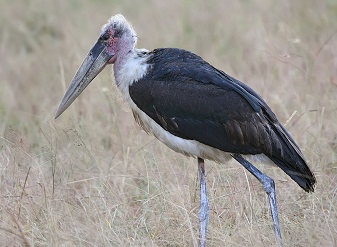
Marabou Stork in the Serengeti
The marabou stork is one of Africa’s largest birds — a towering scavenger with a bald pink head, dangling throat pouch, and enormous wingspan. In Serengeti, marabous are fixtures at predator kills, alongside white-backed and lappet-faced vultures, where they compete for carcass scraps with remarkable patience and bulk.
They are equally at home in wetlands, wading through shallow pans and river margins for fish, frogs, and carrion. Their ungainly appearance on the ground belies graceful soaring on thermals — marabous are among the first large birds visitors notice circling high above the plains.
Huge wingspan
Soars on thermals above the plains
Scavenger
At lion and hyena kills with vultures
Wetland wader
Fish, frogs, and carrion in pans
Year-round
Resident across Serengeti
How to identify a marabou stork
Very large stork with white underparts, dark upper wings and back, and a naked pink head and neck. The dangling pink throat pouch (gular sac) is distinctive in adults. Bill is massive and grey; legs are long and grey-black. In flight, the neck is tucked and wings show a broad span with fingered primaries — silhouette resembles a vulture more than a typical stork.
Juveniles are browner with more feathering on the head. At a kill, marabous stand taller than most vultures and use their bill to tear large pieces of meat. Compare with the African openbill — a much smaller, dark stork with a gap in the bill for snail hunting.
Scavengers at kills and wetlands
Marabou storks follow lions, spotted hyenas, and cheetahs to fresh kills across the Serengeti plains. They arrive on foot and by air, joining white-backed and lappet-faced vultures in the clean-up crew. Their size gives them priority at crowded carcasses — they will bully smaller scavengers away from the best scraps.
Between kills, marabous patrol wetlands, rubbish tips near camps, and river margins. They are opportunistic feeders — fish, frogs, small mammals, and human refuse all feature in their diet. Index every species on the wildlife gallery and read the Serengeti wildlife guide for the full scavenger guild on the Northern Circuit.
With lions, hyenas, and vultures on the plains
Wades in pans and river margins for fish
Soars high — first large bird on the horizon
Opportunistic around lodge waste areas
Marabou storks and the scavenger guild
Serengeti’s scavenger community is one of the most dramatic wildlife spectacles on the planet. When a kill is made, marabou storks converge with white-backed vultures, lappet-faced vultures, and hooded vultures in a hierarchy of size and aggression. Marabous use their height and bill strength to access meat that smaller birds cannot reach.
Watching a kill-site assembly teaches guests about ecosystem recycling — every carcass supports dozens of scavengers within hours. Pair marabou watching with our white-backed vulture guide and lappet-faced vulture guide for the full raptor and scavenger story.
Unlike specialist storks such as the African spoonbill or African openbill, marabous are generalist opportunists — equally likely at a marsh edge or a lion kill.
Where to see marabou storks in Serengeti
Marabou storks are widespread and resident — you can see them on almost any Serengeti drive. The most memorable encounters are at fresh predator kills during the migration, where dozens of scavengers gather within minutes of a lion or hyena finishing a meal.
For wetland marabous, scan the margins of seasonal pans after rains and permanent pools along the Grumeti and Mara corridors. They often stand alongside hadeda ibises and hamerkops — see our hadeda ibis guide for the full wetland bird community.
Follow lions and hyenas — scavengers arrive within minutes
Mara and Grumeti margins — wading and fishing
Scan the sky on hot afternoons — marabous soar with vultures
Safari tips for marabou stork sightings
Stay with a fresh kill — scavengers arrive in waves.
Shoot marabous soaring against the sky at midday thermals.
Combine marabou stops with spoonbills and openbills on the same drive.
Book a 7-day Northern Circuit safari with migration-season time in Serengeti National Park for the best kill-site and scavenger action.
Plan a scavenger and wetland safari in Serengeti
From marabou storks at kills to openbills in marshes, we build private Northern Circuit routes with realistic wildlife stops across every Serengeti habitat.
