

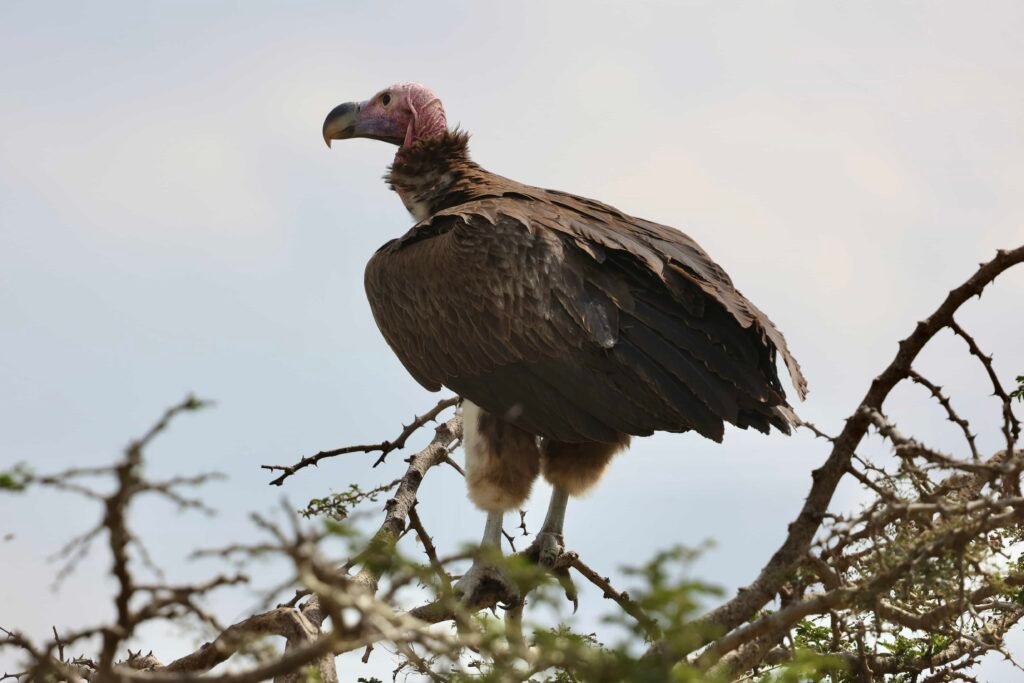
Lappet-faced Vulture in the Serengeti
The lappet-faced vulture is Africa’s largest vulture — a heavy, bare-headed scavenger with pinkish skin folds on the face and enormous wings built for hours of sky patrol. In Serengeti, it dominates carcasses alongside hyenas and smaller vultures.
Seeing one drop from a thermal onto a kill is raw savanna ecology in action. Populations have declined across Africa, which makes every wild Serengeti sighting worth savoring and protecting.
At a fresh kill, lappet-faced vultures often arrive after lighter species but quickly assert dominance with their massive bill — a dramatic hierarchy worth watching from a respectful distance with telephoto glass.
Why vultures matter on the Mara–Serengeti ecosystem
Vultures remove carcasses quickly, limiting disease spread and recycling nutrients into the food web. When large vultures like lappet-faced decline, carcasses persist longer and scavenger dynamics shift — a hidden cost to the entire savanna system.
Serengeti remains one of East Africa’s strongholds for vulture watching. Learn more in our Serengeti wildlife guide and explore every species on the wildlife gallery.
How to identify a lappet-faced vulture
Adults are huge with dark brown plumage, a bare pink or reddish head, and fleshy lappets on the sides of the neck. The bill is powerful — built to tear tough hide that smaller vultures cannot open. In flight, wings are broad with pale panels underneath; the silhouette dwarfs most other Serengeti raptors except martial eagle at distance.
Juveniles are darker and fluffier on the head. Do not confuse with white-backed or Rüppell’s vultures — lappet-faced is bulkier with a heavier bill and dominates at carcasses, often bullying smaller species aside.
At distance, the massive bulk and slow wingbeats separate lappet-faced vultures from bateleurs sharing the same thermal — size is the first clue before bill detail resolves.
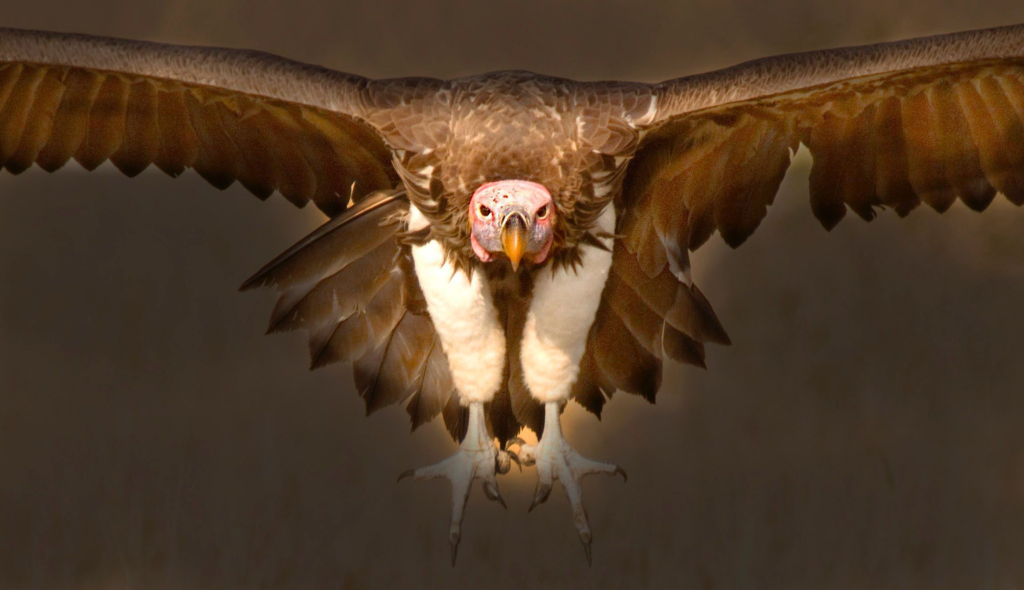
Ecology at a glance
Carrion specialist
Finds kills by sight from high thermals, then descends with smaller vultures in attendance.
Dominant scavenger
Often controls access to carcasses with aggressive displays and powerful bill.
Open country
Prefers savanna and woodland edges where ungulate mortality is highest.
Long-lived
Slow reproduction — population recovery takes decades without threats reduced.
Where to see lappet-faced vultures in Serengeti
Scan the sky on long plain drives and watch for gatherings near recent kills — lions, hyenas, or road mortality attract vultures quickly. River corridors and migration crossing zones can produce spectacular scavenger scenes in season.
Dry season concentrates scavengers near remaining water and predictable kill sites along migration routes. Green season still produces thermals — lone birds soaring high often lead you to ground action below.
Plan routes on the Northern Circuit and pair vultures with eagles — see our bateleur guide and martial eagle guide for a full raptor day.
When predators finish feeding, vultures spiral down — wait at a respectful distance.
Unfortunate but reliable — guides report fresh carcass activity on remote tracks.
Keep binoculars ready on open plains — lone birds often lead you to ground action.
Safari tips for lappet-faced vulture sightings
Follow lion and cheetah sightings — vultures often arrive within minutes.
Never drive onto a kill circle; use telephoto glass and let birds feed undisturbed.
Note size differences between lappet-faced and white-backed vultures at the same carcass.
See our white-backed vulture guide for comparison. Book a 7-day Northern Circuit safari with raptor and scavenger time in Serengeti National Park.
Lappet-faced vultures need open sky and carcass ecology — tell your guide if scavenger guilds interest you. Index every raptor on the wildlife gallery and read our Serengeti wildlife guide. Migration season produces the most dramatic kill-site gatherings on the Northern Circuit.
Plan a Serengeti safari with lappet-faced vultures on the route
We build private itineraries from Arusha with time for ecology, photography, and the full scavenger guild of the Serengeti.
Tell us if vulture hierarchy at kills interests you — we pace predator sightings with ethical viewing distance and time for the full scavenger guild to assemble on the Northern Circuit.
