

White-backed Vulture in the Serengeti
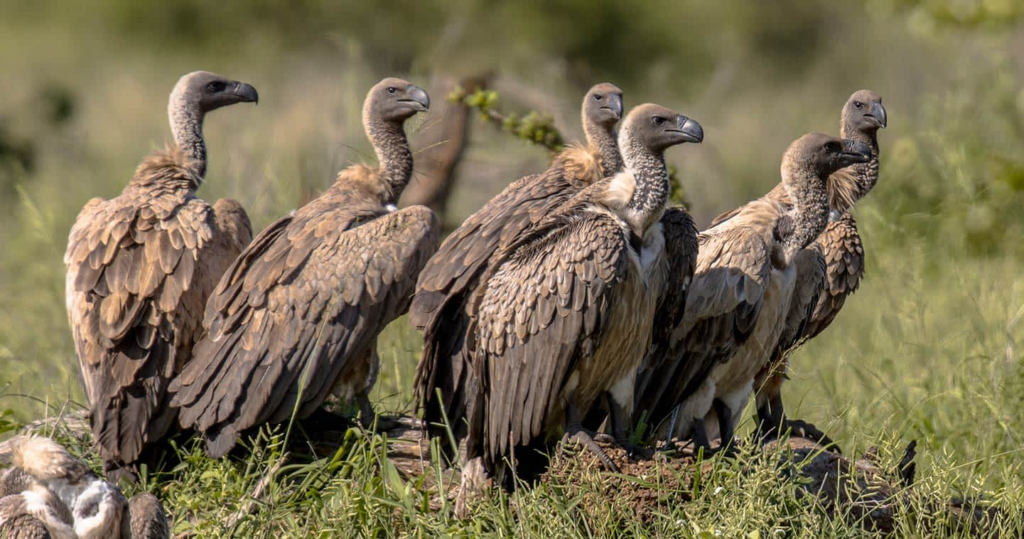
The white-backed vulture is the classic African sky spiral — a medium-large scavenger with dark plumage and a contrasting white lower back visible in flight. In Serengeti, flocks can appear within minutes of any kill, painting the thermals above the plains.
During migration season, casualty rates on river crossings and long plain drives can produce spectacular kettles — one of the most underrated sky shows on a classic Big Five itinerary.
90–100 cm
Wingspan adult
Gregarious
Flocks at kills & thermals
Carrion feeder
Cleans plains fast
Declining
Conservation concern
Where white-backed vultures feed in Serengeti
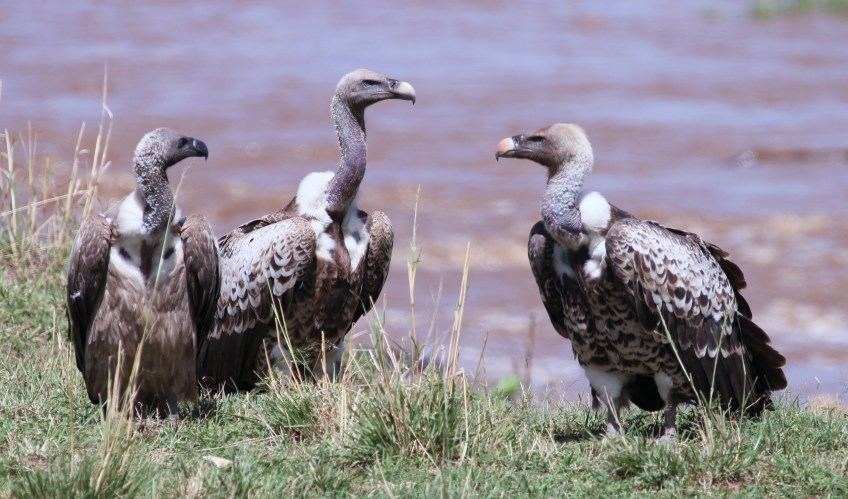
Anywhere ungulates die — lion kills, migration casualties, drought losses, and road incidents. White-backed vultures arrive in numbers, spiraling down with Rüppell’s and hooded vultures while larger lappet-faced birds dominate the carcass center.
Open plains, woodland edges, and river valleys all produce sightings. Index species on the wildlife gallery and read the Serengeti wildlife guide for seasonal kill dynamics on the Northern Circuit.
Flight and feeding behavior
White-backed vultures soar on thermals with wings held flat, rocking less than bateleurs. At carcasses they feed on soft tissue and wait for larger vultures or predators to open tough hides. Flocks communicate through posture and spacing — dominant birds feed first while others circle nearby trees.
During the Great Migration, casualty rates rise and vulture numbers spike — one of the most dramatic scavenger spectacles in world wildlife tourism. Even outside migration, any predator kill on the plains can draw a kettle of birds visible from kilometers away.
Migration season brings the most dramatic vulture gatherings — plan your route using our Serengeti wildlife guide. Scan thermals on every long plain drive.
Dozens may circle one invisible column of warm air — scan sky when mammals are active below.
Several vulture species often share a kill — learn bill size and back pattern to separate them.
Evenings bring vultures to tall trees near water — ask guides about known roost sites.
How to identify a white-backed vulture
Adults are brown-black with a white lower back and rump patch obvious when wings are open. The head is bare and dark; the neck ruff is pale. In flight from below, white back contrasts with dark flight feathers — the classic field mark at distance.
Juveniles are darker overall with less white. Do not confuse with Rüppell’s vulture (pale line on underwing) or hooded vulture (smaller, pale hood). At a kill, white-backed is medium-sized — smaller than lappet-faced, bulkier than hooded.
Watch how birds queue at carcasses: social order is visible in who feeds, who waits in trees, and who spirals overhead. Conservation status is critical across Africa; Serengeti sightings support awareness of how protected areas sustain scavenger guilds that farmland cannot.
Migration season increases kettle size dramatically — a single lion kill on the southern plains can draw dozens of white-backed vultures visible from several kilometres away on clear mornings.
Safari tips for white-backed vulture sightings
Lion and cheetah sightings often lead to vulture gatherings within the hour.
Hot, calm mornings produce the best sky spirals over open plains.
Never approach feeding vultures — disturbance wastes energy they need to survive.
Pair with our lappet-faced vulture guide. Book a 7-day Northern Circuit safari through Serengeti National Park.
Scan thermals on long plain drives — vulture kettles often appear before you see the carcass below.
White-backed vultures are the backbone of Serengeti scavenger ecology. Plan scavenger days on the Northern Circuit using our Serengeti wildlife guide.
Plan a Serengeti safari with white-backed vultures on the route
From scavenger ecology to Big Five action, we weave the full Serengeti story into every private safari from Arusha.
Vulture kettles over the plains are one of the park’s most dramatic sky shows — ask for migration-season routes when scavenger activity peaks on the Northern Circuit.
