

Bateleur in the Serengeti
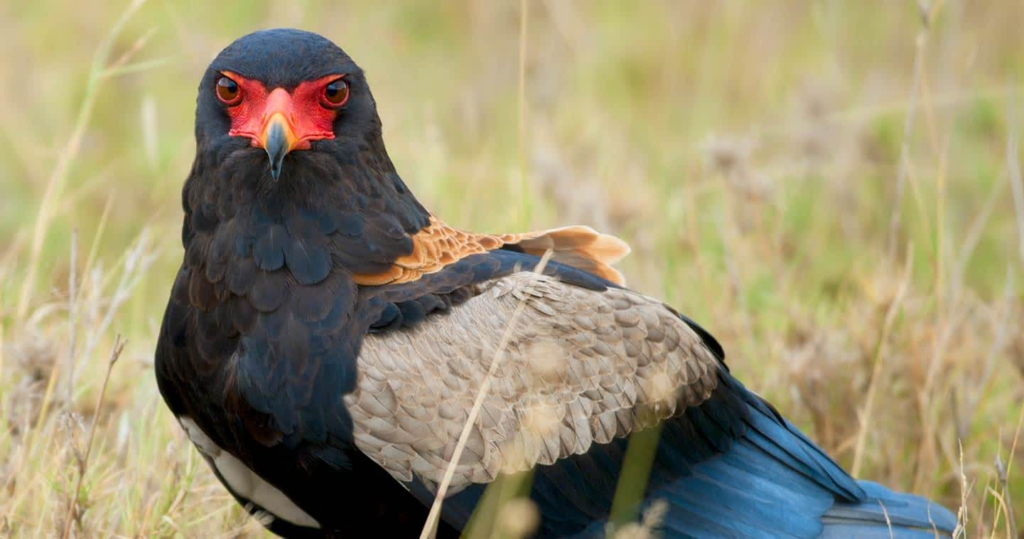
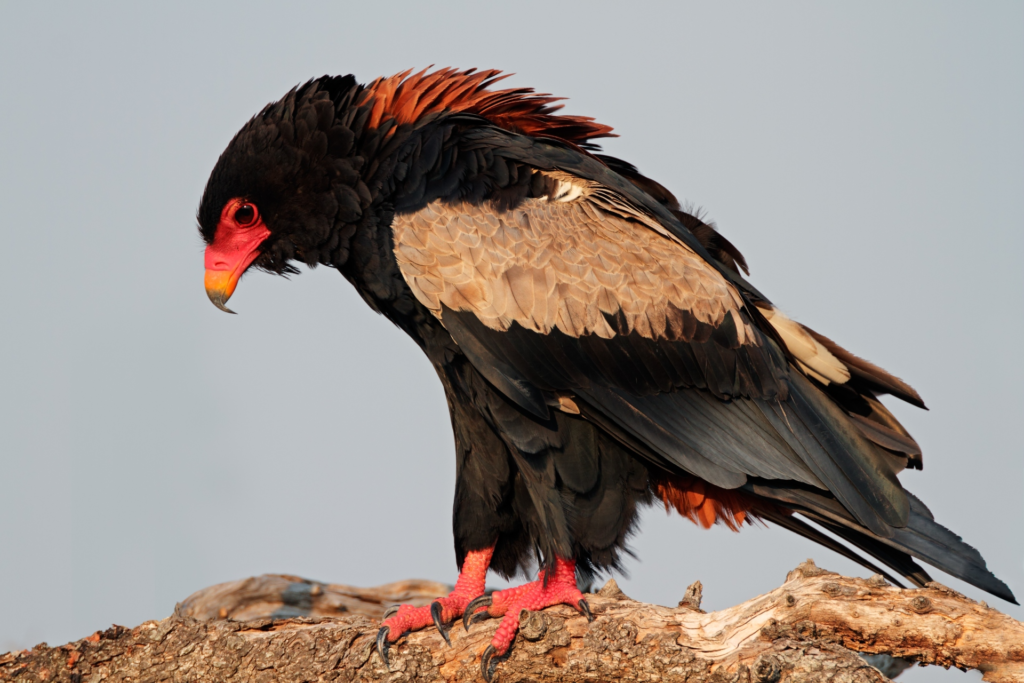
The bateleur is Africa’s most graphic short-tailed eagle — jet-black body, crimson face and legs, and wings that catch the sun like stained glass. Watching one tip and rock across the Serengeti thermals is one of safari’s purest aerial moments.
Adults are unmistakable in flight; juveniles take years to acquire full color. Any serious raptor day in Serengeti should include time scanning open sky above woodland edges and river corridors.
Assign one guest to sky-watch throughout long plain drives — juvenile bateleurs are easy to miss when the vehicle focuses on mammals below.
55–70 cm
Adult length
Rocking flight
Deep wing beats, tilting profile
Open country
Woodland edges & plains
Year-round
Resident across Serengeti
How to identify a bateleur in flight
Adults show a black head, body, and wings with grey secondary patches visible from below. The face and feet are bright red; the bill is short and hooked. The tail is extremely short — the silhouette is compact and triangular, unlike the long tails of snake eagles or the broad wings of vultures.
Flight is distinctive: alternating flaps and glides with wings held in a slight dihedral, rocking side to side as if balancing. Juveniles are brown with longer tail feathers; they can take four to six years to reach adult plumage.
Do not confuse with black chested snake eagle (longer tail, paler underwings) or dark morph booted eagle (different jizz and wing shape). When perched, the deep chest and upright stance separate bateleurs from most other medium raptors.
Hunting and soaring behavior
Bateleurs spend hours aloft on thermals, dropping low to snatch small mammals, birds, reptiles, and carrion. They are agile for their size and will hawk insects in flight. Pairs defend large territories and are often seen alone or in twos rather than in flocks.
Mid-morning thermals after the ground has warmed are the best window for sky-watching. Pair bateleurs with other raptors on the same route — see our martial eagle guide and African fish eagle guide for a complete Serengeti raptor set.
Circle above woodland edges where warm air rises — bateleurs rarely flap for long distances.
Check every dark silhouette — adult bateleurs are small in the sky but distinctive when rocking.
Also drops from low perches onto prey at waterholes and clearing edges.
Where to see bateleurs in Serengeti
Any open habitat with thermals works — central Seronera, southern plains, western corridor woodlands, and river valleys. They cross roads at height but also hunt along tree lines bordering grassland.
Juveniles take years to develop full adult plumage — look for shorter tails and less red on the face. Bateleurs often share thermals with vultures; see our wildlife gallery for the full raptor set.
Index every species on the wildlife gallery and use our Serengeti wildlife guide for seasonal context on the Northern Circuit.
After 9 a.m. thermals lift bateleurs — keep binoculars ready during long plain crossings.
Where acacia meets open grass — perch hunts and low soaring passes.
Grumeti and Mara valleys combine raptors, vultures, and fish eagles in one drive.
Safari tips for bateleur sightings
Assign one person to scan sky while others watch mammals — raptors are easy to miss.
Shoot when the bird rocks against bright cloud — red legs and face pop on adults.
Link river stops with open plain drives on a full birding day.
Compare with other Serengeti raptors in our martial eagle guide and African fish eagle guide. Book a 7-day Northern Circuit safari with sky-watching time in Serengeti National Park.
Keep binoculars ready on long plain drives — rocking flight is often visible before plumage details resolve.
Bateleurs are among the most aerial of Serengeti raptors — assign one guest to sky-watch on every long plain crossing. Plan raptor days using our Serengeti wildlife guide and wildlife gallery.
Plan a Serengeti safari with bateleurs on the route
From rocking eagles to river raptors, we design private safaris from Arusha with sky-watching built into every game-drive day.
Ask for mid-morning plain crossings when thermals lift bateleurs — one of the easiest Serengeti raptors to spot once you know the rocking flight silhouette.
