

African Fish Eagle in the Serengeti
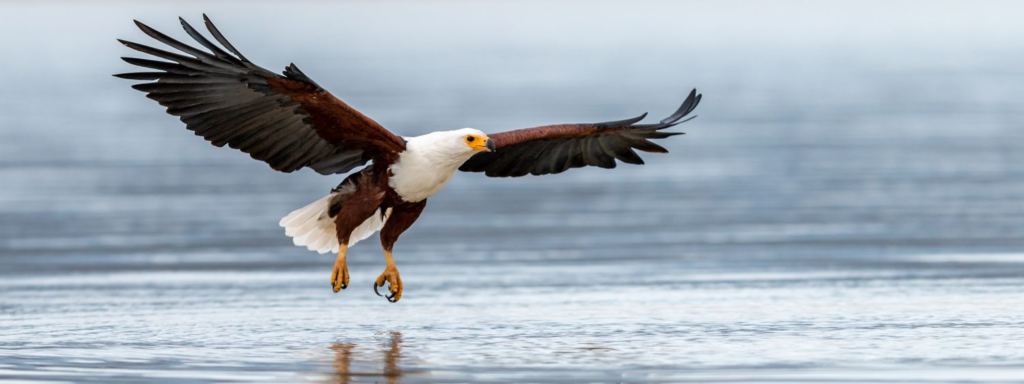
The unmistakable call of Africa — a ringing kyow-kyow-kyow over rivers and marshes. White head, chestnut belly, and bold black wings make the fish eagle one of the Serengeti’s most iconic raptors.
Pairs hold territories along permanent water, perching on dead snags and tall figs where they watch for fish near the surface. Their duetting calls at dawn are often the first bird sound guests hear from riverside camps on the western corridor.
Fish eagles are a reliable highlight on any wetland loop — combine them with waders, storks, and smaller raptors indexed on our wildlife gallery.
Resident pairs along western corridor rivers are often visible from camp decks — request riverside accommodation when fish eagles are a photography priority on your Serengeti itinerary.
70–90 cm
Wingspan adult
Year-round
Along permanent water
Fish hunter
Dives from perch
Iconic call
Heard at dawn & dusk
How to identify an African fish eagle
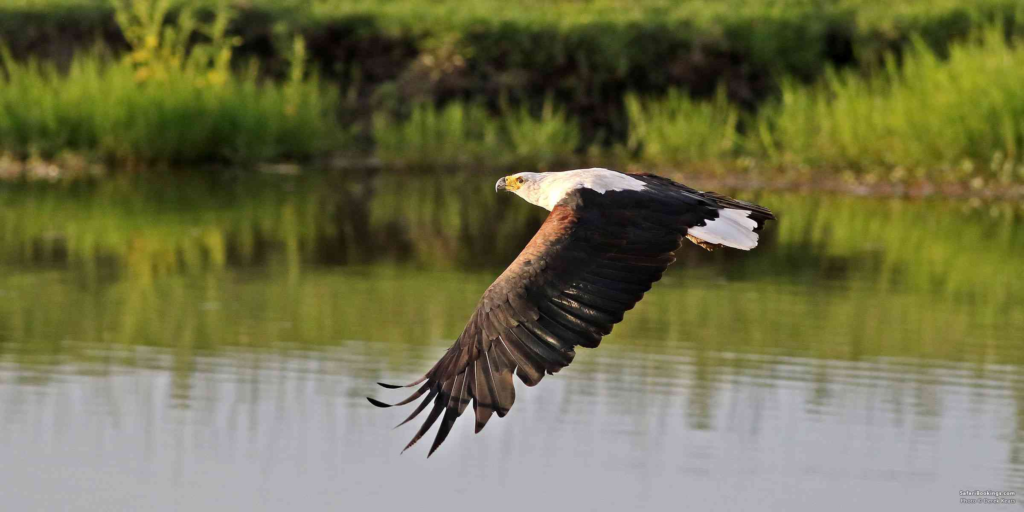
Adults show a snow-white head and tail, chestnut belly, and black wings and back. The massive yellow bill and bare yellow face are unmistakable in good light. In flight, look for broad wings and a short white tail.
Juveniles are mottled brown with pale streaking — they take four to five years to reach full adult plumage. Do not confuse with palm-nut vultures near water; fish eagles have a cleaner white hood and heavier build.
When perched, the chestnut breast contrasts sharply with the white head — a field mark visible at long range across the Mara and Grumeti rivers.
Where fish eagles hunt in Serengeti
Scan tall trees and dead snags along the Grumeti, Mara, and smaller seasonal rivers. Permanent pools in the central Seronera valley and western corridor woodlands hold pairs year-round.
Green season floods create temporary fishing pools far from main rivers — eagles follow receding waterlines as fish become trapped in shrinking channels. Dry season concentrates hunting along sandbars and slow bends where water remains.
Plan routes on the Northern Circuit and browse every species on the wildlife gallery. Full park context in our Serengeti wildlife guide.
Ask for river camp nights when fish eagles are a priority — the dawn call is one of Serengeti’s signature sounds. Bridge crossings are underrated stakeouts.
Quick field notes
Dead trees and tall figs overlooking slow water and sandbanks.
Watches from a perch, then drops feet-first to snatch fish near the surface.
Duets reinforce territory — listen at first light near camp.
Use binoculars on river bends — eagles often sit motionless for long periods.
Western corridor river crossings and Grumeti camps offer reliable sightings.
Shoot when the bird launches — white head and tail pop against dark water.
Safari tips for fish eagle sightings
Pairs call from perches at first light — start game drives early near water.
Lodges on the Grumeti and Mara often have resident pairs visible from the deck.
Combine fish eagles with martial eagles on the same birding morning.
See our martial eagle guide and superb starling guide. Ask for river stops on a 7-day Northern Circuit safari.
Bridge crossings and camp decks are underrated fish-eagle stakeouts — pause even when mammals are not in view.
The fish eagle call is one of Africa’s signature sounds — request a camp with river frontage when eagles are a priority. Index waterbirds on the wildlife gallery and read seasonal river notes in our Serengeti wildlife guide on the Northern Circuit.
Juvenile fish eagles hunt less efficiently than adults — watch for mottled brown birds on the same perches as fully white-headed pairs along the Grumeti and Mara.
Plan a Serengeti safari with fish eagles on the route
From river perches to open plains, we build birding and wildlife days around the waterholes and woodlands you want to see.
Ask for Grumeti or Mara camp nights when fish eagles are a priority — hearing the call at dawn is part of the Serengeti experience. Browse the wildlife gallery and plan your route on the Northern Circuit.
