

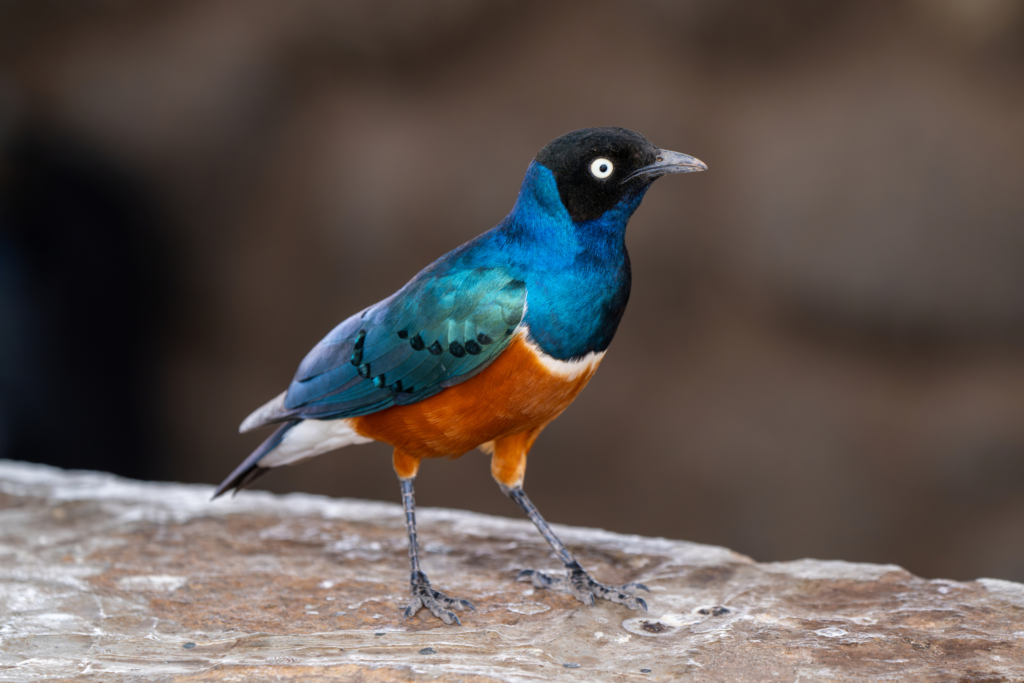
Superb Starling in the Serengeti
Glossy blue-green plumage, a bright yellow eye, and fearless attitude make the superb starling one of the most photographed birds at Serengeti camps and picnic sites. They forage in noisy groups on the ground and call from acacia tops at dawn.
Unlike shy forest starlings, superb starlings have adapted to safari infrastructure — lodge lawns, picnic tables, and vehicle turnarounds are reliable stakeouts. Their metallic sheen catches low morning light, making them a favourite for quick portraits between big-game sightings.
Resident year-round across the Northern Circuit, starlings appear on almost every Serengeti game drive. Index every species on the wildlife gallery before you travel.
Superb starlings are cooperative breeders in some populations — family groups chatter together at camp and along acacia belts, giving photographers multiple angles on the same iridescent plumage without a specialist birding drive.
Year-round
On every Northern Circuit route
Social
Forages in chattering groups
Camp regular
Lodge lawns & picnic sites
Iridescent
Blue-green sheen in sunlight
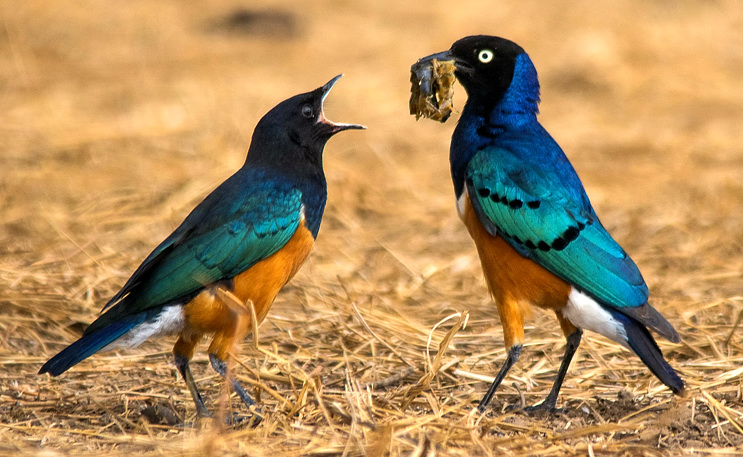
How to identify a superb starling
Look for a compact starling with a long tail, white underparts, and a dark cap. The eye is bright yellow; wings flash metallic blue-green in direct sun. Juveniles are duller brown with a dark eye.
Do not confuse with greater blue-eared starlings in mixed flocks — superb starlings are smaller and show cleaner white bellies.
In flight, the tail is moderately long and wingbeats are quick and direct. On the ground, watch for head-bobbing while foraging and aggressive chases when a rival approaches a food patch near camp.
Where superb starlings live in Serengeti
Common from Seronera to the southern plains wherever acacia woodland meets open grass. They follow safari vehicles for insects, perch on lodge fences, and nest in tree holes near camps.
Green season brings insect booms after rain — starlings work open ground in larger groups, often alongside rollers and weavers. Dry season concentrates birds near permanent water and shaded camp clearings at midday.
Starlings are ideal camp birds — they often greet guests at lodge gates and picnic sites across the Northern Circuit.
Woodland margins and scattered trees along game-drive tracks.
Lodge lawns, picnic sites, and vehicle turnarounds at midday.
Beetles, seeds, and scraps — often in mixed-species flocks.
Loud whistles and clicks from treetops after first light.
Safari tips for superb starling sightings
Starlings gather near camp tables and fire pits at dawn — keep binoculars ready.
Slow near acacia shade; birds often hop along track margins for disturbed insects.
Combine with rollers on the same route for a full color safari morning.
See our lilac-breasted roller guide. Ask for birding time on a 7-day Northern Circuit safari linking starlings, rollers, and raptors.
Keep binoculars on the breakfast terrace — starlings often arrive before your vehicle departs. Quiet guests get closer portraits than sudden movements toward the flock.
Starlings are ideal entry-level Serengeti birds: approachable, colourful, and present from camp terrace to sunset. Plan the full Northern Circuit with our Serengeti wildlife guide and bookmark the wildlife gallery. Pair with the lilac-breasted roller guide for a colour-rich acacia morning. They follow vehicles for insects on open tracks.
Juveniles lack the full metallic sheen of adults but still show the yellow eye and white belly — useful for teaching children field marks before the vehicle leaves camp.
Superb starlings are among the most approachable Serengeti birds — ideal for camp-lawn photography before your first game drive.
Plan a Serengeti safari with superb starlings on the route
From camp-hopping starlings to eagles in the sky, we weave birding stops into every private safari from Arusha.
We route through Serengeti National Park camps where starlings are daily companions. Tell us your birding priorities on the Northern Circuit — we adjust camp nights and drive pace accordingly.
