

Hadeda Ibis in the Serengeti
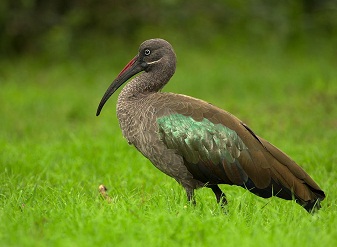
The hadeda ibis is a large, noisy wader with iridescent wing patches and a distinctive loud ha-ha-ha-dah call that carries across camp at dawn. In Serengeti they forage on lawns, firebreaks, and wetland edges — often the first bird guests hear each morning.
Despite their suburban familiarity in East African towns, hadedas are a genuine Serengeti species — common at lodge grounds, picnic sites, and short-grass plains where they probe for worms, grubs, and small invertebrates.
Green season softens soil across firebreaks and camp lawns — hadedas probe deeper then, often in loose flocks that tolerate quiet observers with a camera at breakfast time.
Loud call
Ha-ha-ha-dah at dawn
Large wader
Grey-brown with iridescent wings
Lawn forager
Probes short grass for invertebrates
Year-round
Common across Serengeti
How to identify a hadeda ibis
Large grey-brown ibis with a long decurved bill and broad wings showing iridescent green-purple patches in flight. The call is the best field mark — a raucous ha-ha-ha-dah, often given in flight at dawn and dusk.
On the ground, hadedas walk deliberately with head bobbing, probing soft soil for earthworms and grubs. In flight they show a white rump patch and heavy wingbeats. Juveniles are duller with less iridescence.
Index every species on the wildlife gallery and read the Serengeti wildlife guide for seasonal birding on the Northern Circuit.
Dawn chorus and daily rhythm
Hadedas are most vocal at first light — their calls echo across Seronera camp, picnic sites, and lodge lawns before game drives depart. During the day they forage in loose flocks on short grass, probing deeply with their long bills.
They also visit wetland edges alongside hamerkops and other waders, though hadedas prefer open lawns and firebreaks. At roost they gather in trees near water — scan riverside acacia at dusk for settling flocks.
Pair hadeda watching with woodland species like the African grey hornbill for a full morning bird list before the main mammal drive.
Where hadedas live in Serengeti
Seronera and northern camps — dawn calls before breakfast
Mown edges along tracks attract probing flocks
River edges and seasonal pools at dusk roost
Hadedas are one of the easiest Serengeti birds to see — but photographing their iridescent wings in flight takes patience. Step outside at dawn with coffee and listen for the first calls overhead.
They tolerate lodge activity and often feed within metres of picnic tables — ideal for guests who want bird photos without a specialist drive.
Safari tips for hadeda ibis sightings
Step outside at first light — hadedas call before your game drive starts.
Iridescent wings show best when birds fly toward the sun at low angle.
Short grass around camp is reliable — no long drive required.
Book a 7-day Northern Circuit safari with camp time in Serengeti National Park — hadedas greet you most mornings.
Step outside at first light with coffee — the dawn chorus often starts with hadedas overhead before your vehicle departs.
Hadedas are camp birds as much as bush birds — plan your Northern Circuit with wetland and camp birding using our wildlife gallery. Their loud dawn chorus is one of the easiest Serengeti bird sounds to learn before your first drive.
Iridescent wing patches show best when the bird banks at dawn — position yourself with the sun behind you on lodge lawns for flight shots.
Plan a Serengeti safari with hadedas on the route
From dawn chorus ibises to woodland hoopoes, we balance easy camp birds with big game on every private route from Arusha.
Hadedas are ideal for guests who want rewarding bird photos without a specialist drive — we choose camps with lawns and wetland edges on the Northern Circuit.
