

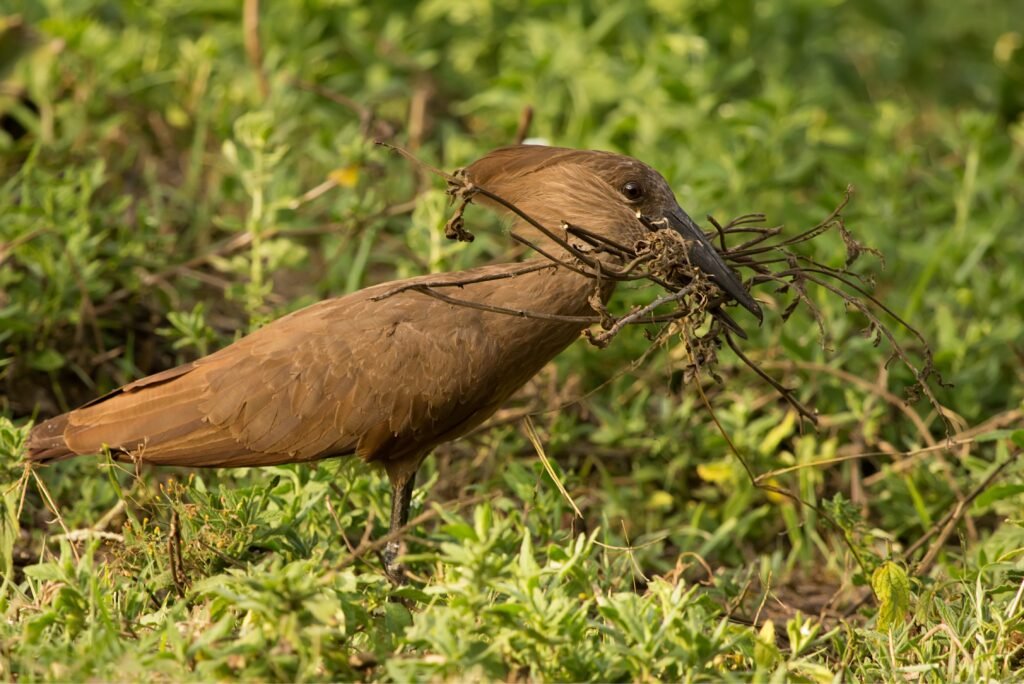
Hamerkop in the Serengeti
The hamerkop is a medium-sized wading bird with a distinctive hammer-shaped crest and rich brown plumage. It is famous for building enormous stick nests — among the largest of any bird — often in the fork of a riverside tree or on a cliff ledge.
In Serengeti, hamerkops are found along rivers, marshes, and waterholes where they hunt frogs, fish, and aquatic invertebrates. Their hunched posture and crest silhouette make them easy to recognise even at distance.
Massive stick nests are landmarks on riverside trees — scan forked branches above the Mara and Grumeti even when no bird is visible; pairs reuse platforms for years and often hunt nearby.
Hamerkop at a glance
Distinctive backward-swept crest gives the bird its name
Stick nests can weigh over 50 kg and last for years
Frogs, fish, and aquatic invertebrates in shallow water
Mara, Grumeti, and seasonal pools across Serengeti
How to identify a hamerkop
Medium brown wader with a long neck, dagger bill, and prominent hammer-shaped crest swept backward. Legs are dark; in flight the neck is folded and wings show pale inner panels. Often seen hunched at the water edge or standing on a mudflat.
Do not confuse with juvenile yellow-billed stork or other brown waders — the crest and compact body shape are unique. Pairs may perform a bowing display near the nest site during breeding season.
See also our African fish eagle guide for other wetland raptors along the same river corridors.
Hunting and nesting in Serengeti
Hamerkops stalk slowly through shallow water, jabbing at prey with quick bill strikes. They also hunt from the bank, watching for movement in the mud. Nests are communal efforts — pairs and sometimes helpers add sticks over weeks until the structure dominates the tree crown.
Large nests are often reused by other species — owls, kestrels, and even monitor lizards may occupy abandoned hamerkop structures. Scan riverside trees for bulky stick platforms above the waterline.
Combine hamerkop stops with woodland birds like the green wood hoopoe on drives that mix river corridors and acacia belts.
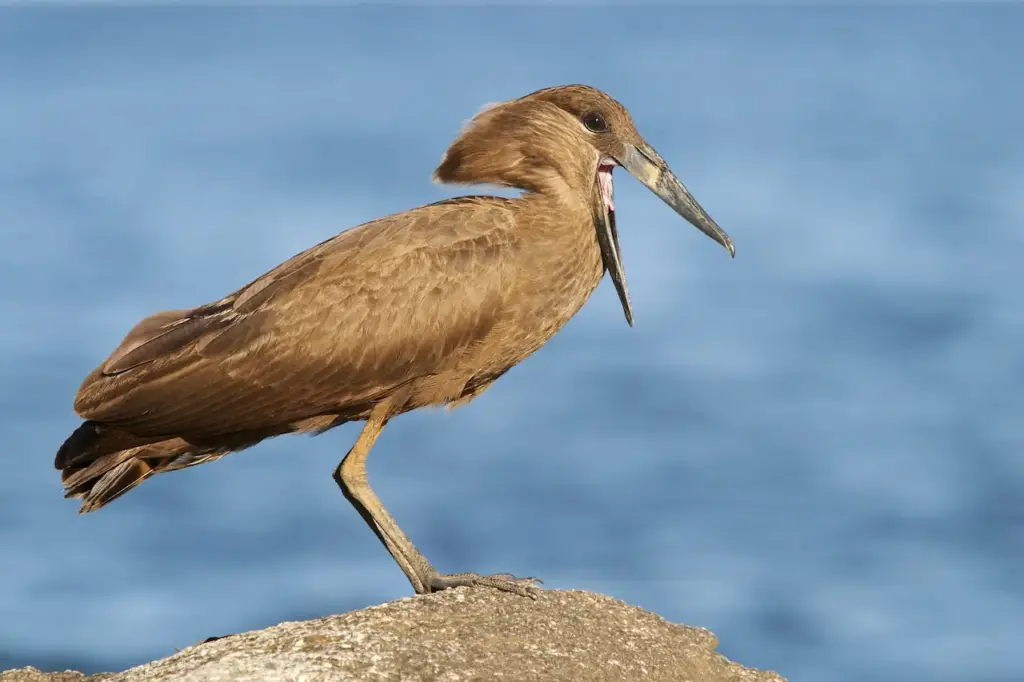
Where to look for hamerkops in Serengeti
Mara and Grumeti bridges — scan banks and overhanging trees.
Bulky stick nests in forked riverside trees are visible year-round.
Hamerkops often feed at water edges before roosting.
Seasonal pools and waterholes near Seronera also attract hamerkops when rivers are low. At dusk they may roost in riverside trees near the nest platform — a bulky stick structure visible from the track year-round.
Browse the wildlife gallery and Serengeti wildlife guide for wetland birding on the Northern Circuit.
Safari tips for hamerkop sightings
Pause at every river crossing and waterhole — hamerkops are sedentary and often overlooked when guests focus on crocodiles and hippos. A 7-day Northern Circuit safari with river time in Serengeti National Park gives the best wetland birding opportunities.
Green season floods expand shallow margins where hamerkops hunt frogs — slow down at seasonal pans as well as main rivers.
Hamerkop nests are landmarks worth scanning from the vehicle. Plan river birding on the Northern Circuit with the wildlife gallery. Green season floods expand shallow margins where hamerkops hunt frogs at seasonal pans.
Bowing displays near nest platforms during breeding season are a memorable behaviour — ask your guide to pause when a pair is active on a riverside tree.
Plan a wetland birding safari in Serengeti
From hamerkops to fish eagles, we build private routes with realistic river stops and woodland birding on the Northern Circuit.
We schedule bridge crossings and camp nights on the Grumeti or Mara when wetland architects like hamerkops share shallow margins with spoonbills and darters at dawn.
