

Green Wood Hoopoe in the Serengeti
Metallic green plumage, a long decurved red bill, and a bubbling chorus make the green wood hoopoe one of the most social birds of Serengeti acacia woodland. Family groups move through branches in tight parties, probing bark for insects and calling constantly to stay in contact.
Unlike the larger ground hornbill, hoopoes stay in the canopy — a flash of iridescent green and white wing patches as they leap between limbs. They are a signature sound of dry woodland drives from Seronera north to Lobo.
Family groups maintain contact with constant bubbling calls — following sound through acacia belts is often faster than scanning branches for metallic green plumage in dappled light.
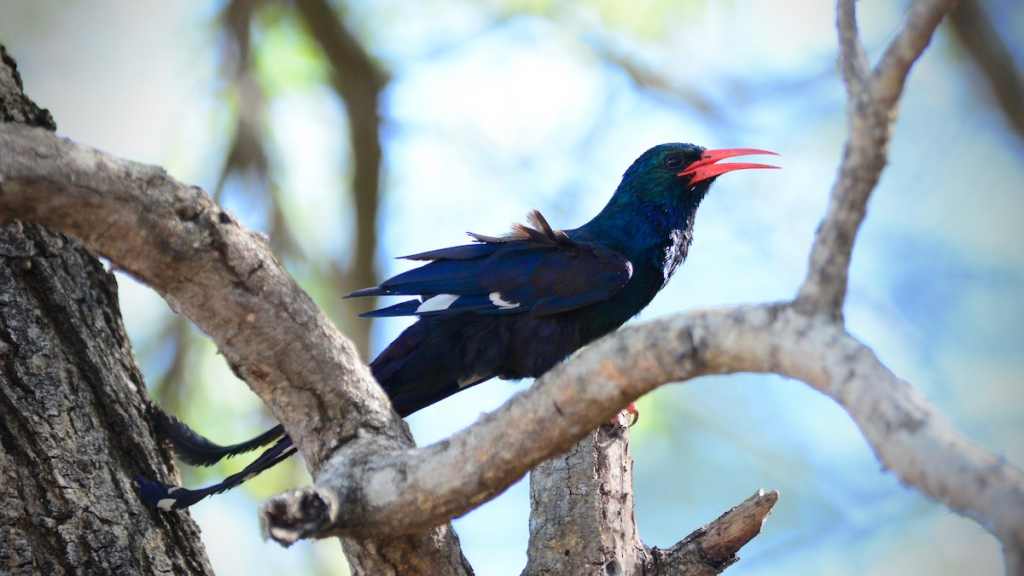
Why hoopoes travel in family groups
Helpers feed young in extended family parties
Bubbling chorus keeps the flock together
Probe trunks and branches for insects
Green wood hoopoes are highly social — you rarely see a lone bird. A party of six to ten individuals may sweep through a single acacia stand in minutes, then vanish into the next grove. This cooperative lifestyle makes them easier to hear than to photograph.
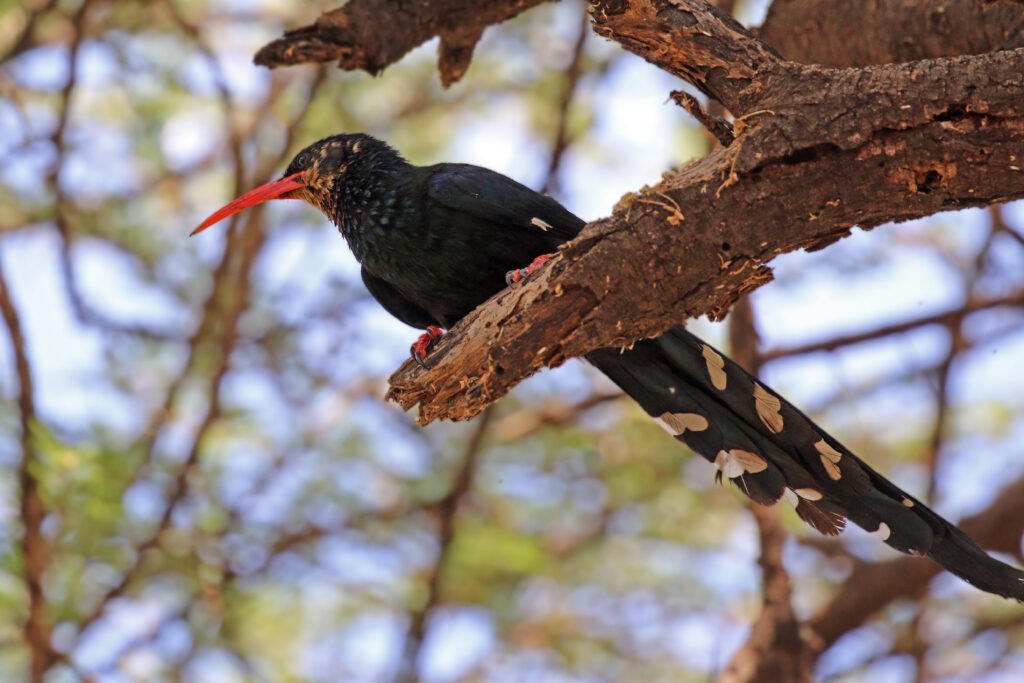
Foraging in Serengeti woodland
Hoopoes cling to vertical trunks and probe deeply into bark crevices for beetles, larvae, and spiders. They also hawk flying insects in short sallies from a perch. The red bill is a key field mark — longer and more curved than the grey hornbill bill.
Pair hoopoe watching with our African grey hornbill guide on the same woodland loop — both species favour acacia but occupy different niches in the canopy.
Listen for the bubbling chorus
The green wood hoopoe call is unmistakable — a rapid, liquid bubbling that carries through dry woodland. Parties call in contact as they move, so following sound is often faster than scanning branches.
Index every species on our wildlife gallery and plan routes with the Serengeti wildlife guide on the Northern Circuit.
Where to see green wood hoopoes
Common in dry acacia woodland and riverine trees from Seronera through northern Serengeti. They need mature trees with bark crevices and cavities for roosting. Edge habitat where woodland meets open grass is productive — hoopoes cross gaps between tree islands in bounding flight.
Morning drives through woodland belts before the heat builds are the most reliable window. Ask your guide to pause when the bubbling call starts — the flock is usually within 50 metres of the track.
Green wood hoopoes are cavity nesters and roost in hollow branches — scan dead limbs in mature acacia for perched parties at first light.
Seronera to Lobo — mature acacia with peeling bark
Fig and riverine trees along seasonal drainage lines
Safari tips for hoopoe sightings
Learn the bubbling call — guides often locate flocks by sound alone.
Follow a party through woodland — they rarely stay on one tree long.
First two hours of daylight when hoopoes are most vocal and active.
Book a 7-day Northern Circuit safari with woodland birding time in Serengeti National Park.
Ask for woodland belt drives before midday heat — hoopoe parties are most vocal in cool morning air.
Green wood hoopoes move in noisy family groups through acacia belts — follow their cackling calls when you lose sight of the flock. Index birds on the wildlife gallery. Morning woodland drives before heat build are the most reliable window.
White wing patches flash on every bounding flight between trees — a useful cue when the metallic green body is hidden in shade.
Plan a woodland birding safari in Serengeti
Explore the full Serengeti wildlife gallery, read our wildlife guide, or see the 7-day Northern Circuit safari itinerary.
Green wood hoopoes reward guests who accept a quiet woodland morning before the plains heat builds — tell us early if cavity-roosting birds are on your list.
