

African Grey Hornbill in the Serengeti
A familiar whistle from acacia canopy — the African grey hornbill is a medium-sized woodland bird with a long curved bill and grey-brown plumage. Males show a black bill with a pale casque; females have a smaller reddish bill tip.
They hop along branches and fly in bounding bursts between trees, feeding on fruit, insects, and small vertebrates. In Serengeti they are a reliable sound of dry woodland from Seronera to northern sectors.
Unlike the larger ground hornbill, grey hornbills stay in the canopy. Their cooperative breeding and cavity-nesting habits make them a rewarding species for photographers patient enough to wait at a fruiting tree.
When acacia is in fruit, grey hornbills gather in small parties — a single productive tree can produce a dozen sightings in one slow woodland pass without leaving the main game-drive circuit.
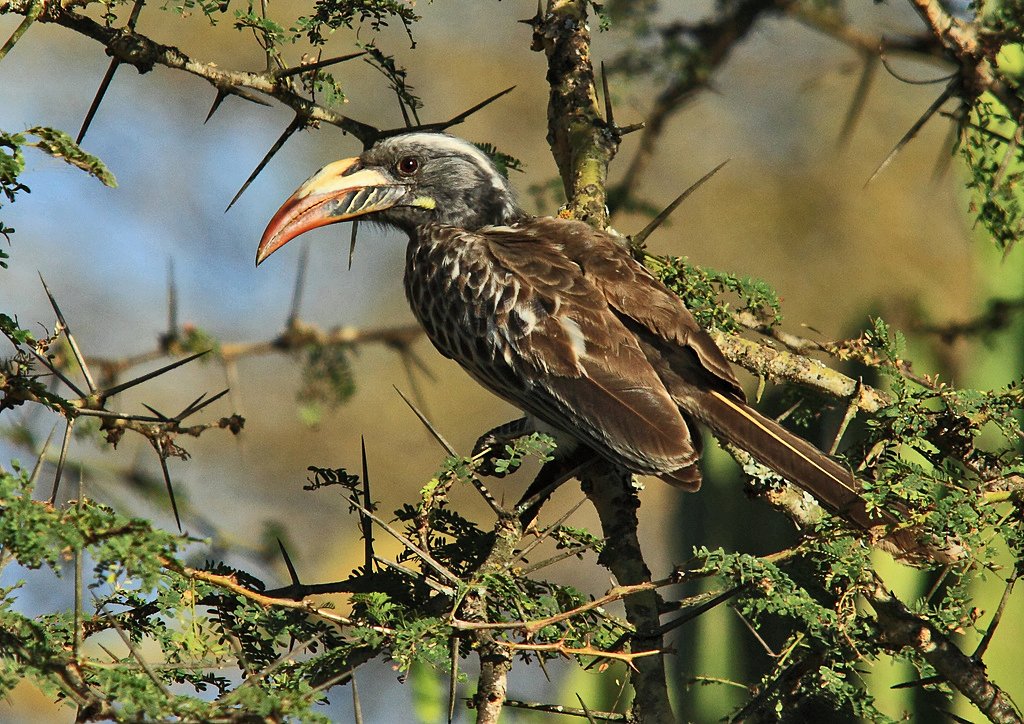
Listen before you look
Grey hornbills are often heard before they are seen — a piping whistle and wing rustle in acacia canopy. Slow driving through woodland with windows down improves detection more than scanning open plains.
Explore the full bird list on our wildlife gallery and read the Serengeti wildlife guide for seasonal woodland birding on the Northern Circuit.
Three steps to a better hornbill sighting
Drive slowly where acacia meets grass — hornbills cross open gaps between trees.
Fig and commiphora fruit draws feeding flocks in dry season.
Listen for duetting whistles — follow sound to perched birds.
Where grey hornbills live in Serengeti
Common in dry acacia woodland and thorn scrub from Seronera north to Lobo. They need tree cavities for nesting — females often seal themselves inside during incubation while males feed them through a narrow slit.
After chicks hatch, the female breaks out and both parents feed the young until they fledge. This sealed-nest behaviour is one of the most distinctive life-history traits among Serengeti birds.
Pair with other woodland species on the same drive — browse the Serengeti bird gallery and our black-winged kite guide for edge habitat variety.
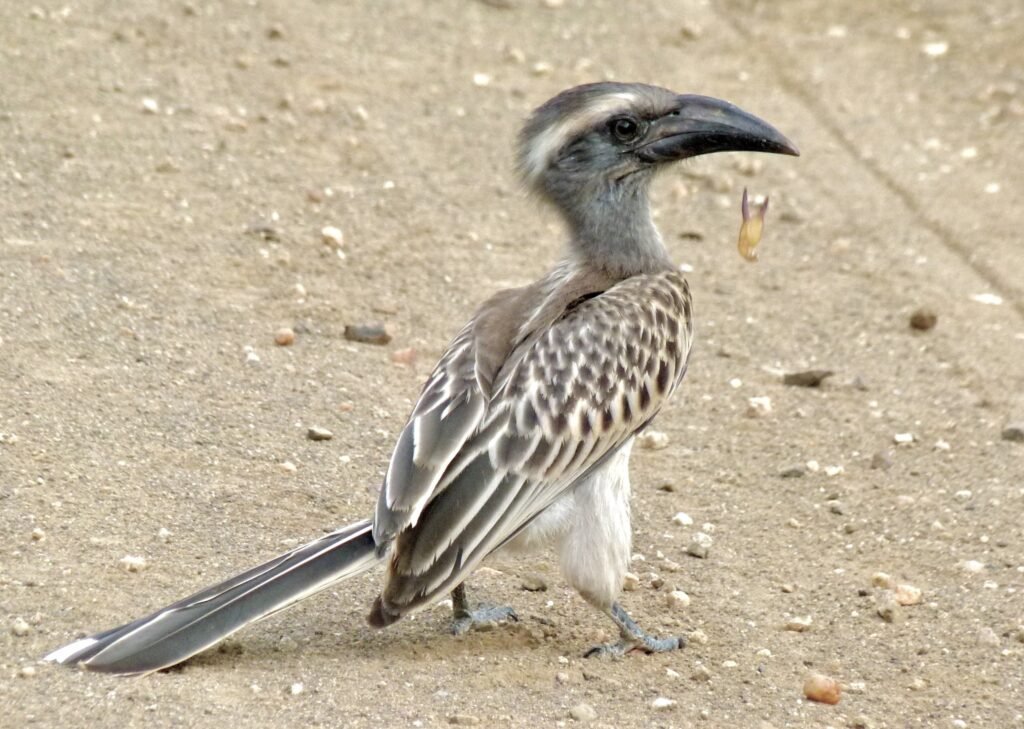
How to identify an African grey hornbill
Grey-brown body, white stripe on outer tail, and long decurved bill. Male: black bill with creamy casque on upper mandible. Female: smaller bill with red tip on lower mandible. In flight, wings show one white bar; flight is floppy and direct between trees.
Listen for the whistling call — a rapid piping that carries through woodland. Pairs often call in duet from separate branches before flying together to the next tree.
Do not confuse with red-billed hornbill in other regions — in Serengeti grey hornbill is the default medium hornbill of acacia woodland. Von der Decken’s hornbill is smaller with a different bill color where ranges meet.
Safari tips for grey hornbill sightings
Learn the whistle — guides often hear hornbills before spotting them.
Low speed under acacia improves canopy views.
Scan holes in tree trunks — sealed nests mean breeding females inside.
Morning woodland drives between mammal sightings are the best window for hornbills — they are vocal when moving between feeding trees. Bring binoculars with good low-light performance under acacia shade.
Book a 7-day Northern Circuit safari with woodland birding time in Serengeti National Park.
Grey hornbills are vocal when commuting between feeding trees — listen for piping calls on slow woodland drives. Browse the wildlife gallery and plan routes on the Northern Circuit. Pairs are resident year-round in acacia belts.
Sealed-nest behaviour means females are invisible for weeks during incubation — ask guides about active nest holes if hornbill ecology interests you.
Plan a Serengeti safari with grey hornbills on the route
We build private woodland birding days from Arusha — hornbills, hoopoes, raptors, and the mammals you came to see, paced realistically across the Northern Circuit.
Grey hornbills are vocal commuters between acacia trees — we build slow woodland margins into every birding day on the Northern Circuit.
