

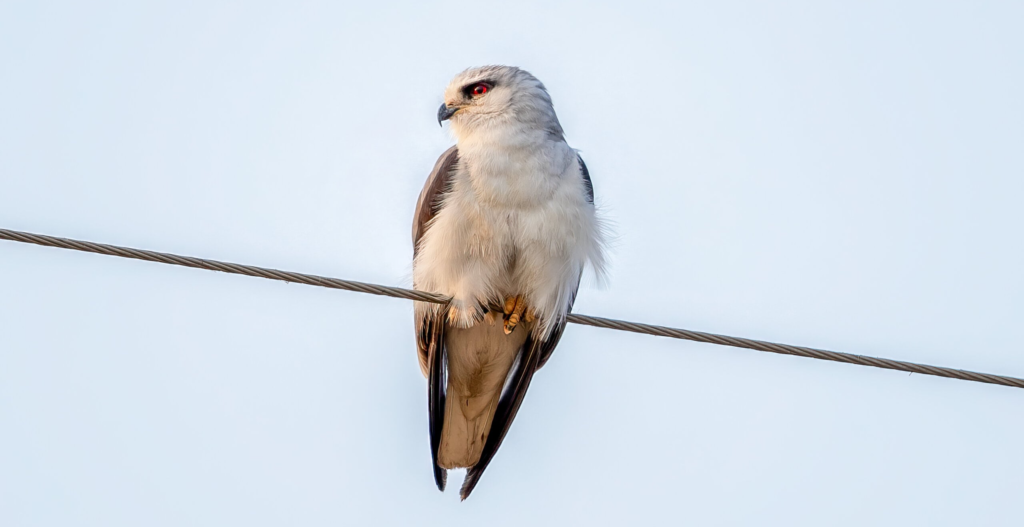
Black-winged Kite in the Serengeti
The black-winged kite is a small, pale raptor famous for hovering like a kestrel — wings beating fast, head fixed on the ground below. In Serengeti it hunts rodents and insects over open grass and burnt ground, often in daylight when other raptors are less active.
Its red eyes, grey-white plumage, and black shoulder patches make it one of the easiest small raptors to identify once you have seen the hover. A good sighting adds variety to any birding list dominated by larger eagles and vultures.
Unlike migrant kestrels, black-winged kites are resident across much of Tanzania. On a typical game drive you may spot one hovering above a wildebeest trail or a freshly burned firebreak where small mammals are exposed.
Hover hunt
Kestrel-style flight
Open grass
Plains & firebreaks
Red eye
Key field mark
Year-round
Resident in Serengeti
How to identify a black-winged kite
Adults are pale grey above and white below with a black shoulder patch and black primaries visible in flight. The eyes are ruby-red; the bill is black. The tail is relatively short; wings are long and pointed for agile hovering.
Juveniles are browner with orange eyes. Do not confuse with black-shouldered kite where ranges overlap — black-winged is paler with a cleaner white head. In behavior, the prolonged hover is the best clue even before plumage details are visible.
Index every species on the wildlife gallery and plan routes with our Serengeti wildlife guide on the Northern Circuit.
Hunting over Serengeti grassland
Kites hover facing the wind, dropping suddenly to seize mice, grasshoppers, and small reptiles. They also hunt from low perches on fence posts and acacia stubs. Pairs are territorial but may hunt in loose groups where prey is abundant after grass fires or migration herds disturb rodents.
During the dry season, short grass along river corridors and around kopjes concentrates rodents — prime kite territory. Guides who know local burn patterns often pause where ash meets green regrowth.
Compare hovering style with the African harrier hawk and sky silhouette with the bateleur on the same raptor route.
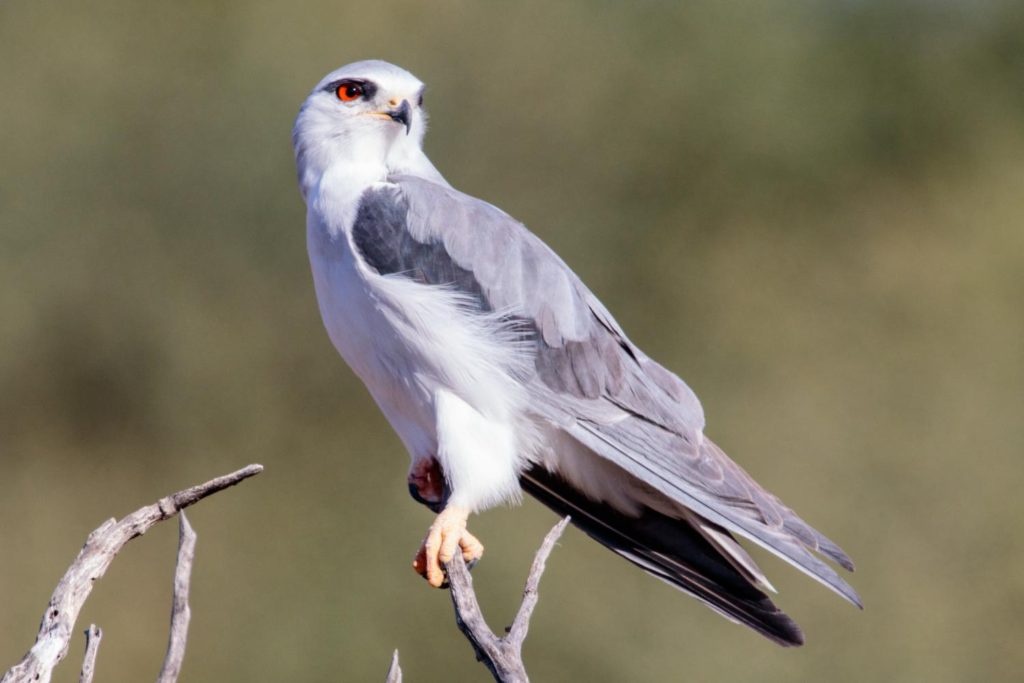
Where to see black-winged kites
Open grassland, burnt ground edges, and short-grass plains from Seronera southward are reliable. Kites also hunt along fence lines and road margins where rodents are exposed. Green season tall grass pushes them to firebreaks and tracks.
After controlled burns and migration herd movement, rodent activity spikes — kites often hover in loose groups where ash meets green regrowth along the southern plains.
After controlled burns or wildfire edges — rodents exposed in open ash.
Fence lines and road edges — kites hover low over short grass.
Thermals are light; kites hunt when larger raptors are less dominant.
Safari tips for black-winged kite sightings
Watch for hovering over open plains during mammal drives — kites are easy to miss if you only scan perches. Ask your guide to slow when you see a small pale raptor hanging in the wind above short grass.
Pair kite watching with dawn drives when thermals are still building and grassland rodents are active. Book a 7-day Northern Circuit safari with raptor time in Serengeti National Park.
Black-winged kites hover like kestrels over short grass — assign one guest to scan low airspace on southern plain drives. Full raptor index: wildlife gallery. Burnt ground edges after controlled fires are especially productive in dry season.
Pale plumage catches low sun on hover — the red eye flash is visible even when wing detail is still resolving at distance.
Plan a Serengeti safari with black-winged kites on the route
We design private birding safaris from Arusha with grassland hover-hunters, woodland raptors, and realistic daily pacing built in.
