

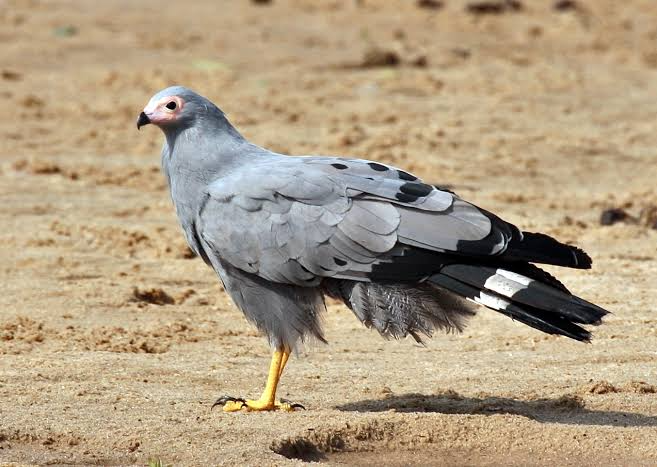
African Harrier Hawk in the Serengeti
Also called the gymnogene, the African harrier hawk is famous for its double-jointed legs — it reaches into tree cavities and weaver nests to extract chicks and eggs. The grey face, white rump patch, and broad wings make it unmistakable in flight over Serengeti woodland.
It is as much a behavior bird as a plumage bird: watching one hang from a nest cavity or flap slowly through acacia canopy is one of the great small-raptor spectacles of East Africa.
Unique hunting adaptations
Harrier hawks use long yellow legs and flexible tarsi to probe cavities — a skill few raptors match. They also hunt small mammals, birds, and reptiles on the ground and hawk insects in flight.
Serengeti habitat use
Common wherever acacia woodland meets open grass — from Seronera to northern Lobo. Weaver colonies attract regular visits; listen for alarm calls that may reveal a harrier hawk working the canopy.
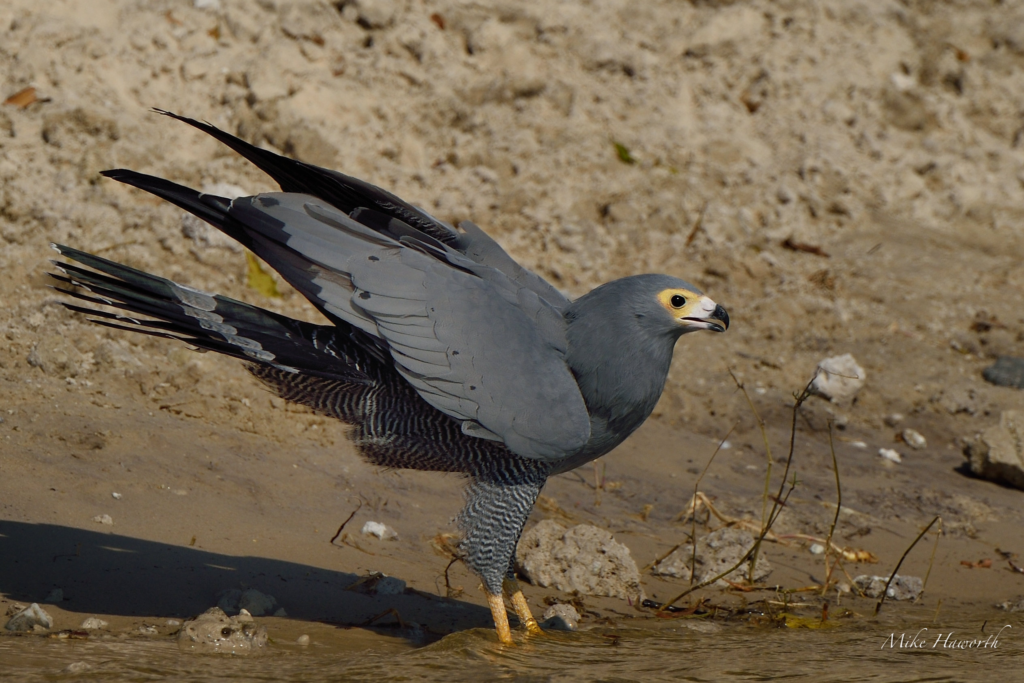
How to identify an African harrier hawk
Adults are pale grey below with dark barring, dark grey above, and a white rump patch obvious in flight. The face is bare and yellow-tinged; legs are long and yellow. Wings are broad with dark tips; tail is barred.
Juveniles are browner and more heavily streaked. In flight, the white rump and slow flap-glide style separate harrier hawks from buzzards and snake eagles. Perched, the slim body and long legs are distinctive.
Explore every species on the wildlife gallery and plan routes with our Serengeti wildlife guide on the Northern Circuit.
Behavior to watch for
Harrier hawks often flap slowly along woodland edges, then stall to inspect nests. When they find prey, they may hang upside down briefly — behavior rarely seen in other Serengeti raptors. Pairs are vocal near nests with chattering calls.
Juveniles are browner with less contrast on the underwing — watch for the long tail and owl-like face at medium range. They often mob smaller raptors and are themselves mobbed by weavers when approaching colonies.
Compare with the black-chested snake eagle and bateleur on a dedicated raptor morning.
Active nests attract harrier hawks — watch for mobbing starlings and weavers.
Slow driving under tall acacia produces close fly-bys.
Follow other birds' distress calls — they often lead to a raptor.
Best seasons and sectors in Serengeti
Year-round residents breed in woodland. Dry season concentrates activity near remaining water and nest sites; green season weaver colonies are busy and attract predators. Northern woodlands and Seronera acacia belts are reliable starting points.
Ask your guide for recent nest activity and pair harrier hawk stops with woodland kingfishers and hornbills for a full edge-habitat birding day.
Green season weaver colonies are especially active — harrier hawks inspect nests more often when chicks are present, making alarm calls a reliable cue for photographers.
Safari tips for harrier hawk sightings
Scan active weaver nests in acacia — harrier hawks inspect them regularly.
Low speed under canopy improves fly-over and perch views.
Link with snake eagle and bateleur routes on one birding morning.
See our black-chested snake eagle guide and black-winged kite guide. Book a 7-day Northern Circuit safari in Serengeti National Park.
Listen for weaver alarm calls — they often reveal a harrier hawk working the canopy above the colony.
The gymnogene’s double-jointed legs let it probe nest holes other raptors cannot reach. Plan woodland birding on the Northern Circuit with our wildlife gallery.
Plan a Serengeti safari with harrier hawks on the route
We build private woodland birding days from Arusha — with time for gymnogene behavior, weaver colonies, and classic Serengeti raptors.
Tell us if harrier hawks are a priority — we schedule slow acacia drives when weaver colonies are active on the Northern Circuit.
