

African Spoonbill in the Serengeti
The African spoonbill is a tall white wader with a distinctive flat, spoon-shaped bill. In Serengeti it sweeps shallow water in side-to-side arcs, filtering small fish, tadpoles, and aquatic insects from the mud.
Spoonbills often feed alongside egrets, storks, and ibises at river crossings and seasonal pools — a reliable sight on any wetland birding stop along the Mara or Grumeti corridors.
Resident year-round where water persists, spoonbills are most visible when green season floods create shallow margins across the park. Index every waterbird on the wildlife gallery before you travel the Northern Circuit. Bridge crossings on the Mara and Grumeti are reliable stakeouts at dawn.
Spoonbills often stand taller than egrets in mixed flocks — their flat pink bill profile is visible at long range across open pans when you pause before moving on to mammal sightings.
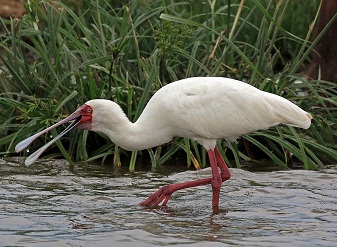
How spoonbills feed in shallow water
Bill swept side to side through shallow mud and water.
Often with egrets, storks, and ibises at the same pool.
Best at receding water on seasonal pans after rain.
The spoon-shaped bill is a tactile feeding tool — spoonbills do not need to see prey clearly. They walk slowly through ankle-deep water, head lowered, sweeping continuously. This method is energy-efficient and works well in turbid water where fish eagles cannot hunt by sight alone.
After rains, receding pans across Seronera and the western corridor hold mixed wader flocks — spoonbills, egrets, and storks often feed shoulder to shoulder in the same shallow water.
White wader
Long legs, all-white plumage
Spoon bill
Flat pink bill tip
River pools
Mara, Grumeti, Seronera
Year-round
Resident in Serengeti
How to identify an African spoonbill
All-white body with pink legs and a long flat bill that widens at the tip into a spoon shape. In flight, neck is extended and wings show dark flight feathers against white coverts. Juveniles are duller with a greyish bill.
Do not confuse with cattle egret (much smaller) or great white egret (pointed yellow bill). Compare wetland behaviour with the hamerkop guide and river hunting with the African fish eagle guide on the same route.
In flight, spoonbills hold their neck extended and legs trailing — a useful shape cue when a white wader passes over a bridge crossing at dawn.
Wetland birding on the Northern Circuit
Spoonbills concentrate where water is shallow and muddy — ideal sweep-feeding habitat. Pause at every bridge crossing and seasonal pan on your Serengeti drives.
Explore the wildlife gallery and Serengeti wildlife guide for full wetland birding context on the Northern Circuit.
Safari tips for spoonbill sightings
Scan mixed wader flocks at waterholes — spoonbills stand taller than egrets with a distinctive bill profile. Book a 7-day Northern Circuit safari with river time in Serengeti National Park.
Ask your guide to pause at receding pans after rain — spoonbills often feed in the open while vehicles pass too quickly.
Spoonbills sift shallow water with that distinctive bill — index waterbirds on the wildlife gallery and plan routes on the Northern Circuit.
Mixed flocks at bridge crossings often include spoonbills, egrets, and storks together — one stop can produce three wader species for your morning list.
Plan a wetland birding safari in Serengeti
From spoonbills to fish eagles, we build private routes with realistic river stops across the Northern Circuit.
Ask for Grumeti or Mara camp nights when wetland birds are a priority — spoonbills, hamerkops, and darters often share the same shallow margins at dawn. Bridge crossings are reliable stakeouts.
