

Kori Bustard in the Serengeti
Heavy, deliberate, and impossibly stately — the kori bustard is Africa’s heaviest flying bird and one of the Serengeti’s most rewarding open-plains sightings. Males inflate a white neck pouch in display, turning a quiet walk across short grass into one of the savanna’s great spectacles.
Unlike secretive bush birds, kori bustards often allow long, close views on game drives. They are a highlight for photographers who want scale, behavior, and classic Serengeti scenery in one frame.
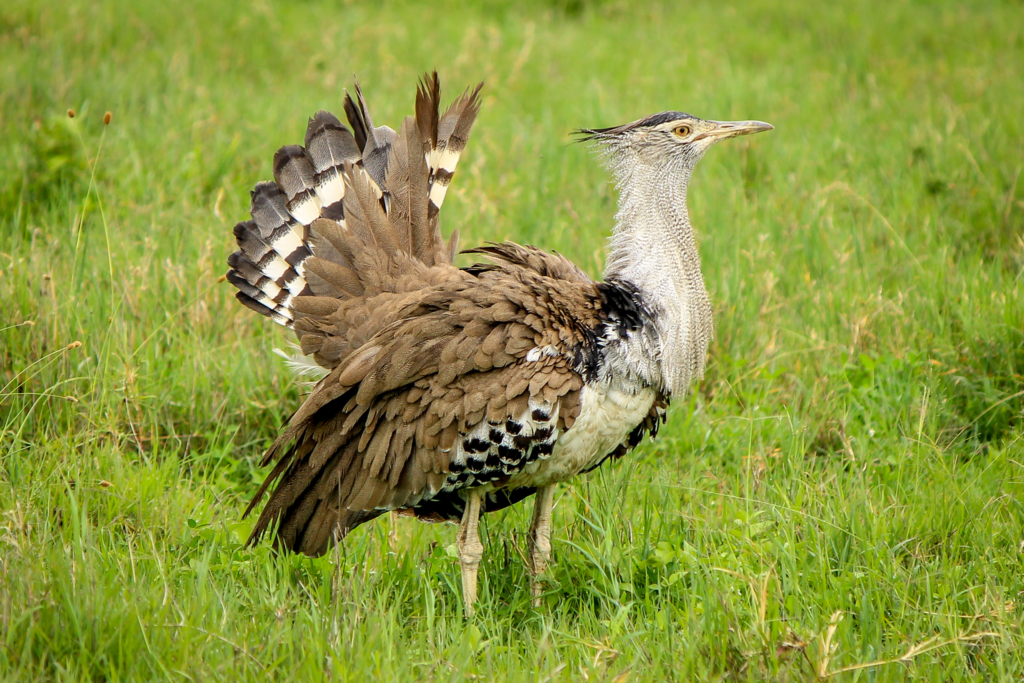
Males are among the heaviest birds capable of flight worldwide.
Short-grass savanna from Seronera to southern Serengeti.
Resident; display peaks in dry season mornings.
How to identify a kori bustard
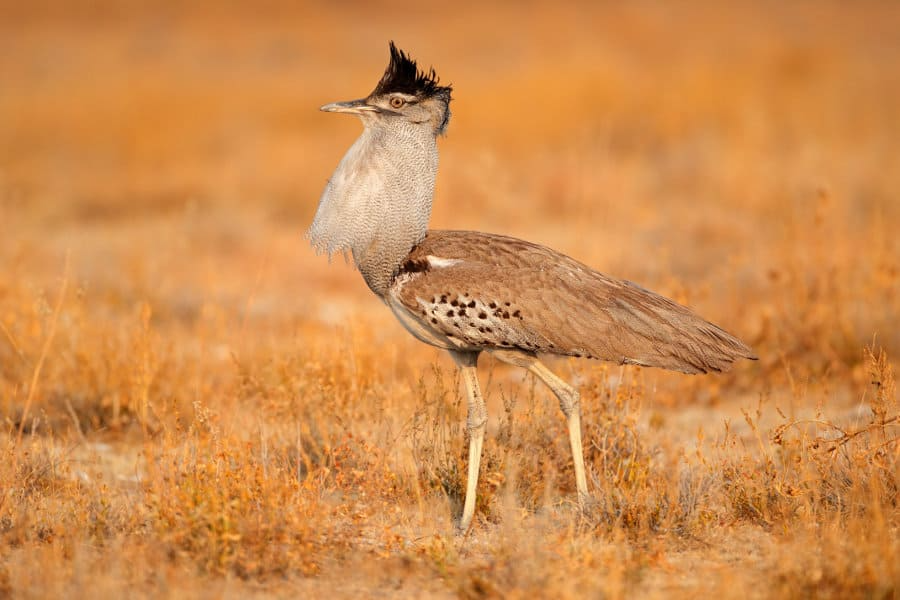
Adults are tall, long-legged, and mostly grey-brown above with fine black-and-white scaling on the back. The head is pale grey with a black crest; the neck shows a bold black-and-white pattern. In display, males extend head feathers and inflate a white throat pouch bordered with chestnut — a sight you will not confuse with any other Serengeti bird.
Females are smaller and lack the full display plumage. In flight, bustards show broad wings and slow, labored wingbeats. On the ground they walk with measured steps, often pausing to scan for insects, small reptiles, and seeds.
Do not confuse with juvenile or female ostriches at distance — bustards are far smaller, with a horizontal posture and patterned upperparts. Secretary birds are taller and slimmer with long tail feathers and a crested snake-hunter profile.
Behavior on the Serengeti plains
Kori bustards are diurnal ground birds. They feed by walking slowly through short grass, picking locusts, beetles, lizards, and small rodents. During the dry season, males gather on leks or display territories where they puff their neck pouches, snap their bills, and make deep booming calls audible across open plains.
They are wary but often tolerate vehicles when approached quietly. Early morning and late afternoon offer the best light for photography and the highest chance of seeing display behavior before heat pushes birds into shade.
Pair with other grassland specialists on the same drive — see our ostrich guide and secretary bird guide for a full ground-bird morning on the Northern Circuit.
Where to see kori bustards in Serengeti
Scan open short-grass plains and firebreak edges from Seronera south toward Ndutu and the Gol Kopjes. Bustards avoid dense woodland; they prefer visibility for detecting predators and for male display arenas.
During the dry season, males display on leks visible from main tracks — slow down when you see a lone bird standing tall on a rise. After rains, pairs disperse across greener plains but remain approachable if you keep the vehicle low-profile.
Every species in the park is indexed on our Serengeti wildlife gallery. For seasonal context and mammal movements, read the full Serengeti wildlife guide on the Northern Circuit before you travel.
Ndutu and short-grass flats hold reliable bustard pairs in the green season.
Central Serengeti game-drive circuits cross prime bustard habitat at dawn.
Rocky outcrops at plain edges — bustards use clear ground between grass and stone.
Open glades west of Grumeti woodlands — quieter roads, patient scanning.
Safari tips for kori bustard sightings
Bustards are most active at dawn when males display and feed in cool air.
Ask your guide to position for eye-level portraits on the plain — not from uphill.
Switch off music near birds on foot; sudden doors or voices make them walk away.
Combine bustards with raptors on a 7-day Northern Circuit safari. See our martial eagle guide for sky hunters on the same route through Serengeti National Park.
First-light plains drives give the best bustard display photography — ask your guide for one early departure on grassland habitat.
Plan a Serengeti safari with kori bustards on the route
We build private itineraries from Arusha with grassland birding stops, realistic drive times, and the right guide for photographers and first-time safari guests alike.
From kori bustards to coqui francolins, we match early starts and habitat choice to the birds on your target list.
