

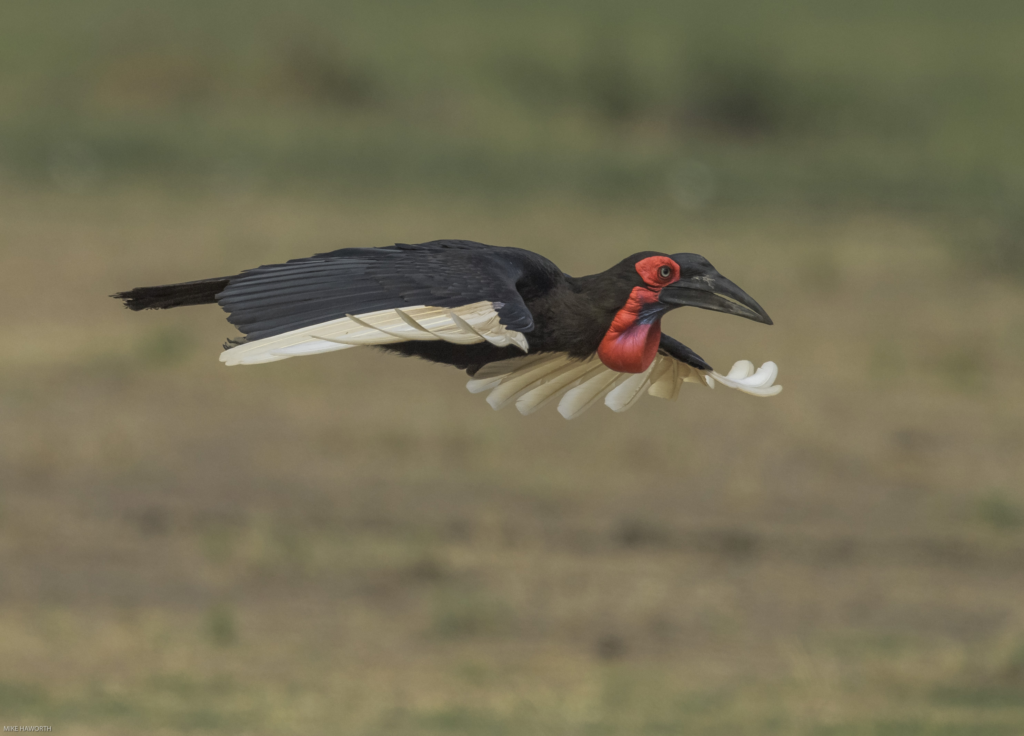
Southern Ground Hornbill in the Serengeti
Jet-black plumage, a crimson face patch, and a deep booming call make the southern ground hornbill one of the most charismatic sounds of the Serengeti morning. These long-lived birds walk the savanna in family groups, foraging like small ground predators rather than typical tree hornbills.
Sighting a cooperative group — often two adults with a helper juvenile — is a highlight for guests who want culture, sound, and behavior beyond the Big Five checklist.
Cooperative
Family groups with helpers
Slow breeders
One chick every few years
Ground foragers
Walks miles daily on foot
Loud calls
Booms at dawn across plains
How to identify a southern ground hornbill
Adults are large, entirely black except for vivid red bare skin on the face and throat. The bill is massive and slightly decurved — one of the largest of any hornbill. In flight, white primary windows flash against black wings; on the ground they stride with purpose, head forward.
Females have a violet-blue patch on the red throat skin; males show more solid red. Juveniles are dull brown with a pale face, gradually darkening over several years. At distance, do not confuse with glossy starlings or crows — ground hornbills are far larger and walk in deliberate family lines.
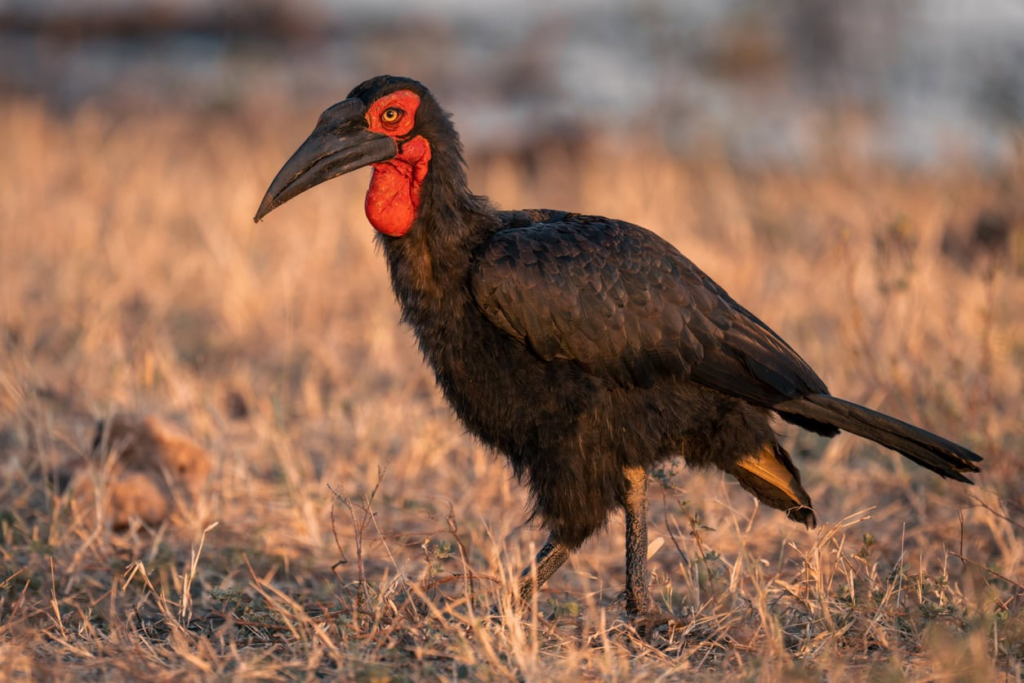
Family groups and foraging behavior
Southern ground hornbills live in territorial groups of two to eight birds. Only the dominant pair breeds; other members act as helpers, defending territory and feeding the single chick. Groups walk long distances each day, probing leaf litter and soil for snakes, frogs, insects, and small mammals.
They are culturally important across East Africa and classified as vulnerable — seeing them wild in Serengeti is a privilege worth slowing down for. Browse all birds on the wildlife gallery and read the Serengeti wildlife guide for seasonal planning on the Northern Circuit.
Watch for a pair leading one brown juvenile — helpers stay close but do not breed.
They stamp and dig at termite mounds and chase lizards in open grass.
Deep whoops carry across camp — learn the call before your first morning drive.
Where ground hornbills range in Serengeti
Look along woodland edges, drainage lines, and open savanna with scattered trees from Seronera to the western corridor. Groups need large territories, so patience matters — but once found, they often feed in one area for an hour, giving excellent observation time.
Early morning is best — groups leave roost trees and walk slowly through grass, probing with those vivid red bills. Tell your guide you want a quiet woodland-margin morning if hornbills are a priority.
Best seasons and times
Year-round residents. Dry season concentrates prey near remaining water; green season offers insect abundance after rains. Pair with grassland giants — see our kori bustard guide on the same morning route.
Safari tips for ground hornbill sightings
Guides often hear hornbills before spotting them — pause when you hear deep booming calls.
Scan the transition zone between open plain and acacia woodland at mid-morning.
If a family is feeding, wait — behavior shots reward patience more than driving on.
Combine hornbills with raptors on a 7-day Northern Circuit safari. See our martial eagle and African fish eagle guides for a full sky-and-ground birding day in Serengeti National Park.
Ask for one slow woodland-edge morning — ground hornbills reward guests who accept a quieter start.
Ground hornbills are slow breeders and wide-ranging — seeing a family group is a highlight worth building into your Northern Circuit itinerary. Browse all species on the wildlife gallery and read seasonal woodland notes in our Serengeti wildlife guide.
Plan a Serengeti safari with ground hornbills on the route
We design private safaris from Arusha with time for birds, mammals, and the sounds that make Serengeti mornings unforgettable.
Ground hornbills are slow breeders — seeing a family with a juvenile is worth building into your Northern Circuit route. Browse the wildlife gallery for related species.
