

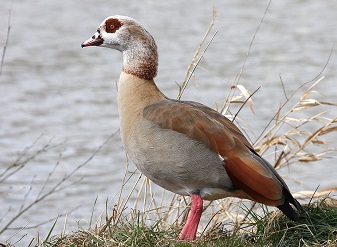
Egyptian Goose in the Serengeti
The Egyptian goose is a striking waterfowl — chestnut eye patches, white wing panels, and a pale grey-brown body make it one of the most photogenic birds on Serengeti pans. Pairs are strongly territorial and often seen standing sentinel on termite mounds or logs beside water.
Despite the name, this species is widespread across sub-Saharan Africa and is a common resident of Serengeti waterholes, river margins, and seasonal pools. They graze on grass and aquatic plants by day and roost near water at night.
On a typical game drive, Egyptian geese are easy to overlook when wildebeest herds dominate the view — but pausing at every pan often reveals pairs, juveniles, and aggressive territorial displays that add real character to a birding list.
Egyptian goose at a glance
Egyptian geese are large, goose-like waterfowl with a heavy build and loud honking calls. Adults show a distinctive chestnut ring around each eye, a brown patch on the breast, and white wing coverts visible in flight or when preening. They are among the most territorial waterbirds on Serengeti pans.
Chestnut rings — key ID mark at any range
Territorial pairs defend waterhole edges year-round
Grass, shoots, and aquatic vegetation
Permanent pools and river margins
How to identify an Egyptian goose
Large waterbird with grey-brown upperparts, cream underparts, and bold chestnut eye patches. White wing patches flash in flight. Bill is pink with a dark tip; legs are pink. Juveniles lack the chestnut eye patches and are duller overall — but the heavy goose shape and pan habitat help separate them from ducks.
Do not confuse with spur-winged goose (much larger, white face, spurs on wing) or knob-billed duck where ranges overlap. Egyptian geese often stand on elevated perches — termite mounds, logs, or rocks — giving a taller silhouette than grazing ducks.
At the same waterhole, scan for wetland waders — our spoonbill guide, openbill guide, and darter guide cover the other species you may see on one pan stop.
Territorial pairs and grazing behaviour
Egyptian geese form long-term pair bonds and defend territories around favoured waterholes. Intruders are met with loud honking, head-pumping displays, and sometimes aerial chases. During the breeding season, pairs nest in tree cavities, on cliff ledges, or on top of old hamerkop or raptor nests.
By day they graze on short grass near water, often walking well away from the pan edge into open savanna. At dusk they return to water to roost. Family groups with striped juveniles are common in the dry season when young birds stay with parents for several months.
Every pan stop on a Serengeti drive is an opportunity — geese are resident year-round and do not migrate, so they are a reliable tick on any week-long Northern Circuit itinerary.
When and where to see Egyptian geese
Egyptian geese are present year-round across Serengeti. In the dry season (June–October) they concentrate at permanent waterholes when seasonal pans shrink — making them easier to find at known pools near Seronera, Moru, and along the Mara. During rains, pairs spread across flooded grassland but still roost near water.
Browse the Serengeti wildlife gallery and read our wildlife guide for pan and waterhole birding on the Northern Circuit.
Best waterholes for Egyptian geese
Permanent pans near the visitor zone hold pairs year-round.
Scan termite mounds and logs — geese use elevated perches as lookouts.
Territorial chases and head-pumping make strong action photos.
River crossings on the Mara and Grumeti also attract Egyptian geese when sandbars and quiet margins provide grazing. Combine pan stops with wetland wader scanning for a full waterbird morning on the same drive.
Safari tips for Egyptian goose sightings
Every waterhole deserves two minutes — geese are often on the far bank.
Loud territorial calls alert you before you see the birds.
June–October concentrates birds at permanent water — peak viewing.
Book a 7-day Northern Circuit safari with waterhole time in Serengeti National Park — Egyptian geese are a reliable bonus on every pan stop.
Plan a Serengeti safari with waterhole birding
From Egyptian geese to spoonbills and fish eagles, we build private routes with realistic pan and river stops across the Northern Circuit.
