

Usambiro Barbet in the Serengeti
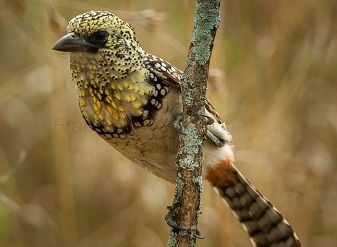
The Usambiro barbet is a small, colourful woodland bird endemic to the Serengeti ecosystem and adjacent Maasai Mara — a split from the widespread d’Arnaud’s barbet complex. Males show a red forehead, yellow belly, and black-and-white face pattern; the species is tied to rocky kopjes and acacia woodland in the park’s eastern and central regions.
Barbets excavate nest holes in dead wood and call with a distinctive double note from exposed branches. In Serengeti, they are a speciality bird for listers — common locally around Moru Kopjes, Gol Kopjes, and rocky outcrops across the plains.
Pair barbet searches with grey hornbills and green wood hoopoes on the same kopje woodland loop for a full bush-bird morning.
Kopje woodland ecology
Usambiro barbets depend on the mosaic of rock, dead wood, and acacia that kopjes provide. They feed on fruit and insects in the woodland belt around rocky outcrops — habitat shared with leopards, hyraxes, and a rich community of bush birds.
Moru, Gol, and Maasai Kopjes — core barbet range
Calling perches and nest-hole sites
Learn the two-note phrase before your drive
How to identify an Usambiro barbet
Small barbet with a red forehead patch, yellow underparts, and black-and-white head pattern. Back is black with yellow spots; bill is stout and dark. Sexes are similar. In flight, rapid wingbeats between trees — often calling from an exposed dead branch on a kopje edge.
Separate from d’Arnaud’s barbet by range and voice — Usambiro is the form found in Serengeti and Maasai Mara. Compare with African grey hornbill — hornbills are larger with a casque on the bill and very different flight.
Index every species on the wildlife gallery and read the Serengeti wildlife guide for kopje birding on the Northern Circuit.
Along Serengeti kopje belts
Usambiro barbets are sedentary — pairs hold territories around favoured kopjes year-round. They call from dead snags on rock edges and forage in acacia canopy for fruit and insects. Morning is best for hearing calls before wind picks up across the plains.
Slow drives around Moru Kopjes and the Gol Kopjes area produce regular sightings for patient birders. Barbets often sit motionless on a perch — scan dead branches on every kopje approach.
Combine with lilac-breasted rollers on fence posts and hornbills in the same woodland for a colourful bush-bird list.
Listen for the double-note call
The Usambiro barbet call is a rhythmic two-note phrase repeated from an exposed perch — often the first clue to its presence before the bird is visible in foliage. Learning this call before your safari helps you pick out barbets on kopje drives when plumage is hidden in acacia leaves.
Browse the Serengeti wildlife gallery for every species on your route — the Usambiro barbet completes the woodland specialist set alongside hornbills, hoopoes, and rollers.
Where to see Usambiro barbets in Serengeti
Central Serengeti — reliable barbet territory
Eastern plains rock islands in acacia savanna
Southern sector kopje woodland belts
Barbets are resident — any kopje drive offers a chance. Plan slow approaches to rocky outcrops with binoculars ready for dead-branch perches at eye level. The Usambiro barbet is a Serengeti speciality — listers visiting Moru or Gol Kopjes should allow extra time for call-and-response scanning in acacia woodland.
Safari tips for Usambiro barbet sightings
Learn the two-note phrase — barbets call from exposed perches.
Snags on kopje edges — favourite sitting spots.
Slow down at every rocky outcrop in central Serengeti.
Book a 7-day Northern Circuit safari with kopje time in Serengeti National Park. Pair with our grey hornbill guide on the same woodland drive.
Plan a kopje birding safari in Serengeti
From Usambiro barbets to hornbills and rollers, we build private woodland routes with realistic kopje stops across the Northern Circuit.
