

Speckled Mousebird in the Serengeti
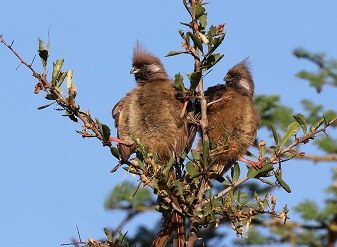
The speckled mousebird is a slender, long-tailed bird of acacia woodland and scrub — named for its mouse-grey plumage, scruffy crest, and habit of scurrying through branches like a rodent. In Serengeti, mousebirds travel in small groups, feeding on fruit, buds, and flowers in the canopy.
They are common but easily overlooked — guests who scan acacia tops at camp and along woodland edges often record mousebirds on the same morning as hornbills, starlings, and wood hoopoes.
Mousebirds are one of the most distinctive silhouettes in East African bush: very long tail, hunched posture, and weak fluttering flight between trees.
Long tail
Distinctive silhouette in acacia
Social flocks
Small groups in woodland
Fruit feeder
Berries, buds, and flowers
Year-round
Resident in Serengeti bush
How to identify a speckled mousebird
Slender bird with soft brown-grey plumage, a scruffy crest, and an exceptionally long tail — often held cocked or fanned. Bill is short and curved; legs are strong for clambering through branches. In flight, the tail streams behind and wingbeats are weak and fluttering.
Speckled mousebirds lack the iridescent plumage of starlings — they are muted and cryptic in the canopy. Listen for soft chattering calls within flocks. Compare with the superb starling guide and grey hornbill guide on the same woodland route.
Index every species on the wildlife gallery and read the Serengeti wildlife guide for bush birding on the Northern Circuit.
Flocks in acacia woodland
Speckled mousebirds are gregarious — they move through the canopy in groups of three to eight, calling softly and feeding on fruit and buds. They often sunbathe with wings spread and belly feathers fluffed, a behaviour that makes them easier to spot on cool mornings.
They are weak fliers and prefer to climb through branches rather than fly long distances. When disturbed, a flock may explode from a tree with noisy wingbeats before settling in the next acacia thicket.
Pair mousebird watching with the green wood hoopoe guide — both are woodland specialists that reward slow drives along tree-lined drainage lines.
Mousebird vs other bush birds
Speckled mousebirds are unmistakable once seen well — no other Serengeti bird combines a mouse-grey body, scruffy crest, and tail longer than the body. Starlings are more compact with shorter tails and iridescent plumage. Hornbills are much larger with heavy bills and loud flight.
In poor light, listen for soft chattering within flocks moving through acacia canopy. Mousebirds often perch side by side on a branch, preening one another — a social behaviour that makes identification easier than solitary canopy birds.
Where to see speckled mousebirds in Serengeti
Mousebirds favour acacia woodland, riverine scrub, and lodge gardens where fruiting trees provide food year-round. Seronera camps, western corridor woodlands, and the edges of kopje country all hold reliable flocks.
Morning and late afternoon are best — mousebirds are active in the canopy when temperatures are moderate. Scan the tops of whistling thorn and flat-topped acacias on every woodland edge.
Plan a 7-day Northern Circuit safari with bush birding time in Serengeti National Park.
Safari tips for speckled mousebird sightings
Woodland edges and camp gardens — flocks feed in the canopy.
Wings spread on exposed branches — easy photo opportunity.
Fruit trees at camp often hold resident mousebird groups.
See our grey hornbill guide and superb starling guide for more woodland species on the same route.
Plan a woodland birding safari in Serengeti
Explore the full Serengeti wildlife gallery, read our wildlife guide, or see the 7-day Northern Circuit safari itinerary.
