

Black-headed Heron in the Serengeti
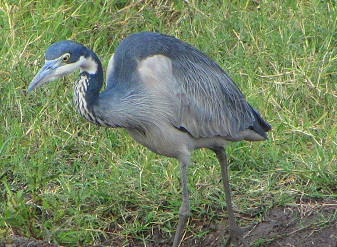
The black-headed heron is a large, grey wader with a dark cap and long yellow bill. It stalks fish, frogs, and small vertebrates in shallow water across Serengeti marshes, river margins, and seasonal pans — standing motionless before striking with a rapid bill thrust.
Less vocal than hadeda ibises but equally tied to water, black-headed herons are a staple of wetland birding loops alongside spoonbills, darters, and hamerkops. Their patient hunting style rewards guests who pause at marsh edges rather than driving past.
Herons are among the largest waders on a typical Serengeti wetland stop — scan the waterline first, then check reeds for kingfishers and smaller species on the same loop.
85–95 cm
Height adult
Year-round
Resident wetland species
Stalk hunter
Fish, frogs, small prey
Black cap
Grey body, yellow bill
How to identify a black-headed heron
Large grey heron with a black crown and nape, white throat, and grey body. Bill is long, thick, and yellow; legs are dark. In flight, the neck is folded in an S-shape and wings show slow, deep beats — larger and heavier than egrets.
Separate from grey heron where ranges overlap by the black (not white) head pattern and slightly smaller size. Juveniles are browner with less contrast on the head. At distance, compare with the African darter — darters are slimmer with a spear-like bill and often swim submerged.
Where black-headed herons feed in Serengeti
Scan shallow margins of the Mara, Grumeti, and seasonal pans after rains. Herons stand in water up to their belly, often alongside African spoonbills and hadeda ibises on the same wetland loop.
Index every species on the wildlife gallery and plan routes with the Serengeti wildlife guide on the Northern Circuit.
Quick field notes
Marshes, pan edges, and slow river backwaters.
Stands motionless — strike is sudden when prey is close.
Folded neck, slow wingbeats — larger than egrets.
Wetland birding on the same drive
A single Serengeti wetland stop can produce black-headed heron, spoonbill, darter, hamerkop, and hadeda ibis within minutes. Herons are often the largest wader present — scan the waterline first, then check reeds for kingfishers and smaller species.
After heavy rains, flooded grassland holds herons hunting in ankle-deep water far from main rivers. The hamerkop guide covers another specialist wader you may see at the same pool.
Bridge stops and sandbars at river crossings
After rains — flooded grass and oxbow pools
Herons reward stationary vehicles at marsh edges
Strike moments when fish or frogs are caught
Stalk-and-strike hunting
Black-headed herons hunt by walking slowly through shallow water, neck extended and bill poised. When prey is within range, the head snaps forward with remarkable speed — frogs, fish, and small rodents are swallowed whole. They may also stand completely still for long periods, a strategy that lets prey approach within striking distance.
Unlike fish eagles, herons do not dive from the air — all hunting is done on foot in water up to belly depth. After rains, herons follow receding waterlines across flooded grassland, often feeding far from main river channels where prey is concentrated in shallow pools.
On the same wetland drive, look for African darters swimming with only their necks above water — a completely different hunting strategy on the same pool.
Best seasons for heron watching
Black-headed herons are resident year-round, but they are most visible when water is shallow and prey is concentrated — during and after the long rains when pans fill, and in the early dry season when receding waterlines trap fish in shrinking pools.
Plan a 7-day Northern Circuit safari with wetland stops in Serengeti National Park during green season for the richest marsh birding.
Safari tips for black-headed heron sightings
Stop at every wetland — herons are easy to miss at speed.
East-facing pan edges give best photography at first light.
Larger than egrets — black cap confirms at distance.
Book a 7-day Northern Circuit safari with wetland time in Serengeti National Park.
Plan a wetland birding safari in Serengeti
From black-headed herons to spoonbills and darters, we weave marsh and river stops into every private Northern Circuit route from Arusha.
