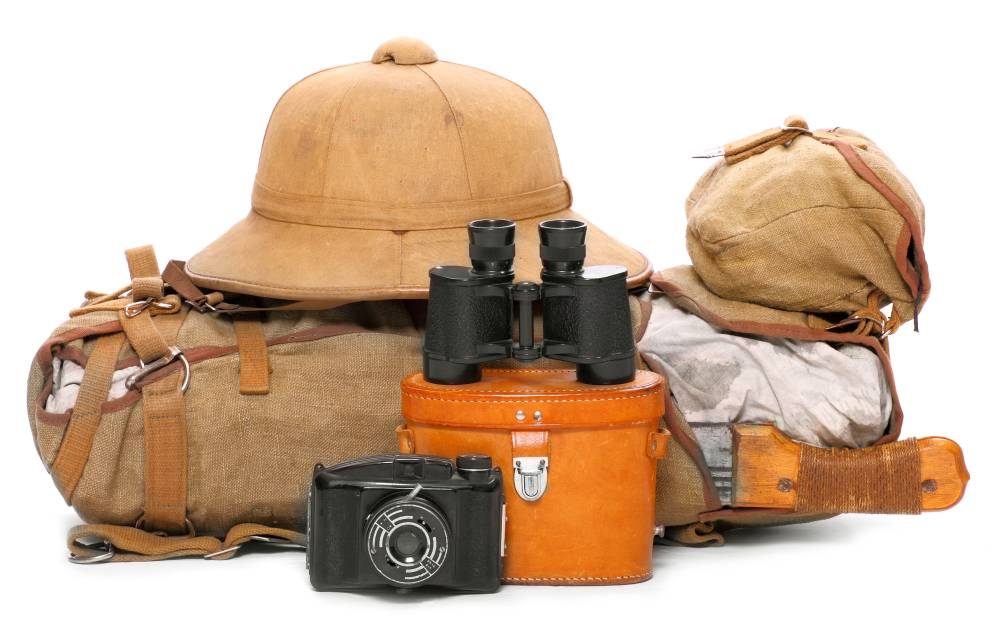
A Serengeti safari packing list is mostly clothing: neutral layers for red dust at midday, a warm layer for 5:45 a.m. game drives, and nothing bright white. Leave the fashion suitcase at home. For the country-wide list (documents, health, all parks), use the Tanzania safari packing list. This page is what to wear in the Serengeti.
If you are still building your route, start with our Tanzania destination guide and the pillar Tanzania safari tours guide. Once your dates are set, use this Serengeti safari packing list to pack once and stop second-guessing your suitcase.
Serengeti Safari Packing List at a Glance
Pack light, pack neutral, and plan to re-wear. Most travelers on a 7-day Northern Circuit need one soft duffel (15-20 kg airline limit on bush flights) and a small daypack. Lodges offer laundry, so three to four interchangeable outfits beat a new outfit every day.
- Clothing: breathable tops, long pants, light fleece, rain layer, hat, sunglasses
- Footwear: closed walking shoes plus camp sandals
- Safari essentials: binoculars, sunscreen, insect repellent, refillable water bottle
- Toiletries: unscented deodorant, basic meds, wet wipes for dusty drives
- Documents: passport, visa, insurance, printed confirmations
- Tech: camera, spare batteries, universal adapter, power bank
What Should I Pack for a Serengeti Safari?
Pack for three micro-climates in one day: cold dawn, hot midday sun, and breezy evenings. Serengeti sits on the Tanzanian plateau at roughly 1,100-1,600 meters elevation, so mornings can dip to 12-15 degrees Celsius (54-59 F) in June and July while afternoons climb past 28 degrees Celsius (82 F). Layers are not travel-blogger advice – they are survival strategy when your guide says the vehicle leaves in twenty minutes and the plains are still silver with mist.
I still remember a guest from Chicago who packed only summer dresses because “Africa is hot.” She was shivering on her first game drive near Seronera, wrapped in a lodge blanket, while lions walked past in the golden light. She laughed about it later, but a light fleece would have saved her that morning.
Core clothing checklist
| Item | Quantity (7-day trip) | Notes |
|---|---|---|
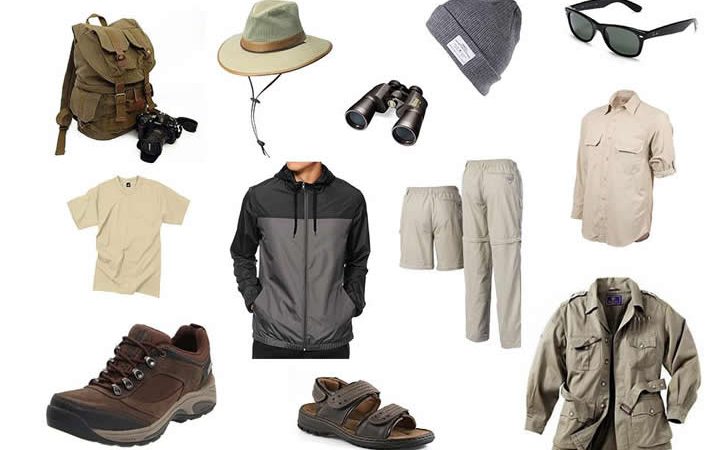
| Short-sleeve tops (neutral) | 3-4 | Quick-dry cotton or moisture-wicking blends |
| Long-sleeve shirts | 2 | Sun and insect protection on drives |
| Lightweight pants | 2-3 | Zip-off trekking pants work well |
| Light fleece or softshell | 1 | Essential for dawn drives |
| Packable rain jacket | 1 | Nov-April green season showers |
| Wide-brim hat | 1 | Strap or clip so wind does not steal it |
| Swimwear | 1 | Some lodges have pools |
| Underwear and socks | 5-7 | Merino socks reduce odor between laundry days |
Serengeti Safari Packing List: Color and Fabric Rules
Color matters more on a Serengeti safari than most first-timers expect. Earth tones – khaki, olive, tan, brown, stone, and muted green – blend with the bush, hide dust, and follow longstanding safari tradition. Bright white, neon, and bold patterns draw attention in ways you do not want around skittish wildlife and tsetse flies.
Why can’t I wear white on safari?
White shows every speck of Serengeti dust within minutes of leaving the lodge. The roads are laterite and the plains are dry for much of the year; a crisp white shirt turns the color of cinnamon before your first coffee break. White also reflects harsh midday sun onto your face and can startle animals accustomed to muted silhouettes in the vehicle. You will not be refused entry for wearing white, but you will regret it in photos and laundry bills.
Can I wear black in Tanzania?
Yes, but black is not ideal for long game drives. Dark colors absorb heat on the roofless sections of your drive and attract tsetse flies in some woodland corridors. Many guides prefer guests avoid dark blue and black for that reason. Black is fine for evenings in camp, flights, and dinners – just swap to lighter neutrals for daytime drives.
What is the 3 finger rule dress code?
The “three finger rule” is a practical modesty guideline used on many African safaris and in rural Tanzanian communities: shoulder straps should be at least three fingers wide, and hemlines should fall below the knee or close to it. It is not a government law in the bush, but it shows respect when you visit villages, markets, or conservative areas. In national parks during game drives, modest coverage also protects you from sun and insects.
Travel Tip: If you would wear it to a family barbecue at home, it probably works for a Serengeti game drive. Save revealing swimwear and party outfits for the lodge pool or your private tent.
Footwear for Serengeti: Can I Wear Sneakers on Safari?
Yes – sneakers are one of the most common shoes on Serengeti safaris and they work well for most travelers. You spend the majority of your time seated in a 4×4 with a pop-up roof, not hiking rough trails. Comfortable walking sneakers or light trail shoes with decent grip are ideal for getting in and out of the vehicle, short lodge walks, and the occasional bush toilet stop.
What I recommend: one pair of closed-toe shoes you can wear all day, plus sandals or slides for camp downtime. Heavy hiking boots are optional unless your itinerary includes multi-hour walking safaris in designated areas. Avoid brand-new shoes – break them in before you fly to Kilimanjaro International Airport.
- Good: trail runners, walking sneakers, light hikers
- Also fine: sturdy sandals with heel straps for camp only
- Avoid: flip-flops on game drives, white soles that show dust, stiff unworn boots
Town vs Bush: Can You Show Your Shoulders in Tanzania?
Tanzania is generally relaxed in tourist lodges and beach resorts, but conservative in villages, mosques, churches, and government offices. On safari in Serengeti National Park, tank tops are common among travelers and tolerated during game drives. In Arusha town, Stone Town in Zanzibar, or local markets, cover shoulders and knees as a sign of respect.
I tell every guest: pack one lightweight scarf or shawl. It turns a sleeveless dress into market-appropriate attire in seconds, doubles as sun protection, and lives in your daypack without taking space. The bush is casual; towns are where cultural awareness matters most.
Do You Dress Up for Dinner on Safari?
Most Serengeti lodges and tented camps are “smart casual,” not formal. Men do well with a collared shirt and clean chinos; women with a casual dress or blouse and pants. You do not need a suit, tie, or evening gown unless you booked an ultra-luxury property that specifies otherwise. After a dusty game drive, everyone looks pleasantly tired – lodges expect that.
One pair of slightly nicer shoes and a wrinkle-resistant shirt is enough. I have sat through hundreds of camp dinners under acacia trees; the guests who pack heavy “dinner outfits” rarely wear them more than twice. Comfort wins.
Toiletries and Personal Care on Safari
Can you wear deodorant on safari?
Yes – please wear deodorant. Your tent neighbors will thank you. Choose unscented or lightly scented products because strong fragrances can attract insects and bother sensitive guests in open-air dining areas. Stick deodorant travels better than aerosols, which airlines restrict anyway.
Many eco-camps use limited septic systems, so biodegradable soap and shampoo are appreciated. Pack sunscreen (SPF 30+), lip balm with SPF, insect repellent with DEET or picaridin, basic pain relievers, anti-diarrhea tablets, and any prescription medications in original bottles with labels.
Should I pack pyjamas for my safari?
Light sleepwear is worth packing, especially in tented camps where you walk to the bathroom at night. A T-shirt and shorts double as pyjamas and spare daywear. In cooler months, long-sleeve cotton sleep layers help. Camps provide blankets and often hot water bottles, but they do not provide sleepwear.
Safari Gear, Tech, and Documents
Beyond clothing, these items separate a good Serengeti trip from a frustrating one. Our team checks gear questions as often as we check passport dates.
Safari essentials
- Binoculars (8×42 is the sweet spot for wildlife)
- Camera with spare batteries and memory cards
- Phone with offline maps and a sealed zip bag against dust
- Universal power adapter (Type D and G plugs in Tanzania)
- Power bank for long drive days
- Refillable water bottle – lodges refill daily
- Small daypack for personal items in the vehicle
- Dust-proof bag or pillowcase for camera gear
Documents and money
- Passport valid 6+ months beyond travel dates
- Tanzania visa (e-visa or on arrival – check current rules)
- Travel insurance certificate with emergency medevac
- Printed lodge vouchers and e-tickets – phone signal is patchy
- USD cash in small bills for tips and souvenirs (post-2006 notes)
- Credit card for lodges – Visa and Mastercard widely accepted
For park rules and conservation context, the official TANAPA website and UNESCO Serengeti listing are worth a read before you pack your bag.
What Not to Pack for Safari
Overpacking is the most common mistake I see in our Arusha office. Guests arrive with hard suitcases, duplicate outfits, and gadgets they never touch. Here is what to leave home.
- Hard-shell large suitcases – safari vehicles and bush planes need soft duffels
- Bright white or neon clothing – dust magnet and wildlife distraction
- Excessive jewelry – attracts attention in towns; easy to lose in tents
- Drone without a permit – illegal in Tanzanian national parks without authorization
- Plastic bags – Tanzania restricts single-use plastic bags at entry
- Hair dryer – most lodges provide one; generator hours may limit use
- Full-size toiletries – travel sizes reduce weight and leak risk
- Formal wear – unless your lodge specifically requests it
What Not to Bring to Tanzania
Some items are simply inappropriate or illegal. Do not pack camouflage-pattern clothing – it is restricted for civilians in Tanzania because it resembles military uniforms. Leave firearms, fireworks, and narcotics out of the question entirely. If you carry prescription opioids or controlled medications, bring a doctor’s letter.
Valuables you cannot replace should stay home. Laptops for work are fine; heirloom jewelry is not. Safari camps are secure, but dust, bumpy roads, and open vehicles are hard on delicate items.
Packing by Season: Dry vs Green Serengeti
Seasonal packing choices tie directly to comfort on the road. Cross-read our bathroom on safari practical guide, how many days you need in the Serengeti, and Tanzania safari safety guide for Americans, plus the best month for a Tanzania safari to match layers to weather.
Your Serengeti safari packing list shifts slightly by season. June through October is cool, dry, and dusty – add a warmer fleece and lip balm. November through May brings short and long rains – pack a compact rain shell and quick-dry fabrics. The Great Migration moves with the grass; your layers should handle temperature swings more than fashion trends.
If migration timing is your focus, read our Serengeti migration month-by-month guide and the draft companion on how many days you need in the Serengeti. Budget questions pair well with our Serengeti safari cost breakdown.
| Season | Extra items | Skip or reduce |
|---|---|---|
| Dry (Jun-Oct) | Warmer fleece, moisturizer, dust mask optional | Heavy rain gear |
| Short rains (Nov-Dec) | Light rain jacket, zip-lock bags for electronics | Thick winter coats |
| Long rains (Mar-May) | Waterproof sandals, quick-dry pants | Non-breathable synthetics |
| Calving (Jan-Feb) | Same as dry – dust plus cool mornings | Overpacking bulky sweaters |
Duffel vs Suitcase: What Works in Safari Vehicles
Soft duffel bags slide into Land Cruiser cargo areas and small aircraft holds. Hard rolling suitcases frustrate drivers who Tetris ten bags before every transfer. If you only own a suitcase, pack a foldable duffel inside it and transfer clothes on arrival in Arusha – we can store your hard case at our office if you begin your trip from us.
Ready to match gear with a real route? Browse our all trips page or book now and we will send a tailored pre-departure checklist with your invoice.
Sample 7-Day Serengeti Safari Packing Checklist
Use this printable-style checklist for a typical week on the Northern Circuit with two to three nights in Serengeti.
- Passport, visa, insurance, flight printouts
- 3 neutral short-sleeve tops, 2 long-sleeve layers
- 2-3 lightweight long pants, 1 optional shorts
- 1 fleece, 1 packable rain jacket
- Walking sneakers, camp sandals, 5-7 socks
- Hat, sunglasses, sunscreen, lip balm, insect repellent
- Binoculars, camera, chargers, power bank, adapter
- Toiletries, medications, small first-aid kit
- Soft duffel plus daypack
- Light sleepwear, swimwear if lodge has pool
- Smart-casual dinner outfit (one set)
- Scarf or wrap for town and village visits
Photography Gear for Serengeti Game Drives
Serengeti rewards photographers who pack deliberately. A telephoto lens (200mm minimum, 400-600mm ideal for birds and distant cats) transforms your memory card. Bring twice the batteries you think you need – cold dawn air drains lithium faster than you expect. Memory cards fail in heat and vibration; carry two smaller cards instead of one giant card.
Dust is the silent killer of camera gear on corrugated roads. A dry bag, silicone lens pouch, or even a ziplock with a rubber band keeps fine laterite dust off your sensor between sightings. Lens cloths get gritty by day three; pack several microfiber cloths and never change lenses outside the vehicle if you can avoid it.
Phones are excellent for wide landscape shots and quick family photos. Download offline maps and your lodge confirmations before you leave Arusha Wi-Fi. A cheap neck strap prevents the heart-stopping drop when you lean out of the pop-up roof for a giraffe silhouette.
Health, Medications, and Insect Protection
Talk to your doctor about malaria prophylaxis for Tanzania – risk is lower on open plains than coastal zones, but many travelers still take precautions. Yellow fever vaccination is required if you arrive from endemic countries; keep your certificate with your passport. Hepatitis A, typhoid, and tetanus boosters are routine recommendations for safari travel.
Pack a small personal first-aid kit: adhesive bandages, antiseptic wipes, blister plasters, oral rehydration salts, antihistamine, and your preferred anti-diarrhea medication. Lodge kitchens are generally safe, but long drive days and new foods upset sensitive stomachs. Motion sickness tablets help on winding crater roads if you are prone to nausea.
Insect repellent with DEET or picaridin applied at dusk reduces mosquito bites around camp. During the day, tsetse flies can be annoying in woodland sections – avoid dark blue and black clothing as noted above. Sleep under provided mosquito nets in tented camps; they are standard and effective.
Family Safari Packing: Kids on the Serengeti
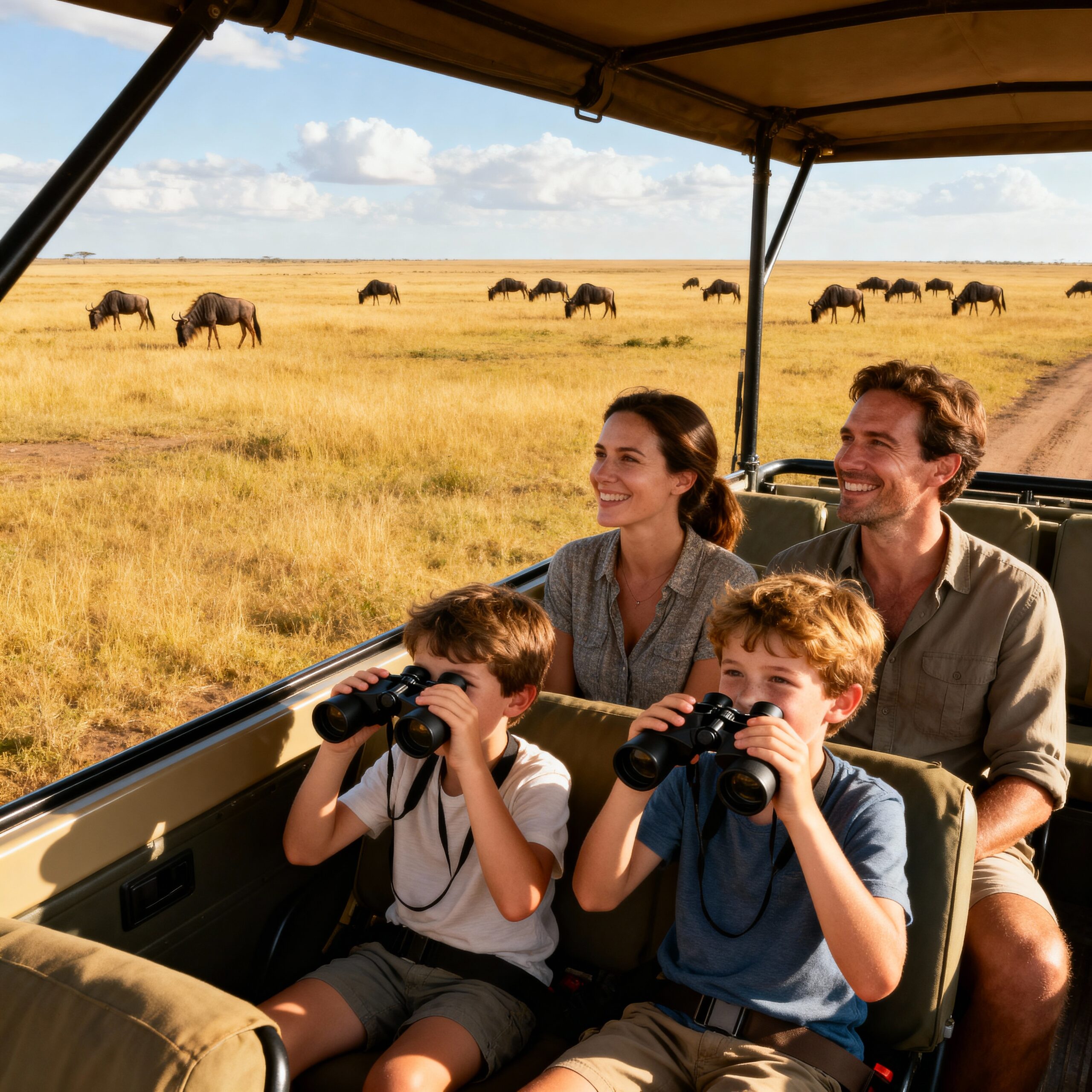
Families ask us constantly what to pack for children on Serengeti safaris. Kids need the same neutral layers as adults, sized for growth spurts and mud enthusiasm. One warm hoodie per child beats three cute outfits that never leave the tent. Binoculars sized for smaller faces make game drives interactive instead of boring.
Pack snacks your children recognize – lodges feed guests well, but a granola bar between sightings prevents meltdowns. Tablets loaded with offline shows help on three-hour transfers, though I encourage kids to watch the landscape instead. Sun hats with chin straps are non-negotiable; the equatorial sun does not negotiate back.
Stroller access is limited in bush camps. A baby carrier or hiking backpack works better for mobile camps. If your itinerary includes our family routes on the family friendly tours page, we send age-specific packing notes with your confirmation.
Laundry, Weight Limits, and Bush Flight Rules
Most Serengeti lodges and tented camps offer laundry service, often included or billed per piece. Turnaround is usually same-day if you hand clothes in by breakfast. That means you can pack fewer items and wash every two to three days – the single best trick for staying under airline weight limits.
If your Serengeti safari packing list includes a fly-in segment to Seronera, Grumeti, or Kogatende airstrips, expect strict baggage rules: typically 15 kg (33 lbs) per person in soft bags. Overweight bags get left behind or charged steep fees on spot aircraft. Wear your heaviest shoes and jacket on the plane; distribute books and lenses in your daypack carry-on.
We weigh bags at our Arusha office before remote flights and repack with guests when needed. It is less embarrassing there than on a dusty airstrip with a pilot tapping his watch.
What I Loved Most About Getting Packing Right
The guests who pack lightest often enjoy the trip most. I think of a couple from Melbourne who brought matching khaki outfits and nothing else fancy. They spent zero mental energy on laundry stress, climbed in and out of the vehicle without fuss, and looked comfortable in every photo. Meanwhile the plains delivered lion cubs on a termite mound, a cheetah stalk at full stretch, and a sunset that turned the sky the color of ripe mango.
Good packing does not create those moments – but bad packing can distract you from them. When you are not fighting a dust-stained white shirt or blistered feet, you are free to whisper “did you see that?” when a thousand wildebeest cross the horizon.
My Honest Experience Packing Guests from Arusha
What exceeded my expectations is how much confidence a solid Serengeti safari packing list gives first-timers. Travelers arrive nervous about snakes, malaria, and what to wear; by day two they relax because the basics are handled. What surprised me early in my career is how often people overpack “just in case” items they never touch – hair straighteners, four pairs of jeans, formal shoes.
What travelers should know: Serengeti is not a fashion runway or a mountaineering expedition. It is dusty, beautiful, and emotionally overwhelming. Pack for comfort, respect, and photos you will want to keep. For wildlife context before you go, our Serengeti animals guide pairs well with this list. For broader Tanzania packing beyond Serengeti, see our general Tanzania safari packing list.
Related planning: bathroom on safari guide.
Related planning: Tanzania safety for Americans.
Related planning: Serengeti wildlife gallery.
Frequently Asked Questions
Related Serengeti Planning Guides
- How Much Does a Serengeti Safari Cost? (2026 Guide)
- How Many Days Do You Need in the Serengeti?
- Best Month for a Tanzania Safari (and Serengeti)
- Serengeti Safari Packing List
- Masai Mara vs Serengeti Safari
- Bathroom on Safari in the Serengeti
- Is the Serengeti Crowded? Wildlife Guide
- Is Tanzania Safari Safe for Americans?
- Serengeti Conservation Threats and How to Help
Explore our pillar Serengeti wildlife guide and wildlife gallery, then browse all trips, contact us, or book your safari when you are ready.
Last updated: June 2026. Planning details change – confirm current park fees and lodge availability when you request a quote.
Written by the Zamadam Adventure Team, Arusha, Tanzania.
Pack neutral layers, a warm fleece for dawn drives, closed walking shoes, hat, sunscreen, insect repellent, binoculars, and a soft duffel. Add smart-casual dinner wear, sleepwear, and documents including passport, visa, and insurance.
White shows red dust within minutes on Serengeti roads and plains, reflects harsh sun, and stands out to wildlife. Neutral earth tones hide dust and match safari tradition.
Yes. Comfortable sneakers or light trail shoes work well for most Serengeti game drives because you are mostly seated. Bring closed toes for dusty stops and keep sandals for camp only.
Skip hard large suitcases, bright white clothing, drones without permits, single-use plastic bags, camouflage patterns, excessive jewelry, and heavy formal wear. Pack a soft duffel and travel-size toiletries instead.
Yes, and you should. Use unscented or lightly scented deodorant to avoid attracting insects. Stick formulas travel better than aerosols on flights.
Most Serengeti lodges expect smart casual, not black tie. A clean collared shirt or casual dress is enough. Guests typically look relaxed after a full day on the plains.
Questions about your specific route? Contact us and we will review your lodge types, season, and flight connections before you zip your bag shut.
Last updated: June 2026. Park seasons and lodge dress codes can vary – confirm details when you book.
Written by the Zamadam Adventure Team, Arusha, Tanzania.
Related Serengeti Planning Guides
Planning your Serengeti trip? Pair this guide with bathroom practicalities on safari, how many days to pack for, Tanzania safety for Americans, and our pillar Serengeti wildlife guide. Browse species photos on the wildlife gallery, then explore all trips, contact us, or book your safari when you are ready.