

Coqui Francolin in the Serengeti
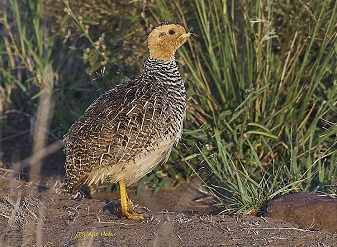
The coqui francolin is a small, cryptic gamebird of open grassland and savanna — more often heard than seen. Males give a distinctive double whistle, co-qui, from a termite mound or grass tussock at dawn and dusk.
In Serengeti, coqui francolins favour short-grass plains, firebreaks, and the edges of woodland where grass meets scrub. They walk rather than fly when disturbed, flushing only at close range with a rapid whir of wings.
For birders building a full Serengeti list, francolins reward patience and early starts — the coqui is one of three francolin species visitors may encounter alongside the red-winged and Shelley’s francolins in different habitats.
Co-qui call
Male double whistle at dawn
Ground bird
Walks through grass — flushes late
Short grass
Plains, firebreaks, woodland edges
Cryptic plumage
Buff and brown barred pattern
How to identify a coqui francolin
Small francolin with buff underparts, brown upperparts, and fine dark barring. The male has a black-and-white face pattern; females are duller. In hand they are unmistakable — in the field, the co-qui call is the best clue. When flushed, they fly low and fast with rapid wingbeats before dropping back into cover.
Do not confuse with red-winged francolin (richer red in wing, different call) or quail (much smaller, in coveys). On open plains, compare ground-dwelling birds with the kori bustard guide — bustards are vastly larger and walk with a stately gait.
Index every species on the wildlife gallery and plan routes with the Serengeti wildlife guide on the Northern Circuit.
Three steps to find coqui francolins
Francolins are heard before they are seen — build your strategy around dawn listening and slow driving through short grass.
Be on the road before sunrise — males call co-qui from termite mounds and grass tussocks for the first hour of light.
Focus on mown firebreaks, plain edges, and recently burnt areas where birds are exposed.
When you hear a call, stop the vehicle and scan low — birds often walk into view within minutes.
Daily rhythm on the Serengeti plains
Coqui francolins feed on seeds, insects, and green shoots in the early morning and late afternoon, resting in shade during midday heat. They are strongly terrestrial — flying only when pressed. Pairs or family groups maintain territories marked by calling perches on termite mounds.
After grass fires, francolins are quick to return to burnt areas where new growth attracts insects. This makes firebreak edges and regenerating plains productive in the weeks after a burn — the same habitat that attracts black-winged kites hunting rodents overhead.
Combine francolin listening with a waterhole stop for Egyptian geese on a full morning birding loop — grassland calls at dawn, pan birds mid-morning.
The co-qui call at dawn
The male’s co-qui whistle is one of the signature sounds of Serengeti dawn — two clear notes, the second slightly higher. Multiple males may call in sequence across open plains, creating a stereo effect that helps locate territories. Learning this call before your safari dramatically improves detection.
Explore the full bird list on our wildlife gallery and read the Serengeti wildlife guide for grassland birding tips on the Northern Circuit.
Pair francolin listening with bustard scanning on the same dawn loop for a complete grassland bird morning.
Safari tips for coqui francolin sightings
Leave camp at first light — calls peak in the first 45 minutes.
Play a recording before the trip so your ear recognises co-qui instantly.
Birds walk at ankle height — scan ground level, not treetops.
Ask your guide for a dawn start at least once on your safari — francolins, larks, and raptors are most active before the main mammal drive. Book a 7-day Northern Circuit safari with early departures in Serengeti National Park.
Plan a dawn birding safari in Serengeti
From coqui francolins to kori bustards and black-winged kites, we build private routes with early starts and grassland birding built into every Northern Circuit day.
Tell us if francolins are on your target list — we schedule at least one pre-breakfast drive when grassland birds are calling across the plains.
