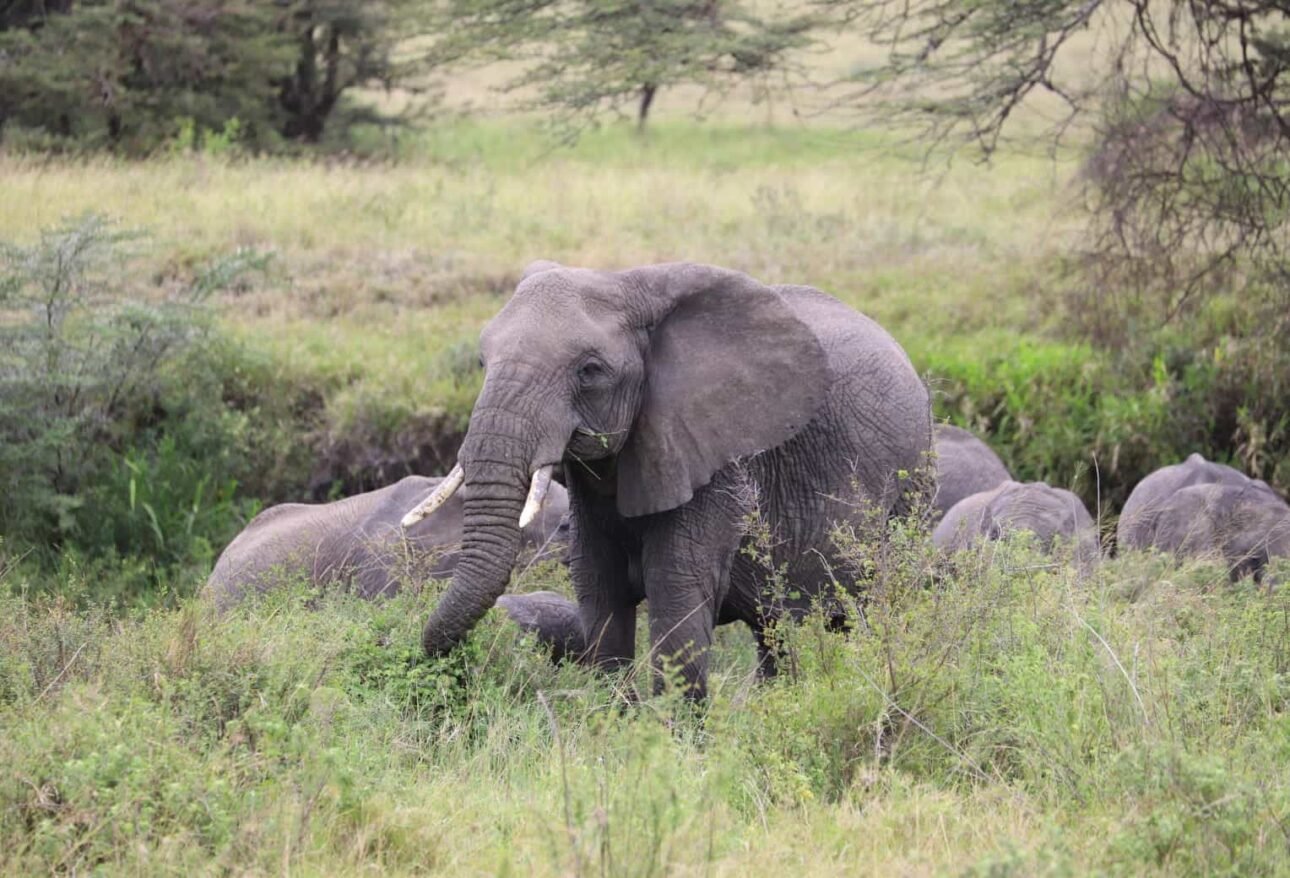
Is the Serengeti crowded? Sometimes yes – especially in central Seronera during peak season when a lion sighting can draw a dozen safari vehicles. But the Serengeti is also one of the largest national parks in Africa, and on the same morning you can find vehicle clusters near a kopje and empty golden plains twenty minutes away. I plan safaris from Arusha at Zamadam Adventure, and the question I hear most after “how much does it cost?” is whether the Serengeti feels overrun. This guide answers that honestly, then walks you through the wildlife you are likely to see – elephants, lions, leopards, cheetahs, hyenas, and more – so you arrive with realistic expectations instead of disappointment.
Short answer: the Serengeti can feel crowded in specific places at specific times, but it is rarely crowded park-wide. With the right season, zone, and guide, you still get those wide-open, heart-stopping moments that make people cry at their first elephant crossing. Below I break down crowd patterns by month, compare Seronera with remote sectors, explain how to avoid vehicle jams, and map the predator hierarchy that defines the ecosystem. For species deep dives, start with our Serengeti animals wildlife guide and Serengeti wildlife gallery.
Is the Serengeti Too Crowded? The Honest Answer
Crowd pressure is manageable when you plan timing and zones together. Read how many days to spend in the Serengeti and best month for a Tanzania safari, our pillar Serengeti wildlife guide, and species pages on Serengeti lion and Serengeti elephant to set realistic wildlife expectations away from the busiest crossings.
The Serengeti is too crowded only if your entire trip stays in the busiest corridors at the busiest hours. Central Seronera, the Naabi Hill gate approach, and famous river-crossing points during the Great Migration can feel like a wildlife traffic jam. I have counted fifteen vehicles ringed around a single cheetah – engines idling, radios crackling, dust hanging in the air. That is real, and I will not pretend otherwise.
What social media rarely shows is the other ninety percent of the park. Serengeti National Park covers roughly 14,750 square kilometers. Remote western woodlands, northern Lamai wedge, eastern short-grass plains, and southern Ndutu outside peak calving windows often deliver sightings with one or two other vehicles nearby – or none at all. The park is a UNESCO World Heritage Site with strict vehicle rules, but volume still concentrates where lodges cluster and where cats are predictable.
So is the Serengeti crowded? In July-August at a Mara River crossing, often yes. On a November green-season drive through the eastern plains with a patient guide, usually no. Your experience depends less on luck and more on routing, timing, and whether your operator chases every radio call or protects your peace.
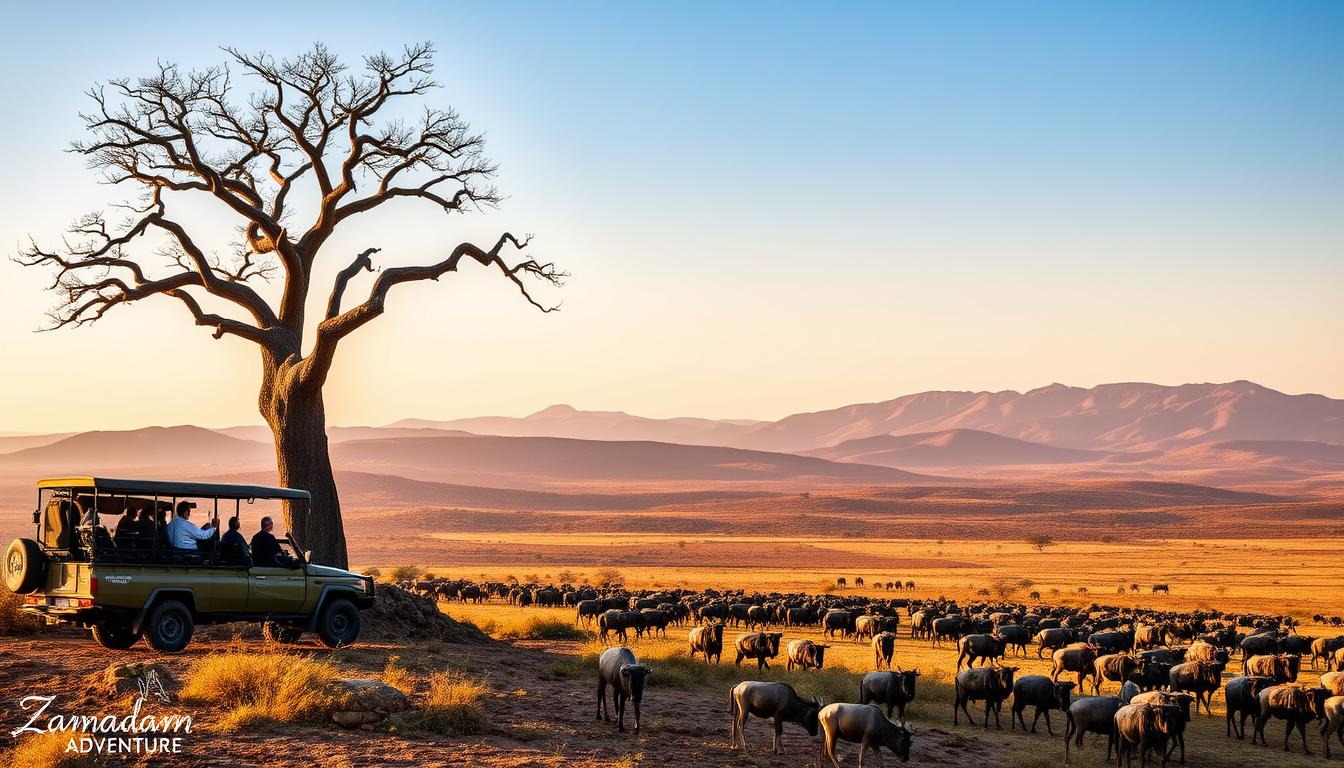
When Is the Serengeti Most Crowded by Season?
Crowds follow migration drama and dry-season comfort. When grass is short and animals concentrate, so do tourists. Here is how I explain seasonality to guests comparing dates on our best month for Tanzania and Serengeti safari guide.
Peak dry season (June through October)
June through October is the busiest window for international travelers. Skies are clear, roads are manageable, and wildlife gathers near permanent water. Seronera Valley hums with activity. Northern Serengeti along the Mara River sees spikes when wildebeest herds push toward Kenya. Vehicle counts at a lion kill can hit double digits before rangers redirect traffic.
Migration crossing peaks (July-September, variable)
River crossings are the Serengeti’s headline event – and its biggest crowd magnet. Dozens of vehicles line the bluffs above the Mara or Grumeti. The sight is unforgettable; the congestion is part of the trade-off. If crowds ruin the moment for you, consider shoulder-season migration viewing in the western corridor or calving season in Ndutu instead. Our Serengeti migration best month guide maps herd movement month by month.
Green and shoulder seasons (November, March, early December)
November rains bring renewal. Landscapes turn emerald, newborn wildebeest wobble on the southern plains, and lodge rates soften. Vehicle density drops outside Christmas week. March can be wet but rewarding for photographers who accept occasional muddy tracks. If your priority is space and value – not guaranteed river crossings – shoulder months often feel like a different park.
Long rains (April-May)
April and May are the quietest tourist months. Some remote camps close; roads in soft areas challenge even skilled drivers. Crowds are minimal. Wildlife is still present – elephants browse in woodlands, lions rest on kopjes, leopards hunt along drainage lines – but you trade convenience for solitude. For crowd-averse travelers with flexible schedules, this window surprises people who assumed Serengeti is always packed.
Seronera vs Remote Serengeti Zones: Where Crowds Build
Think of Serengeti as a country, not a single viewpoint. Seronera is the historic heart – a river valley with year-round water, permanent lodges, an airstrip, and reliable cat sightings. Remote zones spread crowd pressure across ecosystems that feel worlds apart.
Central Seronera Valley
Seronera delivers consistent lion, leopard, and elephant sightings near the Seronera River. That reliability attracts vehicles. Midday near the visitor center and main junctions feels busiest. Early morning still offers magic – I have watched a leopard descend a sausage tree at dawn with only our vehicle present – but by 9 a.m. radio networks buzz and clusters form fast.
Northern Serengeti (Lobo, Kogatende, Lamai)
Northern sectors surge during migration season and calm down otherwise. Permanent camps are fewer than in Seronera, but when herds arrive, northern roads fill quickly. Outside those windows, kopje country and riverine forest can feel remarkably private. This is prime lion and elephant country with dramatic granite outcrops.
Western corridor (Grumeti, Kirawira)
Western woodlands and the Grumeti River offer a different rhythm – fewer vehicles, more gallery forest, strong hippo and crocodile viewing during migration passages. Crowds spike at Grumeti crossings but dissipate on side tracks. Elephants move through riverine belts here; leopards haunt fig trees along watercourses.
Southern plains and Ndutu (NCA border)
Southern short-grass plains explode with life during calving season (roughly January-March). Vehicle numbers rise around Ndutu but spread across vast open terrain. Cheetah sightings shine here – wide views let you watch hunts without jostling. For crowd-conscious travelers, staying mobile with a guide who knows secondary loops matters more than any single lodge brand.
Eastern Serengeti and Soito Kopjes
Eastern sectors reward travelers who skip the obvious loops. Soito Kopjes and open plains east of Seronera often produce lion prides, bat-eared foxes, and raptors with lighter traffic. This is where I send repeat guests who say, “We saw the Big Five already – now show us the Serengeti without the queue.”
How to Avoid Vehicle Clusters on a Serengeti Safari
Crowd management is a skill. Good guides treat it like wildlife tracking – reading patterns, anticipating bottlenecks, and knowing when to leave a sighting that has turned into a parking lot. Here is what we practice at Zamadam Adventure on every Serengeti departure.
- Start before sunrise. The first hour after gate opening is gold. Cats are active; day-trip traffic has not arrived; Seronera feels almost intimate.
- Stay out in the heat of the day. Many vehicles return to camp for lunch. Midday drives on remote loops often mean solitary elephant herds and lazy lion prides under acacias.
- Trust a guide who skips the pile-up. If ten vehicles ring one cheetah, we find another sighting or wait twenty minutes until the circus leaves.
- Book enough days. Rushing a two-day Serongeti hop forces you into Seronera highlights only. Three to four full days lets you rotate zones. See our how many days in Serengeti breakdown.
- Choose lodging inside the park. Outside-gate camps add drive time; you arrive when clusters already formed. Inside-park camps buy quiet dawn departures.
- Consider fly-in sectors. Flying to Seronera, Kogatende, or Grumeti airstrips cuts long transfer days and opens remote routing. Budget more, gain time.
- Travel shoulder or green season. Same wildlife drama, fewer simultaneous vehicles – especially away from river crossings.
TANAPA rangers monitor congested sightings and can limit stacking at sensitive sites. Respect their instructions – they protect animal stress levels and guest safety. Official park rules live on the TANAPA website.
Travel Tip: Ask your operator how many full game drives are included inside Serengeti versus transit days. Extra park days are the cheapest upgrade for both wildlife and breathing room.
Want a route built around space and sightings, not just checklist speed? Browse our 7 Day Tanzania Safari – Serengeti, Ngorongoro and Manyara or contact us for a custom plan through Tanzania’s northern circuit.
Will I See Elephants in the Serengeti?
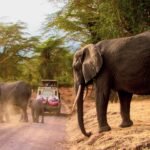
Yes – most visitors see elephants in the Serengeti, especially with two or more full game days. Serengeti elephants are not as dense as Tarangire’s legendary herds, but they are present year-round in woodlands, river valleys, and kopje foothills. On a typical four-day Serengeti-focused itinerary, I expect elephant sightings on at least two days. Missing them entirely usually means one rushed drive through central Seronera at midday only.
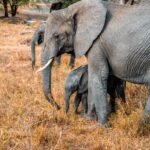
Elephants travel in matriarchal family units. Bulls appear solo or in small bachelor groups. Calves steal every guest’s heart – I still remember a youngster practicing trunk control while its mother stripped acacia bark ten meters from our Land Cruiser. Those quiet moments happen away from lion pile-ups when your guide reads the wind and cuts engine noise.
Best areas for elephant viewing in Serengeti
- Seronera woodlands – Reliable year-round near the river and drainage lines.
- Northern kopje country (Lobo, Larelemangi) – Strong dry-season concentrations.
- Western Grumeti woodlands – Elephants follow riverine forest corridors.
- Eastern Soito and Barafu areas – Quieter loops with browsing herds.
- Southern Ndutu wood patches – Excellent during green season calving period.
For behavior, conservation status, and photo tips specific to the species, read our dedicated Serengeti elephant guide. Elephants shape the landscape – pushing over trees, opening paths, creating water holes other animals use. Watching a herd cross open plain at sunset is one of those Serengeti scenes that makes the early wake-ups worthwhile.
Elephant viewing odds by trip length
These are practical expectations from our Arusha team, not guarantees – wildlife is wild. They help you plan without overpromising.
- 1 full Serengeti day: Moderate chance; one drive limits zone flexibility.
- 2-3 full days: High chance; multiple habitats covered.
- 4+ days with zone rotation: Very high chance; quality viewing plus behavioral moments.
What Is the Top Predator in the Serengeti?
The lion is the top predator in the Serengeti. As the apex carnivore, lions sit at the peak of the food web – hunting large prey, defending territory, and shaping herd behavior across the ecosystem. No other Serengeti predator matches the lion’s combined size, social hunting power, and ecological influence. When travelers ask about the “king” of the plains, biologically and behaviorally, the answer is Panthera leo.
That does not mean lions win every encounter. Hyenas steal kills. Buffalo gore careless cats. Young cubs die from exposure and rival males. But as a species, lions define predator dynamics tourists most often witness on game drives. Serengeti supports one of Africa’s largest lion populations – a fact that still gives me chills when a pride walks past at eye level.
Deep species profile: Serengeti lion guide.
Serengeti Predator Hierarchy: Lions, Leopards, Cheetahs, and Hyenas
Understanding who eats whom – and who argues over the leftovers – helps you interpret sightings. The Serengeti predator web is layered, competitive, and endlessly dramatic.
1. Lion – apex predator
Prides control territories around water and kopjes. Cooperative hunts bring down wildebeest, zebra, and buffalo. Males defend bloodlines; females do most hunting. Lions dominate carcasses unless outnumbered by hyenas at night. Seronera, Maasai Kopjes, and eastern plains pride territories are classic drive-loop territory.
2. Leopard – stealth specialist
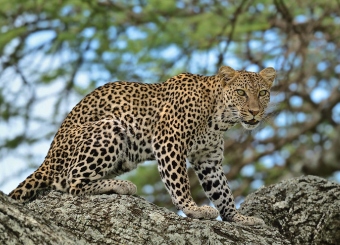
Leopards are solitary, nocturnal, and arboreal when needed. They haul kills into trees to escape hyenas and lions. Seronera’s riverine belts and sausage trees are famous leopard habitat – but sightings require patience. A leopard draped over a branch at last light is one of my favorite Serengeti memories. Full guide: Serengeti leopard.
3. Cheetah – speed hunter on open plains
Cheetahs need visibility and space. Southern and eastern short-grass plains suit their high-speed chases. They lose kills to lions and hyenas routinely – nature’s tax on specialization. Cheetah families on termite mounds at dawn feel like the Serengeti distilled: fragile, fast, breathtaking. Population pressure and vehicle crowding stress cheetahs more than larger cats; give them distance when you find them.
4. Spotted hyena – formidable competitor
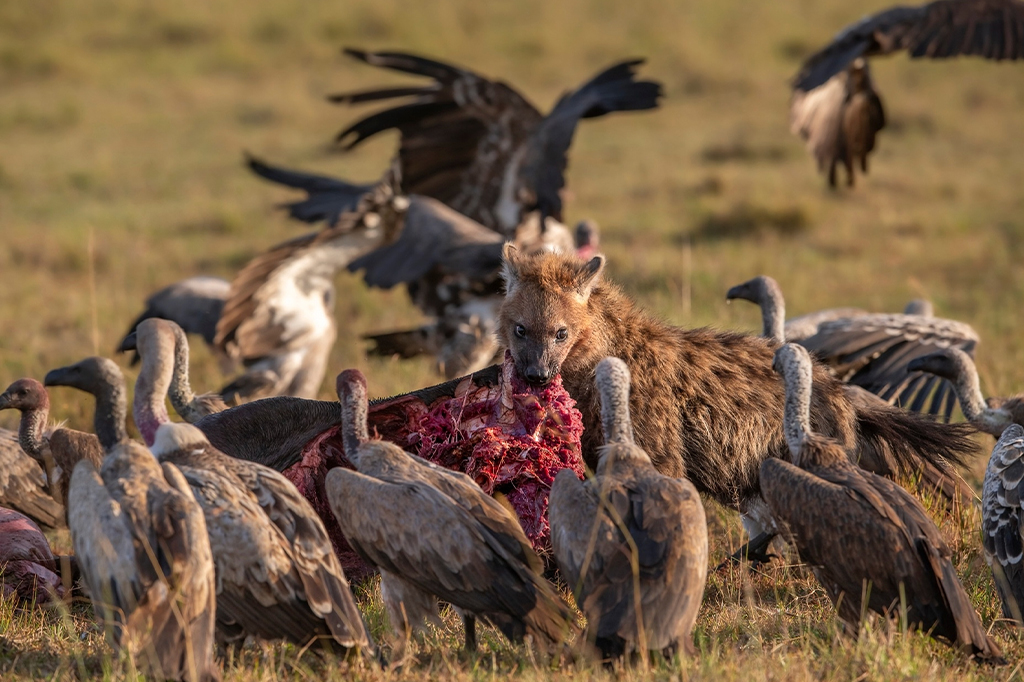
Hyenas are not just scavengers – clans hunt actively and can drive lions off kills when numbers favor them. Their whoops at night define camp soundtracks. By biomass and persistence, hyenas compete at the top tier even if they lack apex status in the textbook sense. Watching hyenas and vultures dispute a lion leftover teaches more ecology in ten minutes than any brochure.
Supporting predators you may also see
- Black-backed and side-striped jackals – Common on plains margins.
- Bat-eared fox – Termite mound specialists in open country.
- Wild dog (painted wolf) – Rare but increasing in some sectors; always a celebration sighting.
- Servals and caracals – Secretive; sharp-eyed guides find them in grass edges.
- Crocodiles – Apex ambush predators at river crossings.
Big Five Odds in the Serengeti: What to Realistically Expect
Travelers often conflate “crowded” with “guaranteed.” Serengeti offers some of the best Big Five viewing in Africa, but rhino is the outlier. Lions, leopards, elephants, and buffalo are regularly seen on multi-day itineraries. Black rhino occur in limited numbers – Moru Kopjes and select northern sectors – and require luck plus guide knowledge.
On a typical 4-day Serengeti stay with zone rotation, our guests usually tick four of five comfortably. Rhino remains a bonus sighting, not a daily one. Combining Serengeti with Ngorongoro Crater improves rhino odds dramatically – crater floor populations are among the most reliable in Tanzania. Browse species pages on the wildlife gallery before you travel so you know what each animal looks like in context.
Big Five snapshot table
Approximate sighting likelihood on a 4-day Serengeti-focused safari with a skilled guide:
- Lion – Very high (daily in most seasons)
- Leopard – Moderate to high in Seronera; requires patience
- Elephant – High with woodland loops
- Buffalo – Very high (herds on plains and woodlands)
- Rhino – Low inside Serengeti proper; higher if combined with Ngorongoro
Other Serengeti Wildlife You Will Likely See
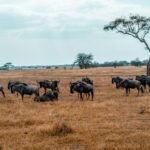
Beyond predators and elephants, Serengeti density astounds first-timers. Wildebeest and zebra in numbers that blur the horizon. Giraffe silhouettes on ridges. Thomson’s and Grant’s gazelles bouncing away from cheetahs. Hippos grunting in Seronera pools. Olive baboons and vervet monkeys at picnic sites. Superb starlings flashing metallic wings on lodge lawns.
Birders find raptors everywhere – bateleur eagles, martial eagles, vultures cleaning the cycle lions start. Our complete wildlife guide lists dozens of mammals and birds with links to gallery species pages. Even on a “slow” drive day, Serengeti delivers – the issue is rarely empty landscape; it is too many vehicles at one empty-looking junction while action happens two kilometers off the main track.
Does Crowd Level Ruin the Serengeti Experience?
It can – if you expect total solitude at a famous river crossing in August. It usually does not – if you accept that world-class parks attract world-class demand and you plan around it. I have seen guests annoyed by six vehicles at a sighting and other guests thrilled because their first lion was six vehicles away. Perspective matters.
What ruins trips faster than crowds is under-planning: one night inside the park, no zone strategy, a guide who races radios all day, or comparing Serengeti to a private conservancy in low season and feeling cheated. Set expectations with your operator before deposit. Ask about maximum vehicle counts at sightings, whether your guide can rotate zones, and how many hours per day you are actually on drive – not just “full board at lodge.”
Responsible tourism also means not adding to stress on cheetahs, leopard kills, or crossing herds. Our Serengeti conservation guide explains threats facing the ecosystem and how travelers can help. Crowds become harmful when vehicles surround hunting cats or block migration corridors – another reason to choose operators who follow park etiquette.
Sample Low-Crowd Serengeti Itinerary Focus
This is a routing sketch for travelers who want wildlife depth with fewer vehicle clusters. Adjust by season and migration position.
- Day 1: Enter via Naabi; afternoon eastern loops toward Soito Kopjes (skip Seronera junction rush).
- Day 2: Dawn Seronera cat search; mid-morning shift to quieter woodland tracks for elephants.
- Day 3: Full day remote sector based on season – western woodlands or northern kopjes.
- Day 4: Southern or Ndutu extension if calving/green season; otherwise repeat best-performing quiet loop.
Pair timing advice from our best month guide and Serengeti packing list with duration planning in how many days you need. Budget context lives in the Serengeti safari cost guide.
What I Loved Most About Serengeti Wildlife – Despite the Crowds
The moment that stays with me was not a Mara crossing with forty vehicles. It was an ordinary Tuesday in November – green grass, low season, our Land Cruiser alone on the eastern plains. A lioness walked parallel to us for two hundred meters, close enough to hear pads on hardpan. Behind her, wildebeest moved like a slow river. No radio chatter. No idling engines. Just heat, grass smell, and the weight of being small in a very old landscape.
I also loved watching guests see their first elephant family – the way adults spread into a protective arc around calves without any human instruction. Or the hush when someone spots a leopard tail twitching in a fig tree and everyone stops breathing. The Serengeti still delivers those moments. Crowds make them harder to find, not impossible.
My Honest Experience Guiding Expectations from Arusha
What exceeded my expectations over years in tourism is how adaptable the Serengeti feels once you stop treating it like a single Instagram location. Guests who thought “crowded park” meant “bad safari” often report their best day was the one we skipped a famous sighting to watch elephants at a mud wallow alone.
What surprised me early is how much disappointment comes from comparison – Mara vs Serengeti debates, YouTube crossing hype, neighbor’s brag about a private rhino. Read our Masai Mara vs Serengeti guide for context, then plan your trip on your dates and priorities, not someone else’s highlight reel.
What travelers should know: the Serengeti is a shared global treasure. Some sharing is inevitable. The skill is choosing when, where, and with whom you explore so sharing becomes background noise rather than the headline. Practical logistics – bathrooms, road time, camp rules – matter too; our bathroom on safari guide covers what first-timers rarely ask until day two. For safety basics on roads and wildlife distance, see Tanzania safari safety for American travelers.
Photography and Viewing Tips When Vehicles Gather
Crowded sightings still produce great photos if you work with constraints. Arrive early for side angles. Use telephoto compression to isolate subjects from vehicle lines. Be patient – cats move; clusters reorganize. Never stand on seats or block other vehicles when rangers manage positioning.
- Pack a 100-400mm or equivalent zoom for predators at distance.
- Wide lens for landscape context when plains are empty.
- Polarizer helps midday haze on open grass.
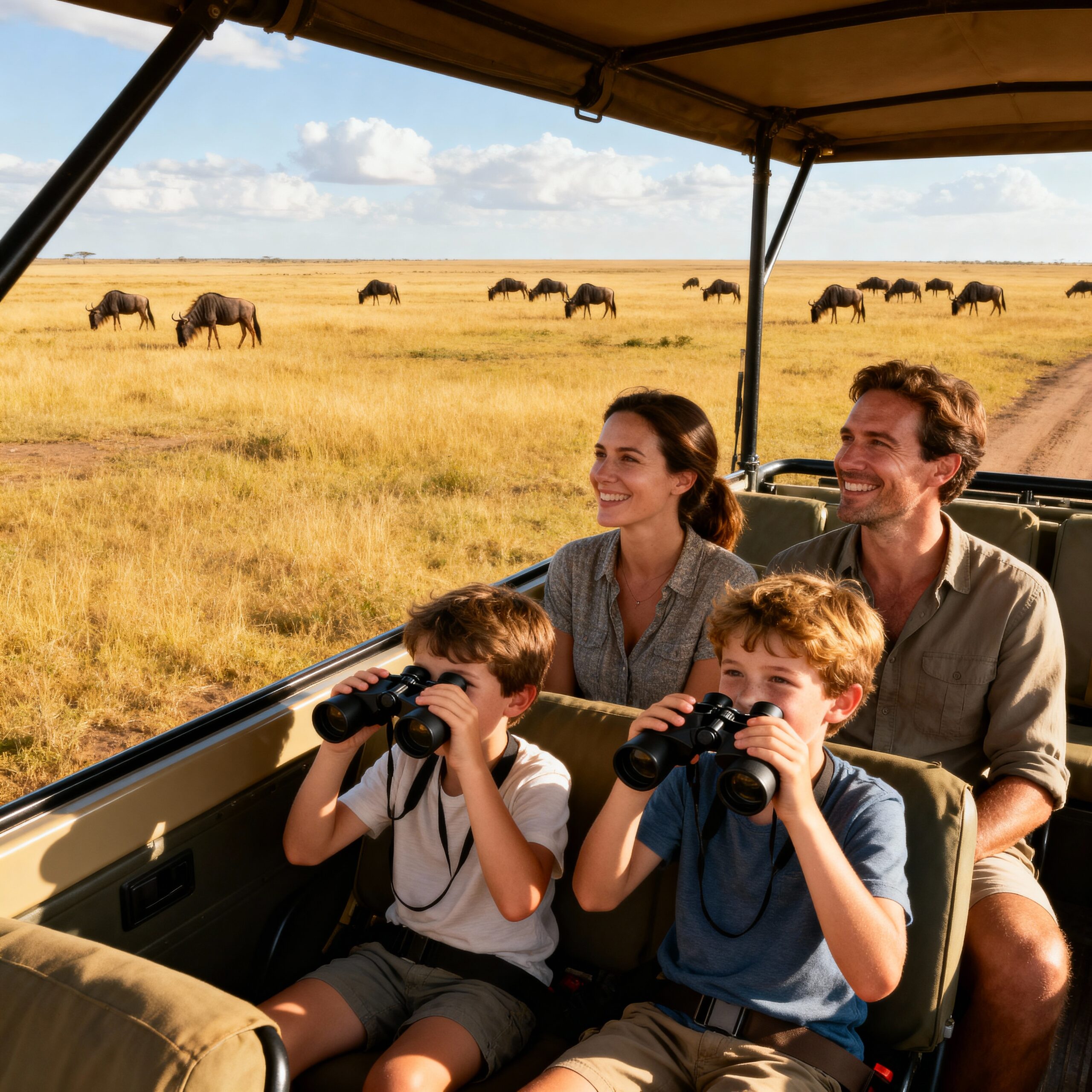
- Put camera down sometimes – binocular observation beats blurry panic shots.
Frequently Asked Questions
Related Serengeti Planning Guides
- How Much Does a Serengeti Safari Cost? (2026 Guide)
- How Many Days Do You Need in the Serengeti?
- Best Month for a Tanzania Safari (and Serengeti)
- Serengeti Safari Packing List
- Masai Mara vs Serengeti Safari
- Bathroom on Safari in the Serengeti
- Is the Serengeti Crowded? Wildlife Guide
- Is Tanzania Safari Safe for Americans?
- Serengeti Conservation Threats and How to Help
Explore our pillar Serengeti wildlife guide and wildlife gallery, then browse all trips, contact us, or book your safari when you are ready.
Last updated: June 2026. Planning details change – confirm current park fees and lodge availability when you request a quote.
Written by the Zamadam Adventure Team, Arusha, Tanzania.
The Serengeti feels crowded at peak sights like Seronera and Mara River crossings in dry season, but most of the park is vast and quiet with proper routing. Shoulder seasons and remote zones dramatically reduce vehicle density.
Yes, most multi-day safaris include elephant sightings, especially in Seronera woodlands, northern kopjes, and western river belts. Two or more full game days raise odds substantially.
The lion is the apex predator. Prides hunt large prey, control territories, and influence the behavior of other carnivores and herbivores across the ecosystem.
Lions, leopards, elephants, and buffalo are commonly seen on 3-4 day itineraries. Rhino is rare inside Serengeti proper; combining with Ngorongoro Crater improves rhino odds.
April-May long rains and shoulder months like November and March see the fewest tourists. Early-morning drives any season also avoid midday vehicle build-ups in Seronera.
Seronera is the busiest sector because of year-round water and cats, but dawn drives and weekday routing to side loops reduce congestion. Midday near the visitor center is peak traffic.