

Elephants in the Serengeti
African elephants are among the Serengeti’s most memorable sightings — slow, intelligent, and deeply social. Matriarch-led family groups move between woodland corridors, river lines, and open plains, communicating over distance with rumbles too low for human ears and protecting calves with coordinated defensive circles.
Unlike the fleeting glimpse of a leopard in a tree, elephants reward patience: you can watch dust baths, trunk greetings, and feeding routines unfold at close range when guides keep a respectful distance. For most travelers, elephants bridge the gap between iconic Big Five checklist and genuine wildlife connection.
Serengeti elephant numbers have recovered under long-term protection, though herds still face pressure from habitat fragmentation outside park boundaries. Responsible viewing — quiet vehicles, no crowding near calves — keeps encounters safe for both guests and animals.
3–6 tons
Adult bull weight
Matriarch
Female-led family units
Year-round
Resident across the park
Big Five
Largest land mammal
How to identify Serengeti elephants
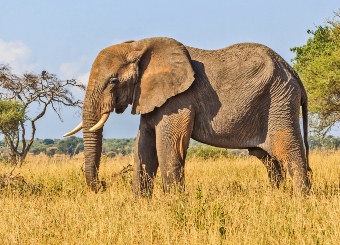
African elephants have large fan-shaped ears (larger than Asian elephants), a single domed forehead, and a trunk with two finger-like tips at the end. Bulls carry heavier tusks and a more rounded forehead; cows are slightly smaller with thinner tusks or none at all in older females.
Juveniles stay close to mothers and aunts — a compact cluster of smaller bodies within the herd is the easiest clue you are watching a family unit, not a lone bull. In dry season, grey skin turns red-brown from dust bathing; in green season, mud wallows darken the hide.
Where elephants roam in Serengeti National Park
Elephants use drainage lines, acacia woodland, and permanent water. The central Seronera valley and eastern woodlands hold reliable herds year-round. In dry months, family groups concentrate along the Grumeti, Mara, and smaller seasonal rivers where browse remains green.
Plan routes on the Northern Circuit and index every species on the wildlife gallery. For the full planning picture — Big Five, migration, and regional timing — read the Serengeti wildlife guide.
Elephants share river margins with Cape buffalo and attract lion prides when calves or weakened adults are present — three Big Five species often overlap on the same game drive loop.
Quick field notes
Matriarch leads daughters, sisters, and dependent calves.
Broken branches and debarked trees mark recent routes.
Dry season pulls herds to rivers and permanent pools.
Matriarchs, calves, and bachelor bulls
Serengeti elephant society revolves around the matriarch — the oldest, most experienced female who decides when to move, where to drink, and how to respond to threats. Family groups typically include her daughters, granddaughters, and immature males. When a calf is born, the entire herd slows its pace and forms protective rings if vehicles or predators approach too closely.
Adolescent males eventually leave the natal herd and may join loose bachelor groups or travel alone. Mature bulls in musth — a hormonal period marked by temporal gland secretion and heightened aggression — demand extra space from guides and other wildlife. Reading ear position, trunk posture, and foot shuffling helps your guide judge mood before you commit to a viewing angle.
Elephants are keystone engineers: they push over trees to reach branches, dig water holes other species use, and create clearings that reshape woodland structure. That ecological role makes them as important to the landscape as they are to the Big Five checklist on Serengeti National Park.
Trunk touches and vocal rumbles reinforce family ties.
Herds shield young — never drive between mother and calf.
Eastern acacia belts and drainage lines hold daily routes.
Give lone bulls extra space — guides read ear and trunk signals.
Safari tips for elephant sightings
Keep space around calves — mothers charge if they feel boxed in.
Switch off near herds; idling and slamming doors unsettle elephants.
Snapping wood in woodland edges often means a feeding herd is near.
Pair elephant drives with predator viewing — read our Serengeti lion guide and buffalo guide for shared habitat tips. Book two full days in the park on a 7-day Northern Circuit safari.
Plan a Serengeti safari focused on elephants
We tailor private routes from Arusha with woodland loops, river margins, and realistic drive times — so you spend more time with herds and less time rushing between gates.
