

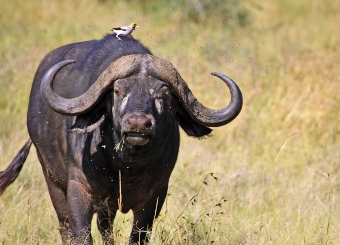
Buffalo in the Serengeti
The Cape buffalo is one of the Serengeti’s most reliable Big Five sightings — massive herds grazing near rivers, wallowing in mud, and moving in disciplined columns across golden plains. They look deceptively calm at a distance, yet experienced guides treat them with respect: a wounded or cornered buffalo is among Africa’s most dangerous animals.
Dozens to hundreds gather at waterholes in dry season, making them a focal point for the entire predator guild. Lions shadow herds for days; hyenas follow. For many guests, a buffalo herd at a muddy pool is as dramatic as any cat sighting — the scale, dust, and tension are pure Serengeti.
Large herds
Dozens to hundreds near water and plains
Water-dependent
River lines and pools in dry season
Big Five
Among the most common sightings
Year-round
Resident across Serengeti
How to identify Cape buffalo
Large, stocky bovine with a dark brown to black coat and a heavy horn boss where the bases meet on the forehead. Horns curve outward and down, then up — sweeping hooks in mature bulls. Ears are large and fringed; the dewlap hangs heavily under the neck. Calves are reddish-brown, darkening with age.
Bulls are bulkier than cows; old males may leave herds to form bachelor groups. Look for red-billed or yellow-billed oxpeckers on shoulders and flanks — a useful field sign when scanning distant herds. Compare predator dynamics with our Serengeti lion guide and browse every Big Five species on the wildlife gallery.
Herd behaviour and grazing ecology
Cape buffalo are bulk grazers — they eat coarse grass other ungulates leave behind, maintaining pasture quality across the ecosystem. Herds move predictably between grazing grounds and water, especially at dawn and dusk. Cows and calves cluster in the centre when threatened; bulls form a defensive perimeter that can repel a lone lion.
Lions target isolated animals, the young, and the weak — but taking down a healthy adult requires a coordinated pride assault, often at night near water. Read our Serengeti lion guide and the Serengeti wildlife guide for the full predator-prey story on the Northern Circuit.
Cows and calves centre, bulls on the perimeter
Pride assaults at waterholes and night edges
Dry-season congregations at rivers and pools
Birds on flanks signal distant herds
Buffalo, lions, and the waterhole drama
Waterholes in Serengeti are theatres of life and death. Buffalo congregate when pools shrink in dry season — and lions know it. A pride may wait in scrub at the downwind edge, timing a charge when the herd is spread thin at the bank. Guests sometimes witness the aftermath: vultures, marabou storks, and hyenas arriving within minutes of a kill.
These scenes connect the Big Five in one frame: buffalo as prey, lion as hunter, scavengers as cleanup crew. Even without action, the tension at a crowded waterhole — ears swivelling, mothers nudging calves — tells you why Serengeti drives stay unpredictable. Black rhino are far rarer in the same landscapes — see our Serengeti rhino guide for how guarded populations differ from common herd sightings.
Buffalo remain the backbone of many pride territories. Understanding their movements helps you predict where cats will be active on any given afternoon on Serengeti National Park.
Where to see buffalo in Serengeti National Park
Buffalo are widespread and resident year-round. The highest densities follow water: Seronera river lines, Grumeti pools, western woodland margins, and northern Mara zones when migration herds pass through. Tell your guide you want herd-focused routing on the Northern Circuit.
Dry season (roughly June–October) concentrates animals at permanent water — excellent for photography when dust backlights a long column crossing the plain. Every Big Five species is indexed on our Serengeti wildlife gallery. For the full planning picture, read the Serengeti wildlife guide.
Central water lines — reliable year-round herds and wallows
Grumeti woodlands and glades — quieter roads, mud pools at dawn
Migration months — buffalo follow grazing columns near the river
Safari tips for buffalo sightings
Dry-season mornings concentrate herds at rivers and pools — start here.
Birds on distant backs reveal herds hidden in grass.
Never crowd buffalo on foot or with the vehicle — they charge without warning.
Book a 7-day Northern Circuit safari with two full days in Serengeti National Park for the best waterhole and herd photography on the Northern Circuit.
Plan a Serengeti safari focused on buffalo herds
We tailor private routes from Arusha with herd-friendly guides, waterhole camp zones, and realistic drive times — so you maximize dawn and dusk windows when buffalo move between grazing and water.
