

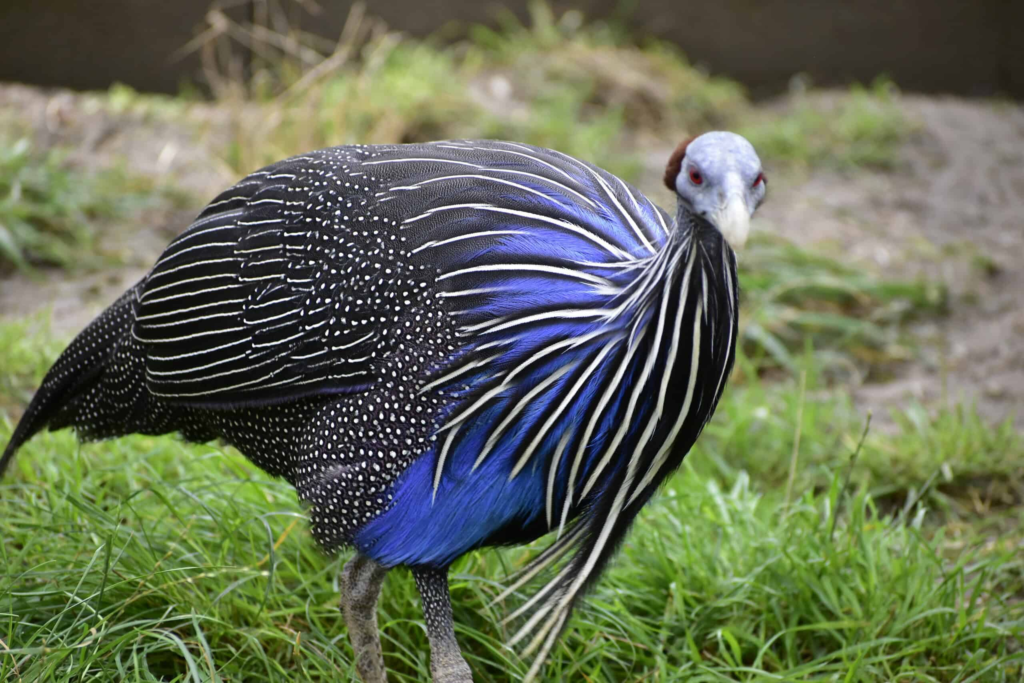
Vulturine Guineafowl in the Serengeti
With a cobalt-blue breast, bare cobalt face, and intricate black-and-white plumage, the vulturine guineafowl is one of East Africa’s most striking ground birds. Flocks move through dry thorn scrub and acacia edges like feathered jewels — social, noisy, and unforgettable in good light.
In the Serengeti they are a specialty of the drier eastern and northern margins rather than the wettest grassland core. Finding a flock scratching at dawn is a top prize for birders who want color beyond the roller and starling.
Photographers should prepare for flush-and-relocate behavior — flocks rarely stay exposed in the open for long once a vehicle stops abruptly.
How to identify vulturine guineafowl
Plumage pattern
Black body with fine white spots; long hackle feathers on the neck. Breast and upper back glow iridescent blue in sunlight.
Head & face
Bare blue face with red eye; crown feathers short and dark. Smaller and more slender than helmeted guineafowl.
Flock behavior
Runs in tight groups of six to twenty birds. Calls are harsh, repetitive chirrs when flushed or alarmed.
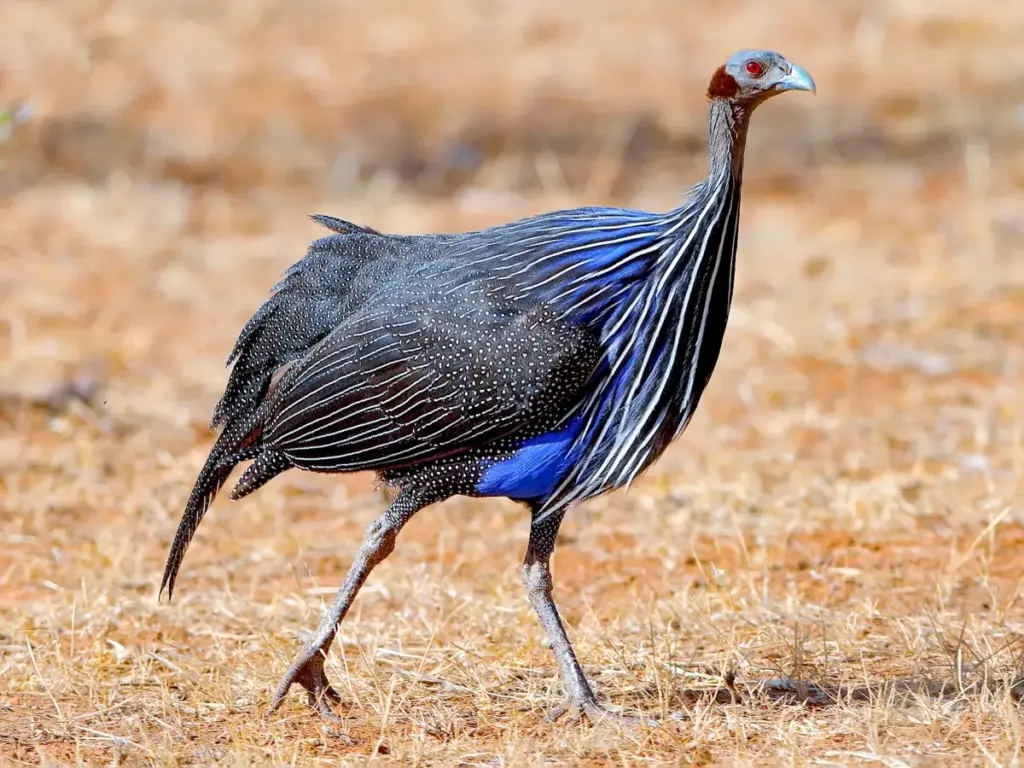
Social flocks on foot
Vulturine guineafowl spend most of their time on the ground, roosting in trees only at night. They feed on seeds, tubers, insects, and small invertebrates uncovered by scratching. Because they rely on cover, they flush explosively when surprised — a sudden whirr of wings and calls that often reveals where the flock landed nearby.
Males are slightly larger but plumage is similar; sexes are easiest to separate by behavior during the breeding season. Juveniles are duller with shorter hackles — flocks may include young birds that stay close to adults for protection from raptors and small carnivores.
Guides who know thorn-scrub edges and dry-season waterlines improve your odds significantly. Cross-reference every species on our Serengeti wildlife gallery and plan routes using the Serengeti wildlife guide on the Northern Circuit.
Where to see vulturine guineafowl in Serengeti
Focus on dry thorn scrub, Commiphora woodland, and acacia margins in the eastern and northern Serengeti. They are less common in the wettest central grasslands and are often associated with kopje edges and drainage lines where cover meets open ground.
Unlike helmeted guineafowl, vulturines prefer drier bush and are more tied to intact thorn habitat. Habitat loss outside protected areas makes Serengeti sightings especially valuable for photographers collecting East Africa’s full ground-bird set.
Green season still produces sightings along scrub margins when grass is tall — flocks use open tracks and firebreaks. Dry season concentrates birds near remaining water and seed-rich ground after controlled burns.
Dense low scrub with scattered acacia — classic flock habitat at first light.
Rocky outcrops with surrounding bush — flocks move between shade and feeding clearings.
Concentrated near remaining water and seed-rich ground after grass fires.
Ask guides about recent sightings near Lobo and eastern boundary woodlands.
Three steps to a better sighting
Flocks feed at dawn when scrub is cool and insects are active on bare ground.
Drive slowly along woodland margins — guineafowl often cross tracks in single file.
When one bird alarms, stop and scan — the flock may be close in cover.
Safari tips for vulturine guineafowl sightings
Schedule thorn-scrub drives in the first hour after leaving camp.
One bird usually means more nearby — scan the bush line before moving on.
Combine with hornbills and starlings for a full ground-and-perch birding morning.
See our southern ground hornbill guide and kori bustard guide. Book a 7-day Northern Circuit safari with birding time in Serengeti National Park.
Thorn-scrub margins at dawn are the most reliable window — flocks scratch in the open before heat pushes them into cover.
Vulturine guineafowl reward patient thorn-scrub drives. Tell your guide early if this species is a must-see on the Northern Circuit. Full index: wildlife gallery.
Plan a Serengeti safari with vulturine guineafowl on the route
We build private birding and wildlife itineraries from Arusha — with realistic drive times, the right guide, and thorn-scrub stops when season allows.
Vulturine guineafowl are a specialty of drier eastern and northern sectors — tell us early if they are on your must-see list for the Northern Circuit.
