Where is Mount Kilimanjaro located in Tanzania? It rises in the northeast of the country, right on the border with Kenya, in Kilimanjaro Region. The nearest safari hub is Arusha (about 2-3 hours by road), and the classic trekking gateway town is Moshi. Most climbers fly into Kilimanjaro International Airport (JRO), look up, and think: “Wait – that snowy mountain is in Africa?” Yes. And it is very real.
I still remember my first clear view from the road between Arusha and Moshi. The clouds opened, Kibo’s summit appeared, and our whole vehicle went quiet for ten seconds. Someone whispered, “That is the one we are climbing?” We were not even on the mountain yet, and it already felt bigger than the photos.
If you are planning a Kilimanjaro trek, a northern Tanzania safari, or both, this friendly guide explains exactly where Kilimanjaro sits on the map, how to reach it, and how locals (including our Arusha team at Zamadam Adventure) usually combine it with Serengeti and Ngorongoro trips.
Mount Kilimanjaro Location at a Glance
| Detail | Answer |
|---|---|
| Country | Tanzania (United Republic of Tanzania) |
| Region | Kilimanjaro Region |
| Nearest major town | Moshi (south) and Arusha (west) |
| Main airport | Kilimanjaro International Airport (JRO) |
| Protected area | Kilimanjaro National Park (UNESCO World Heritage Site) |
| Coordinates (summit) | About 3.0755° S, 37.3533° E |
| Summit height | 5,895 m / 19,341 ft (Uhuru Peak on Kibo) |
| Border | Tanzania-Kenya border runs across the mountain’s northern slopes |
Where Is Mount Kilimanjaro on the Map of Tanzania?
Mount Kilimanjaro is in northeastern Tanzania, inland from the Indian Ocean coast and north of the country’s safari heartland. Picture Tanzania as a rough triangle: Dar es Salaam and Zanzibar sit on the east coast; the famous wildlife parks of the Northern Circuit (Serengeti, Ngorongoro, Tarangire, Lake Manyara) spread west and northwest of Arusha. Kilimanjaro stands just east of Arusha, towering above coffee farms and banana plantations.
On a country map, Kilimanjaro is easy to spot because it is Africa’s highest point and often shown with a snow cap, even though it sits only about 3 degrees south of the equator. That combo – equator plus glaciers – is part of what makes people fall in love with it before they even lace up their boots.
Is Mount Kilimanjaro in Tanzania or Kenya?
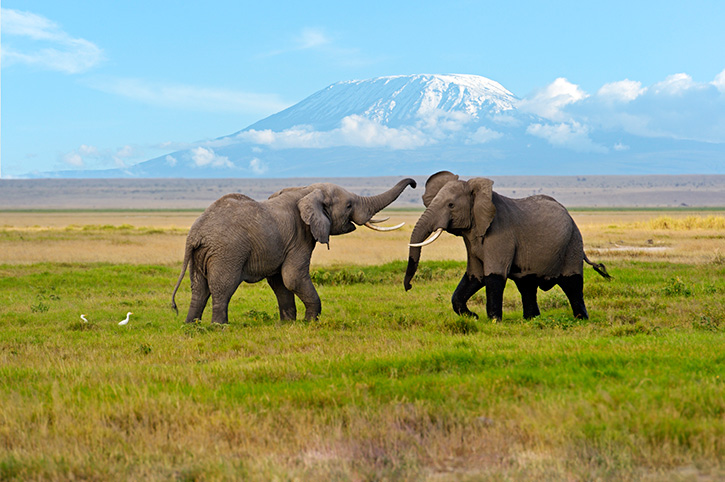
Mount Kilimanjaro is in Tanzania. The international border with Kenya runs along the northern side of the massif, which is why you sometimes see dramatic Kilimanjaro photos taken from Amboseli National Park in Kenya. The summit and all official climbing routes are on the Tanzanian side inside Kilimanjaro National Park (managed by TANAPA).
Gateway Towns: Moshi, Arusha, and Kilimanjaro Airport
Most travelers use three names when they ask about Kilimanjaro location:
- Moshi – the classic base town south of the mountain; trekking briefings, gear shops, and lodge nights before/after the climb.
- Arusha – Tanzania’s safari capital; perfect if you combine wildlife and trekking. We are based here at Zamadam Adventure.
- Kilimanjaro International Airport (JRO) – the main entry point, between Moshi and Arusha.
Rough driving times (traffic and season dependent): JRO to Moshi about 45-60 minutes; JRO to Arusha about 45-75 minutes; Arusha to Moshi about 2-3 hours. Not far on paper. On the road, you will want a buffer because African traffic has personality.
Travel tip: If your itinerary includes safari and Kilimanjaro, staying in Arusha first keeps logistics smooth. You can safari west, then transfer toward Moshi when trek day approaches.
Kilimanjaro National Park and the Three Volcanic Cones
Kilimanjaro is not one neat triangle. It is a massive volcanic massif with three main cones:
- Kibo – the highest cone and home to Uhuru Peak (the summit most climbers target).
- Mawenzi – a dramatic, jagged secondary peak (technical climbing; not the standard tourist route).
- Shira – an older plateau on the western side; many routes cross Shira’s high moorland.
The entire mountain sits within Kilimanjaro National Park, a UNESCO-listed site recognized for its unique equatorial glaciers, montane forests, and altitude-driven ecosystems. Learn more from UNESCO’s Kilimanjaro listing and the overview on Wikipedia (handy for quick geography, then double-check park rules with your operator).
How Far Is Kilimanjaro from the Serengeti and Ngorongoro?
This is the question we hear constantly in our Arusha office: “Can we safari and climb in one trip?” Yes – and the geography makes it logical. From the Kilimanjaro/Moshi area to Ngorongoro or Lake Manyara is roughly a half-day drive. To the Serengeti depends on which sector you enter; northern Serengeti is farther, central/western sectors are common in week-long itineraries.
That is why Mount Kilimanjaro location in Tanzania matters for trip design: you are not flying to a random mountain island. You are in the same northern ecosystem as elephants, lions, and crater views. Browse our Mount Kilimanjaro destination page and the combined 13-Day Safari & Kilimanjaro tour if you want a ready-made bush-plus-peak plan.
Can You See Mount Kilimanjaro Without Climbing It?
Absolutely – and you should. Clear mornings from Arusha, Moshi, and some lodge decks deliver that famous “snow on Africa” view. Cloud often builds by afternoon, so early starts win. On safari drives toward Amboseli viewpoints (Kenya side) or certain high points near Arusha, Kilimanjaro can appear like a floating white cap above golden grass.
I could not stop smiling the first time I saw it from a coffee farm outside Moshi. The mountain looked close enough to touch, but the guide laughed and said, “That is still hours away on foot.” Perspective is part of the fun.
Best Time to Visit Kilimanjaro Region
Weather affects both trekking and views. Two drier windows are popular:
- January to mid-March – warmer, often clear mornings, good for photography.
- June to October – cooler, drier, peak trekking season; book early.
Long rains (roughly March-May) and short rains (November) can mean more cloud on the summit, but the mountain is climbable year-round on the right route with the right team. For safari pairing, dry season also concentrates wildlife near water – a nice bonus.
Getting to Mount Kilimanjaro: Flights and Road Transfers
Most international guests fly into JRO (Kilimanjaro International Airport) or connect via Dar es Salaam / Nairobi. From JRO, your operator arranges a transfer to Moshi, Arusha, or your lodge. If you are safari-first, many itineraries start in Arusha; trek operators often stage in Moshi.
Visa, insurance, and yellow-fever rules change – check official Tanzania immigration guidance before travel. Your tour company should confirm park fees, rescue coverage, and tipping culture before trek day.
Popular Kilimanjaro Climbing Routes (Where Each Starts)
All routes are on the Tanzanian side. Location-wise, trailheads ring the mountain:
| Route | Typical trailhead area | Vibe |
|---|---|---|
| Marangu | Southeast (hut route) | Classic, gradual, shared huts |
| Machame | Southwest | Scenic, popular, camping |
| Lemosho | West | Longer acclimatization, beautiful Shira Plateau |
| Rongai | North (near Kenya border) | Quieter approach from dry north side |
| Northern Circuit | West to north arc | Longest, strong acclimatization profile |
Choosing a route is not just about difficulty. It is about which side of the mountain you walk, how many days you have for altitude adjustment, and whether you want forest, moorland, alpine desert, or glacier views last. Ask your operator to match route to your fitness and dates – not just to a brochure photo.
What I Loved Most About Kilimanjaro’s Setting
It is the contrast. One hour you are among banana trees and market stalls; later you are in cloud forest hearing colobus monkeys; by trek day three you are above the clouds in a lunar landscape. Tanzania’s northeast corner packs an unreasonable amount of “wow” into a small map square.
My favorite moment was not the summit selfie (though that mattered). It was a pre-dawn cup of tea on the Shira Plateau, stars still visible, the outline of Mawenzi turning pink. I thought, “So this is where Kilimanjaro lives.” I still remember that more vividly than the crowded summit photos.
My Honest Experience
Kilimanjaro is approachable for determined beginners, but it is not a casual hill walk. Altitude is the real boss. The location helps – you can recover in a good lodge in Moshi or Arusha after – but respect the mountain and book enough days.
What exceeded expectations: how organized Tanzanian crews are, how friendly villages feel at the base, and how easy it is to combine with safari if you plan transfers once instead of piecing it together last minute.
What surprised me: how often clouds hide the summit until the last days, and how rewarding lower slopes are even if weather is moody. Pack patience and good layers.
Want help stitching trek and safari together? Request a travel proposal – no payment required to start the conversation.
Suggested Itinerary: Safari + Kilimanjaro Location Logic
| Days | Where you are | Why it works |
|---|---|---|
| 1 | Arusha (JRO arrival) | Briefing, gear check, easy acclimatization day |
| 2-4 | Tarangire / Ngorongoro / Manyara | Classic northern parks near Arusha |
| 5-7 | Serengeti | Wildlife highlight before physical trek |
| 8 | Transfer toward Moshi | Position for Kilimanjaro trailhead |
| 9-14 | Kilimanjaro trek | 6-7 trekking days plus recovery |
| 15 | Moshi or Arusha depart | Fly out from JRO |
Shorter? Do a 7-day northern safari plus a dedicated Kilimanjaro climb booked with a licensed trekking partner. Longer? See our full trip list.
Practical Travel Tips for the Kilimanjaro Region
- Carry USD or Tanzanian shillings for tips and small purchases; cards work in many lodges but not everywhere.
- Learn a few Swahili phrases – “Asante” (thank you) and “Hakuna matata” (no worries) go a long way.
- Altitude prep: walk hills at home, hydrate, and avoid rushing a short route if you are new to high elevation.
- Photography: polarizing filter helps with sky; protect gear from dust on safari days before/after trek.
- Respect park rules: stay on marked trails; Kilimanjaro National Park is protected for a reason.
Local Culture Around the Mountain
The Chagga people have lived on Kilimanjaro’s fertile slopes for generations – coffee, bananas, and storytelling are part of daily life. Markets in Moshi are colorful, loud, and welcoming. Take time for a cultural visit if your schedule allows; it grounds the climb in real community, not just altitude numbers.
Food? Try fresh pineapple, ndizi (plantain dishes), and a good cup of Tanzanian coffee before your trek. You will need the calories later.
Why Kilimanjaro Belongs on Your Tanzania Map
Whether you climb or just gaze at the summit from a safari vehicle, Kilimanjaro anchors northern Tanzania. It sits between cultures, climates, and ecosystems – coast not far, savanna west, mountain east. That is why so many travelers treat it as the exclamation point on a Tanzania adventure.
Still planning? Read our Tanzania safari tours guide, explore destinations, and contact our Arusha team for a tailored route.
Frequently Asked Questions
Mount Kilimanjaro is in northeastern Tanzania, in Kilimanjaro Region, near the town of Moshi and about 2-3 hours from Arusha. The summit lies inside Kilimanjaro National Park on the Tanzania-Kenya border.
The mountain is in Tanzania. Kenya shares the northern border, which is why Amboseli in Kenya offers famous Kilimanjaro views, but all standard climbs are on the Tanzanian side.
Moshi is the closest major town and main trekking gateway. Arusha is the main safari hub and also commonly used for combined itineraries.
Most climbers use Kilimanjaro International Airport (JRO), between Moshi and Arusha. Some guests connect via Dar es Salaam or Nairobi depending on airline routes.
Uhuru Peak on Kibo cone is 5,895 metres (19,341 feet), the highest point in Africa. It is a serious altitude challenge despite non-technical routes.
Yes, on clear mornings from parts of northern Tanzania and from some lodges near Arusha or Moshi. Cloud often builds later in the day, so early starts help.
Driving time varies by Serengeti sector, but many northern safari itineraries position you within a long day or overnight transfer from the Kilimanjaro area. Combined trips are very common.
Yes. Tanzania requires licensed guides and registered crews for all Kilimanjaro treks. Independent climbing is not permitted in the national park.
January to mid-March and June to October are popular drier windows. Treks run year-round, but rainier months mean more cloud and mud on some routes.
Absolutely. Views, coffee farm visits, cultural tours, and safari combinations make the region rewarding even without summiting. Many guests love the mountain from the ground.
Final Thoughts
So – where is Mount Kilimanjaro located in Tanzania? Northeast of the country, above Moshi, in sight of Arusha, inside a UNESCO national park that feels like several worlds stacked on top of each other. Come for the summit if you are ready. Come for the views and safari combo if you are not. Either way, you are in the right corner of Africa.
Ready to map it out? Browse all trips, read the safari planning guide, or request a travel proposal from our Arusha team.
Last updated: June 2026. Park fees, routes, and flight options change – confirm details when you book.